
CASHEW NUT SHELL OIL

Soft dried mango shelf life is influenced by more than just the production date printed on a package.
For importers, distributors, snack brands, retailers, and private-label buyers, product stability depends on several factors working together, especially:
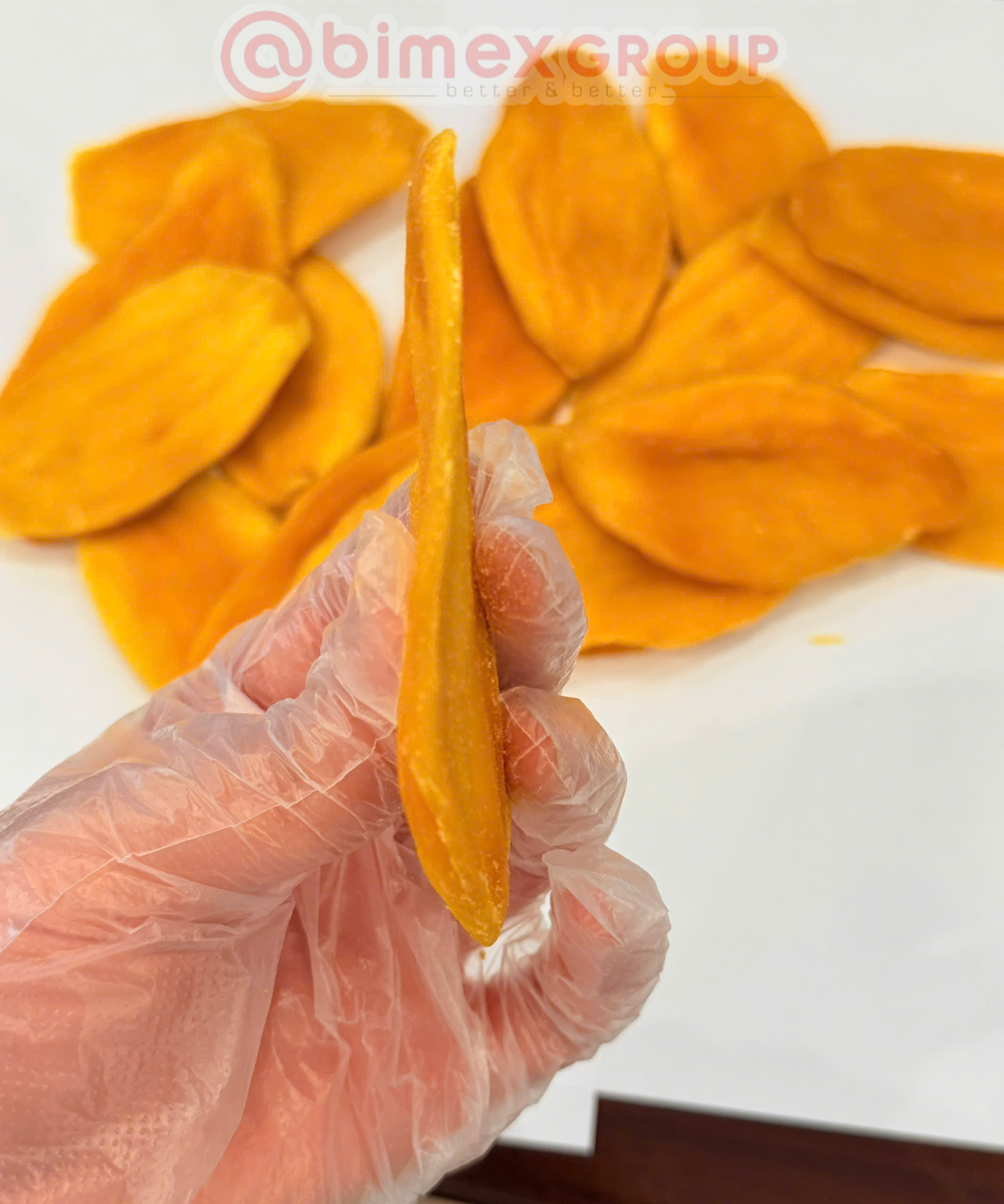
Soft dried mango is designed to retain a chewy, soft texture rather than becoming completely dry and brittle.
That texture makes moisture management especially important.
If the product absorbs too much moisture during storage, texture and stability may change. If it loses too much moisture, it may become firmer or less pleasant to eat.
This is why understanding the factors that affect soft dried mango shelf life can help buyers make better decisions about packaging, storage, transportation, and inventory planning. 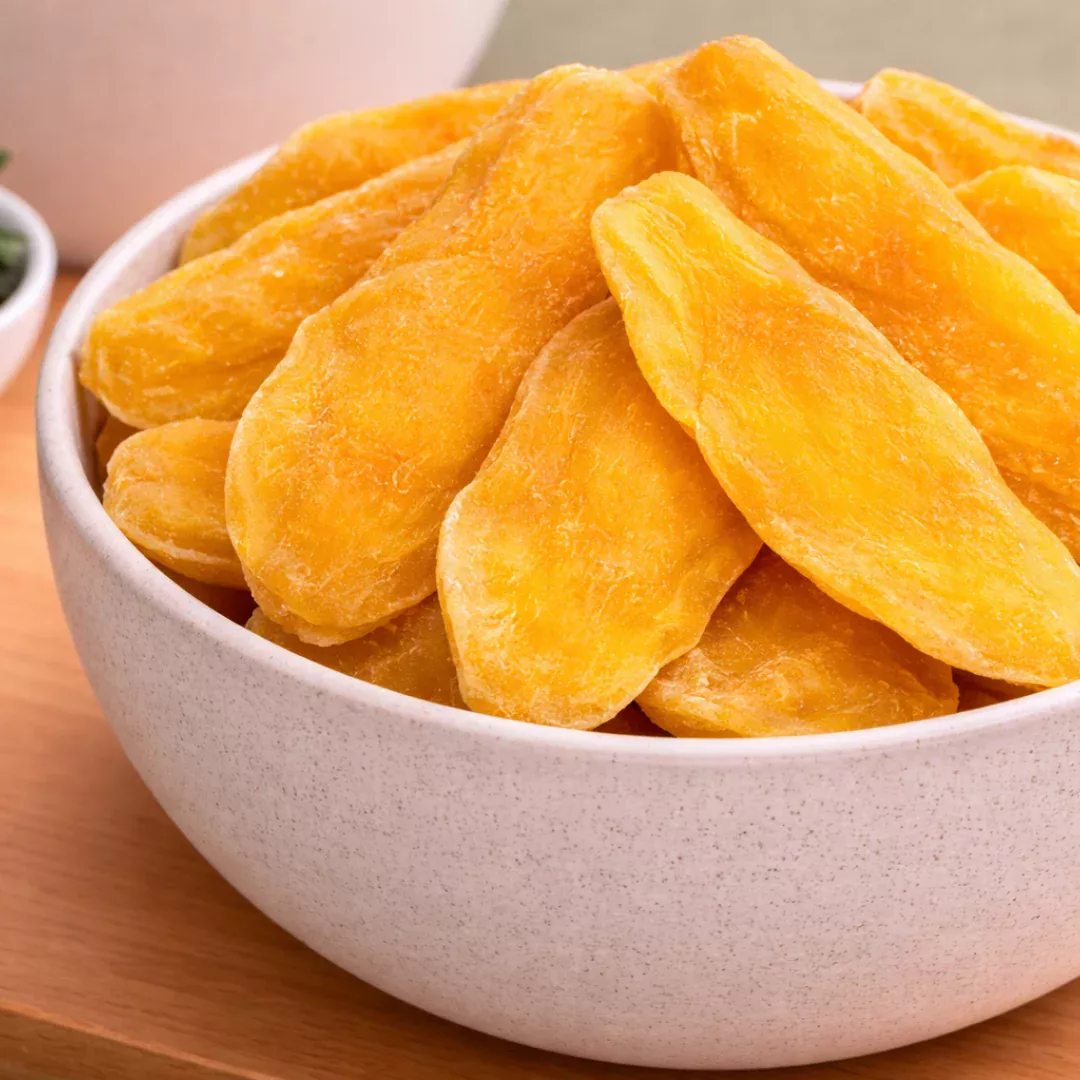
Shelf life generally refers to the period during which a food product is expected to maintain acceptable quality and remain suitable for its intended use under defined storage conditions.
For soft dried mango, quality may include:
However, shelf life should not be treated as a universal number.
The actual shelf-life declaration for a specific product should be based on appropriate product information, validation, laboratory testing, manufacturing controls, and supplier documentation.
A general article cannot replace product-specific shelf-life data.
One of the most important concepts in dried-fruit stability is water activity, often written as aw.
Water activity is different from total moisture content.
Moisture content tells us how much water is present in a product.
Water activity relates more closely to how available that water is for physical, chemical, and microbiological processes.
Two mango products can have similar moisture content while behaving differently if their water activity differs.
This is why water activity can be an important technical parameter when evaluating dried-fruit stability.
However, no single aw value should be presented as suitable for every soft dried mango product without testing.
The acceptable target depends on the product formulation, processing method, texture target, packaging, and storage conditions.
Soft dried mango needs enough retained moisture to maintain a chewy texture.
If too much water is removed, the product may become:
If the product gains moisture during storage, it may become:
The goal is not simply to make dried mango as dry as possible.
Instead, manufacturers try to achieve a controlled balance between texture and stability.
That balance should be evaluated for the specific formulation.
This distinction is important for B2B buyers.
A specification may include a moisture requirement, but moisture content alone does not provide a complete picture of product stability.
Water activity can also be influenced by:
For this reason, buyers evaluating soft dried mango shelf life should avoid assuming that a particular moisture percentage automatically guarantees a particular shelf life.
Product-specific testing remains important.
Once soft dried mango leaves production, the package becomes a major protective barrier.
Good packaging helps reduce unwanted changes caused by:
For soft dried mango, the packaging should be suitable for the intended storage period and distribution conditions.
A weak moisture barrier can allow the product to absorb water from humid environments or lose moisture in dry environments.
Both situations can affect texture.
Dried fruit can be exposed to very different climates during international trade.
A shipment may move through:
In humid conditions, poorly protected dried mango may absorb moisture through unsuitable packaging or compromised seals.
This may contribute to:
For this reason, packaging selection should consider the complete supply chain, not just conditions at the factory.
Packaging may also help limit oxygen exposure.
Over time, oxygen can contribute to changes in:
The rate of these changes depends on the actual product and packaging system.
For commercial programs, buyers may want to discuss packaging structure with the manufacturer rather than choosing bags only based on appearance.
A premium-looking package is not necessarily a high-performance barrier package.
Even good packaging material cannot protect the product if the seal is damaged.
Potential problems include:
A package that looks almost normal may still allow moisture or air exchange if the seal is compromised.
For this reason, packaging quality control should include more than checking artwork and dimensions.
Seal quality matters.
Storage temperature is another important factor in soft dried mango shelf life.
Higher temperatures can generally accelerate various quality changes in food products.
Soft dried mango stored in excessively warm conditions may experience faster changes in:
The exact rate depends on the formulation, packaging, and storage environment.
For this reason, dried mango should normally be stored under the supplier’s recommended conditions and protected from excessive heat.
No single temperature should be presented as universal unless confirmed by the relevant product specification.
Soft dried mango should generally be kept away from:
Heat exposure can raise the temperature inside the package and increase product stress.
Sunlight may also influence packaging and product appearance depending on the pack structure.
An indoor, controlled storage environment is usually preferable.
It is not only high temperature that can create problems.
Repeated temperature changes can influence the environment inside packaging and warehouses.
For example, products may move between:
Large fluctuations can contribute to moisture movement or condensation risk under certain conditions.
A stable storage environment is therefore generally preferable.
Warehouse humidity can influence the product, particularly if packaging is damaged or does not provide an adequate moisture barrier.
High relative humidity may increase the risk of moisture pickup.
Dry conditions may contribute to moisture loss if the packaging barrier is weak.
This is why warehouse management should focus on:
Buyers should also avoid storing cartons directly against wet walls or floors.
Not all soft dried mango products are identical.
Formulations may include:
These differences may influence how the product behaves over time.
For example, sugar can interact with water in the product and influence texture and moisture behavior.
Different preservation strategies can also affect quality stability.
Therefore, one shelf-life conclusion should not automatically be applied to every mango formulation.
No-added-sugar soft dried mango relies more heavily on the natural characteristics of the fruit and the drying process.
Its texture and stability profile may therefore differ from a conventional sweetened formulation.
This does not mean one formulation is automatically better.
It simply means buyers should evaluate each product according to:
Product-specific data is more useful than broad assumptions.
Different mango cuts have different surface areas and thicknesses.
Possible formats include:
Thicker pieces may dry and equilibrate differently from thinner pieces.
Smaller cuts also expose more surface area relative to their size.
This can influence texture and moisture movement.
For commercial production, drying conditions need to be managed according to the intended cut and specification.
Soft dried mango may naturally feel slightly sticky depending on:
Stickiness by itself should not automatically be interpreted as spoilage.
However, an unexpected increase in stickiness compared with the approved specification may indicate moisture pickup or storage changes.
Buyers should compare the product with:
rather than judging by touch alone.
Bulk and retail packs behave differently during use.
A sealed retail pouch may remain closed until the consumer opens it.
A large bulk bag may be opened and closed repeatedly during food manufacturing or repacking.
Once opened, the product becomes more exposed to:
For bulk users, good post-opening handling practices are therefore important.
The remaining product should be protected and properly resealed according to internal food-safety procedures.
Primary packaging directly protects the mango.
Secondary packaging, such as export cartons, helps protect the primary packs from:
A strong barrier bag inside a weak carton can still be damaged during logistics.
Packaging design should therefore consider both product protection and distribution conditions.
Shelf-life management does not begin only when goods enter the warehouse.
International shipments may spend weeks in transportation.
During this period, the product can experience:
Buyers should consider transit conditions when developing inventory plans.
A long supply chain may require stronger packaging protection than a short domestic route.
Importers and distributors should maintain good stock rotation.
Common approaches include:
The appropriate method depends on the company’s quality system.
Lot identification should remain clear so warehouse staff can track:
This helps reduce the risk of older stock remaining unnoticed.
When dried mango arrives, buyers should inspect cartons and bags before storage.
Check for:
Damaged products should be isolated for evaluation.
Receiving inspection is one of the simplest ways to protect product quality.
B2B buyers should avoid relying only on a shelf-life number printed in a quotation.
A more useful evaluation includes:
For critical programs, buyers can also request available laboratory or stability documentation.
Shelf life should ideally be supported by appropriate testing and product experience.
Testing may include evaluation of:
The specific test program depends on the product and supplier quality system.
A general online article cannot provide the exact shelf-life period or water activity target for a specific shipment.
Those values should come from verified product documentation.
The Certificate of Analysis (COA) provides information related to a specific production lot.
Depending on the supplier and product, it may include relevant quality parameters.
Buyers should refer to the actual COA and specification for the shipment rather than applying general values found online.
If water activity is a contract requirement, buyers should confirm:
before placing the order.
It is tempting to use one common shelf-life statement across all dried mango products.
However, the appropriate declared period may differ because of:
For this reason, a specific best-before period should only be communicated based on the applicable product documentation.
The same principle applies when developing private-label artwork.
Private-label packaging often includes:
These details should be agreed before mass printing.
Incorrect shelf-life information on printed packaging can create regulatory and commercial problems.
Buyers should therefore confirm the applicable information with the supplier before approving artwork.
When discussing soft dried mango shelf life, B2B buyers should consider asking:
These questions provide more useful information than asking only, “How many months does it last?”
General good practices for soft dried mango include:
These are general recommendations.
The applicable storage conditions for a specific product should always follow the supplier’s technical documentation.
Soft dried mango shelf life is not determined by one factor alone.
It depends on the interaction between:
water activity + moisture + formulation + packaging + temperature + humidity + handling.
Water activity helps describe how available water is within the product.
Packaging helps control moisture and oxygen exchange.
Storage temperature influences the rate at which product characteristics may change.
And warehouse and transportation practices determine how well the product is protected after production.
For B2B buyers, the key is not to search for one universal water activity number or shelf-life period.
Instead:
This approach provides a more reliable basis for sourcing and quality management than applying generic shelf-life assumptions.
Abimex Group supplies Vietnamese soft dried mango for international importers, distributors, retailers, snack brands, and private-label projects.
Different product concepts can be discussed according to buyer requirements, including:
Buyers can contact us for product specifications, samples, available quality documentation, packaging information, and quotations.
Contact Abimex Group to discuss Vietnamese soft dried mango for your sourcing program.