
CASHEW NUT SHELL OIL

Soft dried mango cut types can influence much more than the appearance of a finished product. The shape and size of mango pieces may affect portioning, texture perception, product presentation, mixing behavior, packaging efficiency, and how easily the fruit can be incorporated into different food applications.
For B2B buyers, choosing between slices, strips, cubes, and diced pieces should therefore depend on the intended use rather than appearance alone. A large mango slice may work well as a stand-alone snack, while smaller pieces may be easier to distribute through cereal, bakery, confectionery, or snack-mix formulations.
At the same time, there is no single cut that is automatically best for every product. Mango variety, maturity, moisture level, drying conditions, formulation, packaging, and storage can also affect the final performance of soft dried mango.
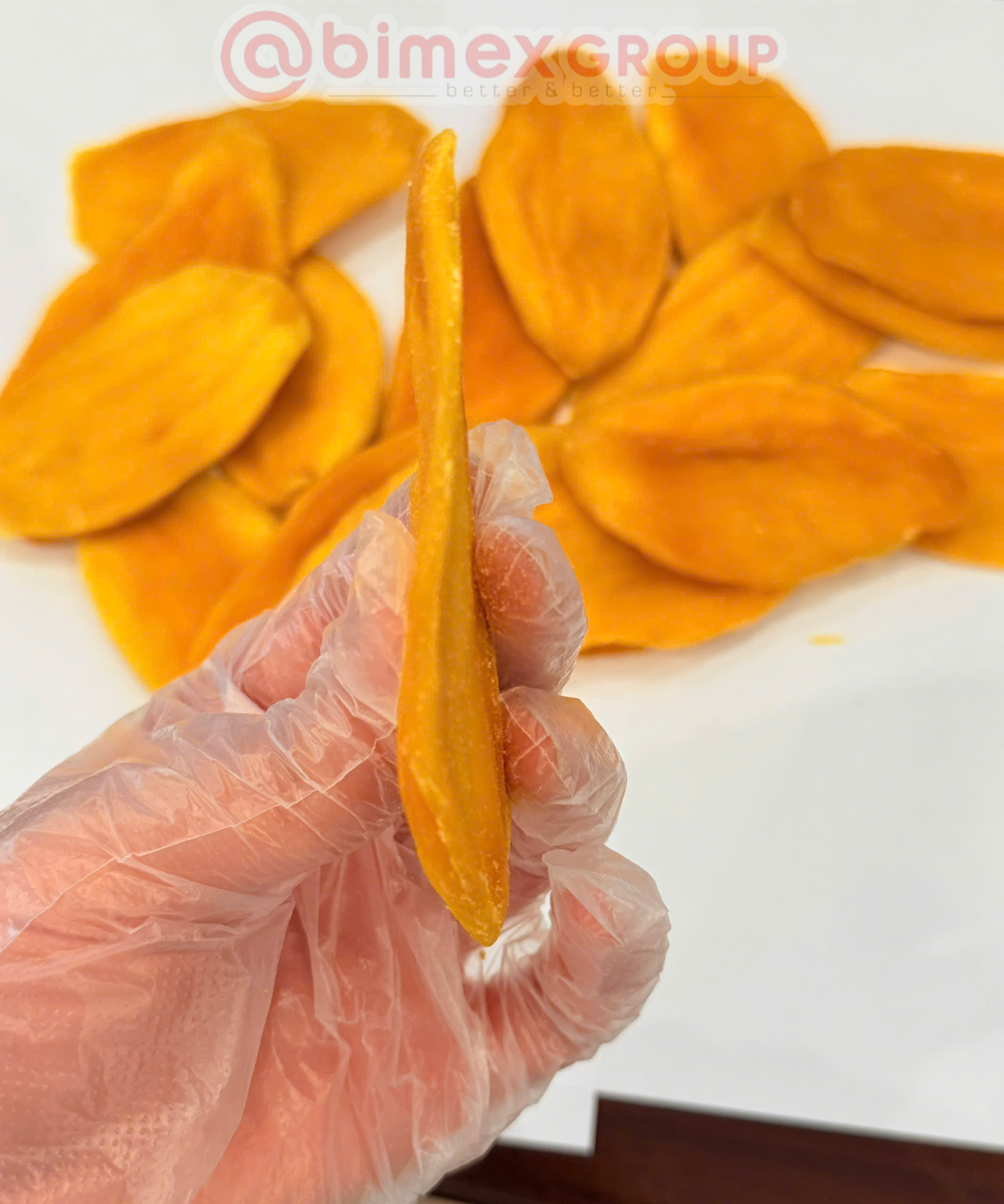
Different soft dried mango cut types create different product experiences.
Large pieces provide a more visible mango identity, while smaller cuts can make portioning and distribution more consistent. Shape can also influence how consumers perceive chewiness. A thick slice, for example, may feel more substantial than a small diced piece even when both come from the same dried mango product.
For manufacturers, the right cut should be considered together with the finished product format, processing method, desired texture, and packaging system.
Slices are one of the most familiar forms of soft dried mango.
They usually retain a recognizable fruit shape, making them suitable for products where mango should remain visually prominent. Because the pieces are relatively large, consumers can easily identify the ingredient.
Soft dried mango slices can be considered for retail snack packs, gift packs, premium dried fruit assortments, or other applications where whole-piece presentation is important.
Larger slices may also provide a stronger chewing experience because consumers bite directly into a substantial piece of fruit.
However, consistency can become important. Differences in slice width, thickness, or length may affect the visual uniformity of the pack and may also create slightly different textures.
When evaluating slices, buyers should consider how uniform the pieces need to be for their target market.
Strips provide a narrower, elongated format that can offer a different eating experience from large slices.
They may be convenient for portion-controlled snack concepts because the pieces are easier to pick up and consume individually. They can also create a clean, organized appearance inside transparent retail packaging.
For manufacturers comparing soft dried mango cut types, strips may offer a useful middle ground between large slices and small diced pieces.
Their elongated shape can maintain a visible mango identity while providing more manageable portion sizes.
Strip width and thickness may influence chewiness, so buyers should review actual samples rather than relying only on dimensions shown on a specification sheet. Natural fruit structure can also create some variation from piece to piece.
Cubes can provide a more compact and uniform appearance.
Compared with slices or strips, they may be easier to distribute through products such as snack mixes, confectionery concepts, bakery products, or certain cereal applications.
Their relatively regular shape may also support portion control when manufacturers want a more consistent amount of mango in each serving.
However, cube performance can depend on the surrounding ingredients.
If cubes are mixed with nuts, cereals, chocolate, coconut, or other dried fruits, differences in density, surface texture, and piece size can affect how evenly the ingredients remain distributed during handling and packaging.
Manufacturers should therefore test the complete formulation rather than evaluating mango cubes separately.
Diced mango generally refers to smaller pieces intended to distribute more easily through a formulation.
Among the various soft dried mango cut types, diced pieces can be particularly useful when mango is intended to function as an inclusion rather than the main visual component.
Potential applications can include granola, cereal blends, bakery fillings, snack mixes, confectionery, chocolate products, and other food-manufacturing concepts.
Smaller pieces provide more individual mango inclusions per unit of product, which may help create a more even distribution.
However, very small pieces can also behave differently from larger cuts. They have more exposed surface area relative to their size, and their texture may be perceived differently after mixing with other ingredients.
In products containing moisture, binders, coatings, or syrups, diced mango may also interact with the surrounding formulation over time. Application testing is therefore important.
Soft dried mango cut types, including shape and dimensions, can influence how the fruit feels when eaten.
A thick slice may provide a longer, chewier bite. A narrow strip may feel easier to bite through, while cubes or diced pieces can create shorter bursts of mango texture within a mixed product.
This does not mean that cut size alone determines softness.
Actual texture also depends on factors such as moisture, fruit structure, drying conditions, sugar content, formulation, and storage.
Two products with similar dimensions may still feel different if their production conditions or raw materials are different.
When comparing soft dried mango cut types, buyers should therefore evaluate both the physical dimensions and the sensory characteristics of the sample.
Appearance can be especially important in retail products, where soft dried mango cut types shape the first impression on the shelf.
Large slices can communicate a strong dried-fruit identity because consumers can clearly recognize the original fruit. Strips can create a neat, premium-looking presentation, while cubes and diced pieces may give snack blends and food formulations a more uniform appearance.
Product developers should consider whether mango is intended to be the hero ingredient or a supporting inclusion.
For a stand-alone dried mango snack, large visible pieces may be desirable. In a granola or confectionery product, smaller pieces may make more sense because they can be distributed across multiple servings.
This is one reason why soft dried mango cut types should be selected according to product positioning as well as manufacturing needs.
Soft dried mango cut types and piece size can influence how the fruit behaves during packing, transportation, and storage.
Larger pieces may be easier to separate visually, while smaller pieces can settle differently within a pack. Depending on the product formulation and storage conditions, pieces may also experience compression or sticking.
Bulk packs used by food manufacturers can behave differently from small retail packs because the product may experience more pressure from the weight of the material above it.
For this reason, manufacturers should evaluate the mango in the packaging format that is closest to the intended commercial use.
When sourcing different soft dried mango cut types, buyers may want to review several factors together rather than selecting a product based on shape alone:
Specifications should also align with the food safety and labeling requirements of the destination market, including the international food standards published by the Codex Alimentarius Commission.
Clear communication about the end use can help suppliers and buyers discuss appropriate product options more effectively.
Choosing between soft dried mango cut types such as slices, strips, cubes, and diced pieces is ultimately about how the mango needs to function in the finished product.
For stand-alone snacks, larger cuts may provide stronger visual impact. For snack mixes, granola, bakery, confectionery, or other manufactured products, smaller cuts may offer easier distribution and portioning.
The best option among soft dried mango cut types depends on the recipe, desired eating experience, processing conditions, packaging, and target market.
Rather than asking which cut is universally better, manufacturers can benefit from comparing soft dried mango cut types based on their specific application and testing suitable samples under realistic production conditions.
Abimex Group supports international B2B buyers sourcing soft dried mango for retail, wholesale, private-label, snack, bakery, confectionery, cereal, and other food-manufacturing applications.
Whether you are evaluating slices, strips, cubes, or diced pieces, Abimex Group can support discussions around available product formats, specifications, packaging requirements, samples, and export coordination.
Contact Abimex Group to discuss the soft dried mango format and product specifications that may best match your target application and market.