
CASHEW NUT SHELL OIL

Jackfruit chips moisture level is often one of the first specifications B2B buyers check when evaluating product quality. Moisture matters because it can influence crispness, shelf stability, and overall sensory experience.
But here is the interesting part: two batches of jackfruit chips can show a similar moisture value on a specification sheet and still feel noticeably different when you bite into them.
One may feel lighter and crispier. Another may seem harder, denser, or slightly more oily.
Why?
Because moisture content is only one factor behind texture. Slice thickness, moisture distribution, raw jackfruit characteristics, oil content, frying conditions, product structure, storage, and packaging can all influence how the final snack feels.
For importers, distributors, private-label brands, and snack companies, understanding these differences can help when comparing suppliers and approving product samples.
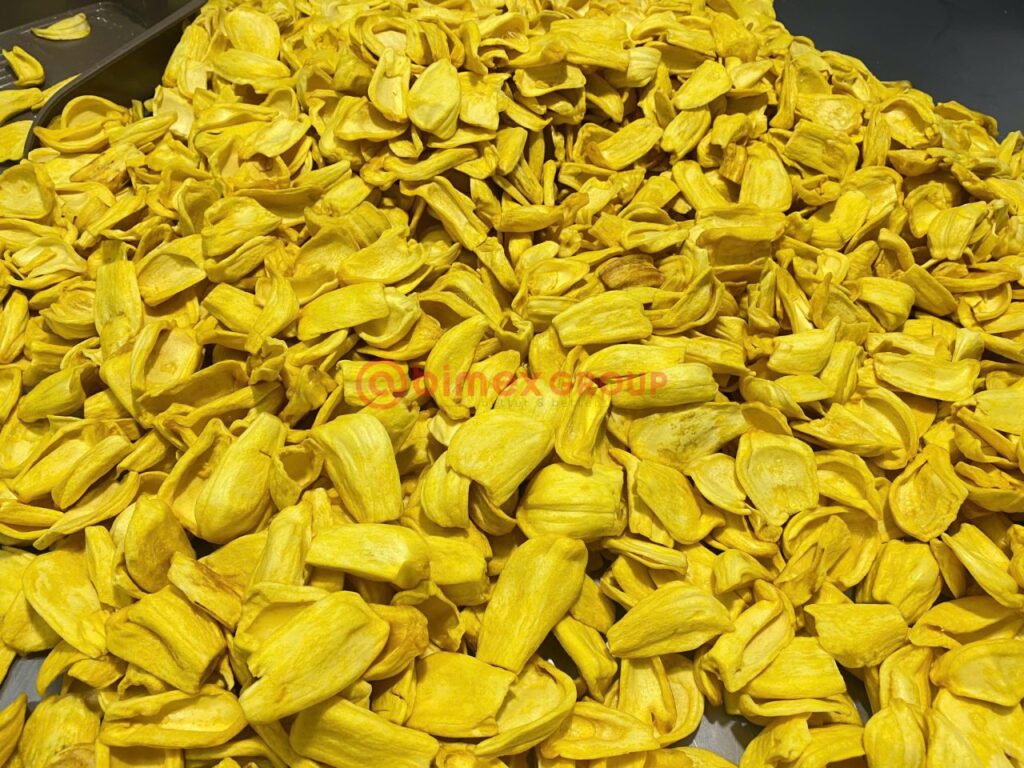
Moisture content generally describes how much water remains in a product relative to its weight. It is an important technical parameter, but it does not fully explain where that moisture is located or how tightly it is held within the food structure.
Two products can therefore have similar overall moisture content while distributing that water differently throughout each slice.
One batch may contain relatively uniform pieces, while another may have thicker centers and thinner edges. Even if laboratory results are similar, the eating experience may not be identical.
That is why jackfruit chips moisture level should be evaluated together with sensory testing and other product specifications rather than used as a single measure of crispness.
A laboratory result usually represents the moisture content of the tested sample as a whole.
However, an individual jackfruit chip is not always perfectly uniform.
The outer surface may lose moisture faster during frying or drying, while the center may retain more. Thicker areas may also behave differently from thinner areas.
This can create different textures within the same piece.
For example, a chip may feel crisp at the edge but slightly denser in the center. Another chip with a similar measured moisture value may have a more even structure and therefore feel consistently crisp throughout.
This helps explain why jackfruit chips moisture level alone cannot fully predict the bite consumers will experience.
Slice thickness is another important factor.
Thinner jackfruit pieces generally have a shorter distance for moisture to travel during processing. Depending on the process, this can make it easier to achieve a lighter, more brittle texture.
Thicker slices may create a more substantial bite and can retain a different internal structure.
However, thicker does not automatically mean softer, and thinner does not always mean crispier. Frying conditions, raw material maturity, oil absorption, and final moisture all interact.
For B2B buyers, piece thickness should therefore be considered alongside moisture specifications.
If one supplier produces very uniform slices and another has wider thickness variation, their products may feel different even when the reported moisture values are close.
Jackfruit is an agricultural product, so the raw material itself can vary.
Fruit maturity, variety, fiber structure, natural sugar content, and initial moisture may all affect the way jackfruit responds to processing.
A firmer raw jackfruit segment may develop a different internal structure from a softer or more mature piece.
This matters because crispness depends not only on how much water remains but also on what happens to the food structure as moisture is removed.
When comparing jackfruit chips moisture level between batches, buyers should remember that similar numbers do not necessarily mean the raw materials were identical.
Natural variation can contribute to differences in bite, density, color, and overall mouthfeel.
For fried jackfruit chips, oil also contributes to the sensory experience.
Two products may have similar moisture levels but different oil contents or different amounts of oil remaining on the surface.
A chip with more noticeable surface oil may feel heavier or less crisp, even if its internal structure is technically crunchy.
On the other hand, effective post-frying draining or deoiling may create a lighter mouthfeel.
This is why jackfruit chips moisture level should ideally be reviewed together with oil or fat-related specifications where relevant.
Buyers should also evaluate actual samples for:
A technical specification can provide useful information, but sensory evaluation reveals how those parameters work together in the finished product.
Processing conditions strongly influence texture.
For vacuum-fried jackfruit chips, variables such as temperature, frying time, vacuum conditions, and post-frying treatment can affect moisture removal and the formation of a porous structure.
The way water leaves the fruit can influence how many air spaces form inside the chip and how rigid or brittle the structure becomes.
This means two products with similar final moisture may still have different microstructures.
One may be more porous and light, while another may be denser.
The consumer does not see this internal structure—but they can feel it immediately when biting the chip.
Another point buyers should understand is that moisture content and water activity are not the same measurement.
Moisture content describes the amount of water in the product.
Water activity relates more closely to how available that water is within the food system.
Two foods with similar moisture content can potentially have different water activity values because ingredients and food structure influence how tightly water is held.
For snack manufacturers, this distinction can be relevant when evaluating product stability and texture.
However, specific water activity limits should always be based on verified product specifications, applicable standards, and the supplier’s validated quality system rather than a universal assumption.
Texture can continue to change after the chips leave the production line.
Jackfruit chips may absorb moisture from the surrounding environment if packaging protection is insufficient or if the pack is repeatedly opened.
In humid conditions, this can reduce crispness.
Temperature can also affect the sensory experience, particularly when combined with changes in oil and moisture.
As a result, jackfruit chips moisture level measured at production does not necessarily describe how the product will feel after extended transportation or storage.
Packaging barrier performance, seal integrity, warehouse conditions, and destination climate should therefore be considered as part of the overall quality strategy.
The physical shape of a chip can also influence how consumers perceive texture.
Large, intact pieces may create a stronger crunch sensation, while smaller broken fragments may feel different even when they come from the same batch.
Curvature and thickness variation can also influence how much force is required to break the chip.
This means that sensory consistency depends partly on piece-size and shape consistency—not just moisture.
For retail brands, this can be particularly important because consumers experience appearance and texture together.
When evaluating jackfruit chips, buyers should avoid focusing on one specification alone.
Useful points to review include:
When reviewing jackfruit chips moisture level, it is also useful to ask whether the specification shows a target, maximum, or acceptable range and what test method is used.
Product samples are especially important.
Two suppliers may provide specifications that look similar on paper but deliver different sensory experiences. Side-by-side sample evaluation can help buyers determine which product better matches their target market.
For private-label and large-volume projects, an approved reference sample can create a clearer benchmark for both buyer and supplier.
The buyer can evaluate:
This makes discussions about quality more specific than simply requesting “low moisture” or “extra crispy” jackfruit chips.
Ultimately, jackfruit chips moisture level is important—but it is only one part of texture.
Moisture distribution, slice thickness, fruit maturity, internal structure, frying conditions, oil content, packaging, and storage can all influence how crispy or dense a jackfruit chip feels.
For B2B buyers, the best approach is to combine technical specifications with sensory evaluation.
Rather than asking only, “What is the moisture percentage?”, a more useful question may be:
“Does this product deliver the texture, consistency, and eating experience our market expects?”
Abimex Group supports international B2B buyers sourcing jackfruit chips and other processed fruit products for retail, wholesale, distribution, private-label, and snack applications.
From product specifications and sample evaluation to packaging requirements and export coordination, Abimex Group works with customers to identify suitable options for different target markets.
If your business is evaluating jackfruit chips texture, moisture specifications, packaging options, or other sourcing requirements, contact Abimex Group to discuss the product specifications that best fit your market and business needs.