
CASHEW NUT SHELL OIL

Sweetened vs unsweetened desiccated coconut is an important comparison for bakery, confectionery, snack, cereal, and dessert manufacturers because the two products can behave very differently in a formulation.
The most obvious difference is added sugar. However, manufacturers should also consider moisture, texture, ingredient declaration, sweetness contribution, processing behavior, packaging, and storage stability.
Terminology can vary between suppliers and markets, so buyers should not assume that every product labeled “sweetened coconut” or “unsweetened coconut” follows exactly the same formulation. The supplier’s specification and ingredient declaration should always be checked before commercial use.
Understanding these differences can help product developers choose a coconut ingredient that better matches the desired recipe, texture, labeling strategy, and manufacturing process.
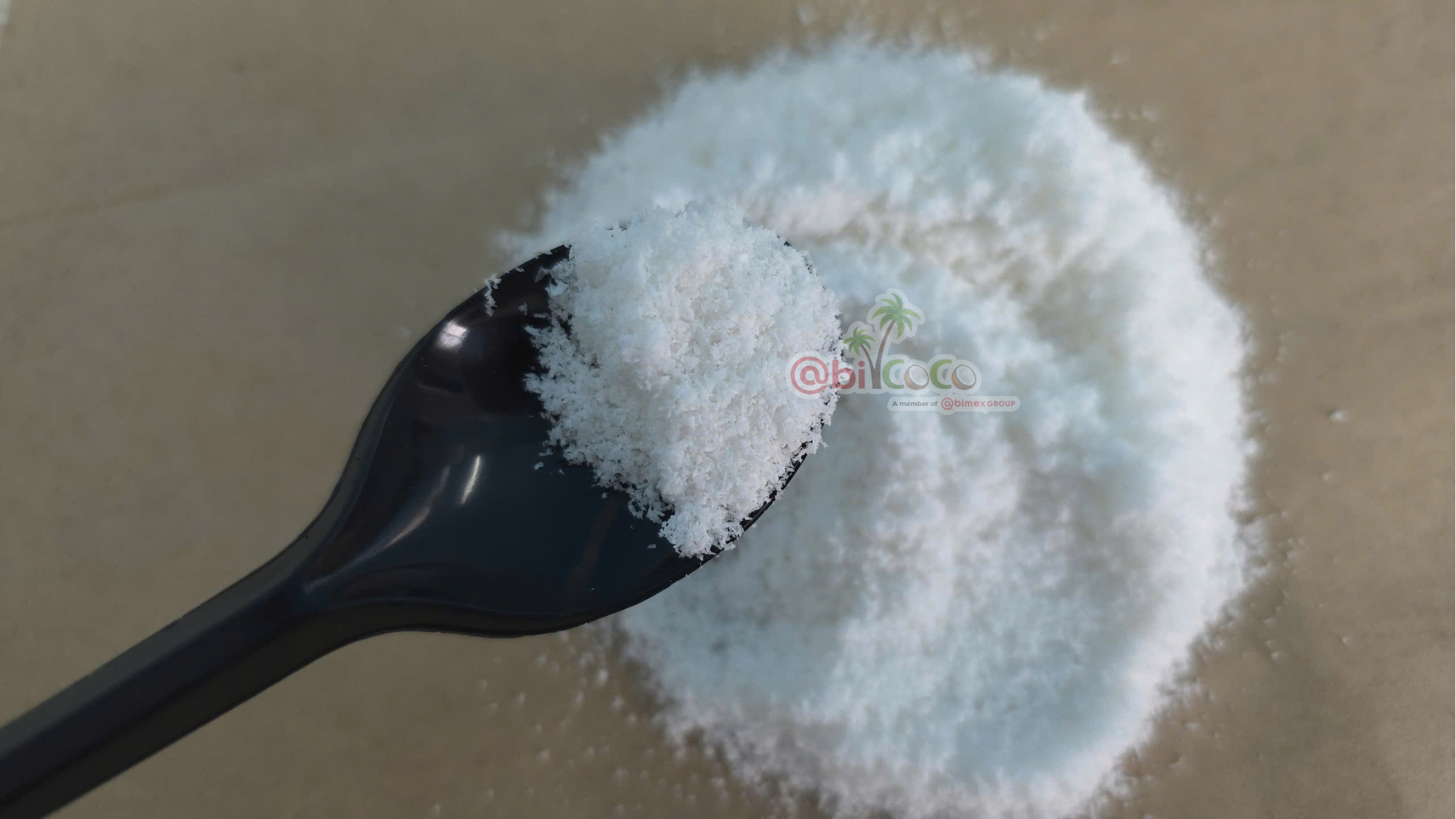
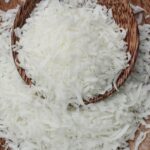
In general, unsweetened desiccated coconut is dried coconut kernel without added sugar as part of the formulation. Depending on the supplier, it may be available in fine, medium, shredded, flaked, or other commercial formats.
Sweetened coconut, by contrast, contains added sweetening ingredients and may be processed to create a softer or more moist eating experience.
However, sweetened vs unsweetened desiccated coconut should not be treated as a simple “better versus worse” comparison.
Each type serves different purposes.
An unsweetened product gives manufacturers greater control over the sweetness of the overall formulation. A sweetened product may contribute both coconut character and sweetness while potentially offering a different texture.
The right choice depends on the finished product.
The first difference manufacturers should review is the ingredient declaration.
Unsweetened desiccated coconut generally allows the coconut itself to contribute flavor and texture without introducing additional sugar from the coconut ingredient.
This can be useful when manufacturers want to control the amount and type of sweetener elsewhere in the recipe.
Sweetened coconut adds another source of sweetness to the formula.
This means manufacturers may need to adjust other ingredients to maintain the desired flavor profile and product composition.
For example, simply replacing unsweetened coconut with a sweetened version at the same usage level could make a product taste sweeter than intended.
The opposite is also true. Switching from sweetened to unsweetened coconut without reformulating may reduce perceived sweetness.
For commercial production, substitutions should therefore be tested in the complete recipe.
Moisture is another major consideration when comparing sweetened vs unsweetened desiccated coconut.
Traditional desiccated coconut is a dried ingredient. Sweetened coconut products, depending on how they are manufactured, may have a different moisture profile and softer texture.
Internationally, quality parameters for desiccated coconut, including moisture and oil content, are set out in the Codex Alimentarius standard for desiccated coconut (CXS 177-1991), which buyers can use as a reference point alongside supplier specifications.
This difference can influence how coconut behaves during mixing, baking, coating, filling, or storage.
A relatively dry coconut ingredient may absorb moisture from surrounding ingredients in some formulations. A softer or more moist coconut product may interact differently with doughs, syrups, chocolate systems, binders, or fillings.
Manufacturers should therefore avoid assuming that two coconut products with similar particle sizes will behave identically.
The moisture specification should be reviewed together with actual application testing.
Texture is often one of the easiest differences to notice.
Unsweetened desiccated coconut may provide a relatively dry, fibrous, or crisp-to-chewy texture depending on particle size and application.
Sweetened coconut may feel softer, more tender, or more cohesive depending on its formulation and moisture condition.
Particle size matters as well.
Fine coconut can integrate more smoothly into a filling or dough, while larger shreds or flakes can provide a more visible coconut presence and a stronger bite.
When evaluating sweetened vs unsweetened desiccated coconut, manufacturers should therefore compare both formulation and cut size.
A difference that appears to come from sugar may actually be influenced by particle dimensions, moisture, processing conditions, or a combination of these factors.
Unsweetened coconut gives product developers more flexibility over sweetness.
This can be valuable in formulations containing other sweet ingredients such as chocolate, syrups, fruit preparations, or sweetened fillings.
Manufacturers can adjust sweetness elsewhere while still using coconut for aroma, texture, and visual identity.
Sweetened coconut may work differently because part of the sweetness is already incorporated into the coconut ingredient.
This can be useful in some confectionery, bakery, or dessert applications, but it also means the coconut needs to be considered as part of the total formulation rather than as a neutral inclusion.
Neither approach is universally superior.
The most appropriate option depends on the desired sensory profile and recipe structure.
Heat can change coconut aroma, color, and texture.
During baking or toasting, coconut may develop stronger roasted notes and darker coloration depending on temperature, heating time, particle size, surrounding ingredients, and processing conditions.
Added sugar can introduce another variable into this process.
For this reason, sweetened vs unsweetened desiccated coconut may not develop identical color, flavor, or texture under the same baking conditions.
A coconut product that performs well as a topping may behave differently when mixed directly into a dough.
Likewise, a product intended for an unbaked filling may need different characteristics from one exposed to significant heat.
Manufacturers should test the actual ingredient under realistic production conditions rather than relying only on appearance before processing.
It may be tempting to assume that one coconut type automatically has a longer shelf life than the other.
In practice, shelf life depends on multiple factors.
These can include:
Added sugar can affect how water behaves within a food system, but sugar content alone does not determine shelf life.
Likewise, a drier product should not automatically be assigned a specific shelf life without product-specific validation.
When comparing sweetened vs unsweetened desiccated coconut, buyers should therefore rely on the supplier’s validated shelf-life information and recommended storage conditions.
Packaging is important for both products.
Coconut contains fat and can be affected by oxygen, heat, moisture, and surrounding odors. Packaging therefore plays an important role in maintaining the intended sensory and physical characteristics during transportation and storage.
A product with a different moisture or sugar profile may also require a different packaging approach.
Manufacturers should review factors such as:
Large industrial packs may behave differently from smaller retail packs, especially after repeated opening.
Buyers should follow the storage and handling guidance supplied for the specific product rather than assuming that all coconut ingredients can be managed identically.
Choosing between sweetened and unsweetened coconut can also affect the finished product’s ingredient declaration and positioning.
Manufacturers developing products around controlled sweetness or specific ingredient strategies may prefer an unsweetened option because it provides greater formulation flexibility.
Other products may intentionally use sweetened coconut to achieve a particular flavor and texture.
Whatever the choice, ingredient and nutritional declarations should be based on verified supplier documentation and the finished formulation.
Manufacturers should not make claims such as “no added sugar” solely because one ingredient is unsweetened. Such claims depend on the complete product formulation and applicable regulations in the destination market.
In the United States, for example, the FDA requires added sugars to be declared on the Nutrition Facts label, so the choice of sweetened or unsweetened coconut directly affects the finished product’s labeling.
When sourcing sweetened vs unsweetened desiccated coconut, manufacturers should review more than price.
Useful points to compare include:
Product developers may also want to test both options in the actual formulation before selecting the commercial specification.
This is especially important when coconut makes a noticeable contribution to texture or sweetness.
There is no universal answer to the sweetened vs unsweetened desiccated coconut question.
Unsweetened coconut may be suitable when manufacturers want greater control over sweetness, formulation, and the contribution of other ingredients.
Sweetened coconut may be considered when the desired product calls for additional sweetness and a particular texture profile.
However, suitability depends on much more than whether sugar has been added.
Moisture, cut size, processing conditions, packaging, finished-product formulation, and storage requirements all influence performance.
The most reliable approach is to define what the coconut needs to do in the final product and then compare suitable specifications through application testing.
Understanding sweetened vs unsweetened desiccated coconut can help procurement and product-development teams make more informed decisions about sweetness, moisture, texture, processing, and shelf-life requirements.
Abimex Group supports international B2B buyers sourcing desiccated coconut for bakery, confectionery, cereals, snack products, fillings, coatings, private-label, and other food-manufacturing applications.
From product specifications and sample discussions to packaging requirements, documentation, and export coordination, Abimex Group works with buyers to identify suitable coconut products for different markets and applications.
Contact Abimex Group to discuss your desiccated coconut requirements, preferred grade, formulation needs, packaging options, and sourcing plans.