
CASHEW NUT SHELL OIL

Soft dried mango has something that works particularly well in modern snack content: it is easy to understand visually.
Before a viewer even tastes it, they can see the golden-yellow color, flexible slices, soft surface, and chewy-looking texture.
That makes it an interesting product for:
Unlike a snack that needs a long explanation, a good piece of chewy dried mango can communicate much of its eating experience within a few seconds.
A simple video showing the pack opening, a mango slice being pulled apart, and the first bite may be enough to create curiosity.
So why does soft dried mango translate so naturally into visual snack content?
The answer comes down to three things:
texture, color, and the first-bite effect.
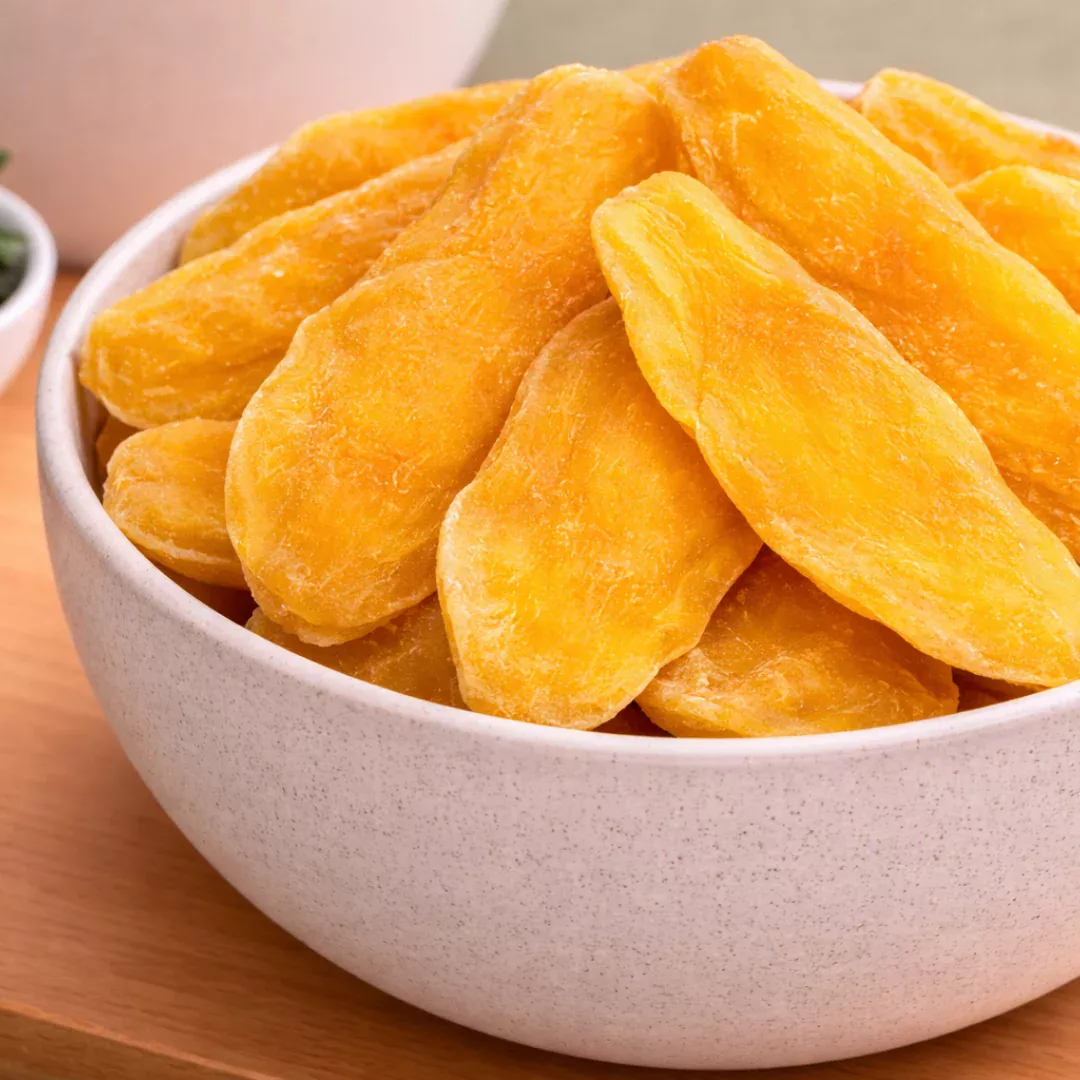
Texture is difficult to communicate through a static product description.
Words such as:
can mean different things to different consumers.
Video helps solve that problem.
When someone bends a slice of soft dried mango, pulls it gently, or bites into it, viewers can immediately get a better idea of the texture.
This makes mango particularly suitable for close-up content.
A viewer can see whether the slice is:
For snack brands, this type of visual demonstration can be more engaging than simply placing the pouch on a table.
Some foods produce an obvious visual reaction when eaten.
Crispy snacks create a crunch.
Stretchy foods create a pull.
A chewy dried mango slice creates a slower, more visible bite.
The consumer bites into the slice, pulls it away, and begins chewing.
That movement helps communicate the product experience.
For short-form content, a simple sequence can work well:
Open → Pick up → Bend → Bite → Show texture
The video does not need complicated editing.
The product itself provides the movement.
Food content is highly visual, and color plays an important role.
Soft dried mango commonly has yellow, golden, or orange-yellow tones depending on:
This warm color can stand out clearly against simple backgrounds such as:
For photography or video, a simple background can help make the mango the focal point.
Natural color variation should be expected because mango is an agricultural product.
For commercial orders, appearance should be evaluated against the agreed specification or approved sample.
Piece size matters when creating product content.
Larger dried mango snack slices are easier to:
They also communicate the fruit origin more clearly than very small pieces.
For private-label brands, large or visually consistent slices may therefore be useful when product appearance is an important part of the positioning.
However, the best cut depends on the intended market.
Some brands may prefer:
There is no universal best format.
One of the easiest ways to demonstrate soft dried mango is simply to pull a slice apart.
This can show:
It also gives viewers a closer look at what they would actually be eating.
For brands, this type of video can help answer an important customer question without using many words:
“Is it actually soft?”
The visual should reflect the real product rather than being exaggerated.
Food videos do not always require narration.
A simple close-up video may focus on:
The natural sound of the package and the eating experience can become part of the content.
Because soft dried mango is chewy rather than crispy, the sensory effect will be different from chips.
That difference can actually help the product stand out.
Instead of emphasizing a loud crunch, the content can focus on:
softness + flexibility + chewiness.
Another advantage of chewy dried mango is that the product itself can be the main visual.
You do not necessarily need:
A clean wooden bowl, a simple plate, or the open pouch may be enough.
This is useful for brands producing content regularly because the concept is easy to repeat.
Different videos can focus on:
A simple first-person question can make content easier to click:
“What does soft dried mango actually taste like?”
or:
“How chewy is this mango?”
The viewer then sees the answer visually.
This style can work particularly well for consumers who have never tried the product before.
Instead of making exaggerated claims, brands can simply show:
This creates a more straightforward product demonstration.
Comparison videos are another easy content format.
For example:
Soft dried mango vs crispy fruit chips
The focus should be on differences in:
rather than claiming that one product is better, healthier, or more nutritious.
Another possible comparison is:
Thick slices vs thin slices
or:
Whole slices vs bite-size pieces
These formats help consumers understand product options quickly.
Not every piece of mango will have exactly the same:
Natural variation is normal.
For social content, this can make the product look less artificial and more recognizably fruit-based.
However, B2B buyers still need clearly agreed quality standards.
Commercial acceptance should be based on:
rather than a social media image alone.
Another simple format is everyday snack content.
A creator may show soft dried mango in:
This places the product into a realistic consumption occasion.
For B2B brands, this type of content can also demonstrate potential positioning.
For example:
Retail snack → individual pouch
Gift product → premium box
Travel snack → compact packaging
Café snack → small display pack
The pouch itself also matters.
A simple package-opening sequence can create an effective introduction:
For private-label brands, this makes packaging design part of the overall experience.
A clear front panel can help consumers identify:
without overcrowding the design.
When producing short videos for soft dried mango, avoid covering the product with too much text.
Simple phrases are usually enough:
“Soft Dried Mango”
“Look at that texture”
“Chewy mango moment”
“Would you try this?”
or:
“First bite”
Let the product carry most of the visual story.
A simple short-form video could follow this structure:
Show the pouch and a close-up of the mango.
On-screen text:
“How chewy is soft dried mango?”
Open the package and pull out one large slice.
Slowly bend or gently pull the mango slice.
Take a bite and show the texture clearly.
Show the inside of the mango slice.
Display:
“Would you try it?”
or for B2B:
“Looking for Vietnamese Soft Dried Mango?”
This type of video can be reused for:
For importers and private-label snack brands, appearance matters because consumers often see the product online before trying it.
Useful product characteristics to evaluate include:
These characteristics influence both eating experience and marketing presentation.
A viral-looking video should never replace technical evaluation.
B2B buyers should still review:
A beautiful mango slice on social media does not prove that every production lot will be identical.
Natural variation and manufacturing tolerances must be considered.
Texture descriptions are subjective.
One buyer’s definition of “soft” may be different from another buyer’s expectation.
The same applies to:
For this reason, physical sample approval is important.
A sample allows buyers to evaluate the real product before confirming the commercial specification.
A product may look natural and fruit-based, but visual appearance should not be used to imply unsupported:
Any such statements should be based on appropriate testing and applicable labeling regulations.
For viral content, focusing on:
texture + color + taste experience
is usually enough.
Its flexible slices, bright color, and visible chewy texture make it easy to demonstrate through close-up shots.
No. Texture can vary depending on fruit, processing, formulation, moisture condition, and product specification.
A simple 10–30 second format such as Open → Bend → Bite → Close-Up can show the product clearly.
Large slices can create strong visual impact, but the best cut depends on the target product and customer requirements.
Yes, depending on supplier capability and agreed product, packaging, and commercial requirements.
Soft dried mango combines several characteristics that work well in modern food content:
bright color + flexible slices + visible texture + a satisfying first-bite moment.
Unlike products that require a long explanation, chewy dried mango can communicate much of its sensory experience through a short video.
For brands, the most effective content does not need to overpromise.
Simply show:
Open → Bend → Bite → Texture
and allow consumers to see the product for themselves.
For B2B buyers, visual appeal should then be supported by the essentials:
approved sample + agreed specification + consistent quality requirements.
That combination helps turn an attractive dried mango snack into a product concept that works both on screen and in the market.
Abimex Group supplies Vietnamese soft dried mango for international importers, distributors, retailers, foodservice buyers, and private-label projects.
Buyers can contact us to discuss:
Contact Abimex Group to discuss Vietnamese soft dried mango for your snack and private-label product line.