
CASHEW NUT SHELL OIL

Choosing a reliable tapioca cat litter supplier involves much more than comparing product prices.
For importers, distributors, pet retailers, and private-label brands, the right supplier should be able to support consistent product quality, suitable packaging, clear documentation, and practical communication throughout the sourcing process.
Tapioca-based cat litter is increasingly being explored as a plant-based option for modern pet-care product lines. However, not every product performs the same way.
Differences in:
can influence the final customer experience.
That is why professional buyers should evaluate the product as a complete system rather than purchasing based only on appearance or price.
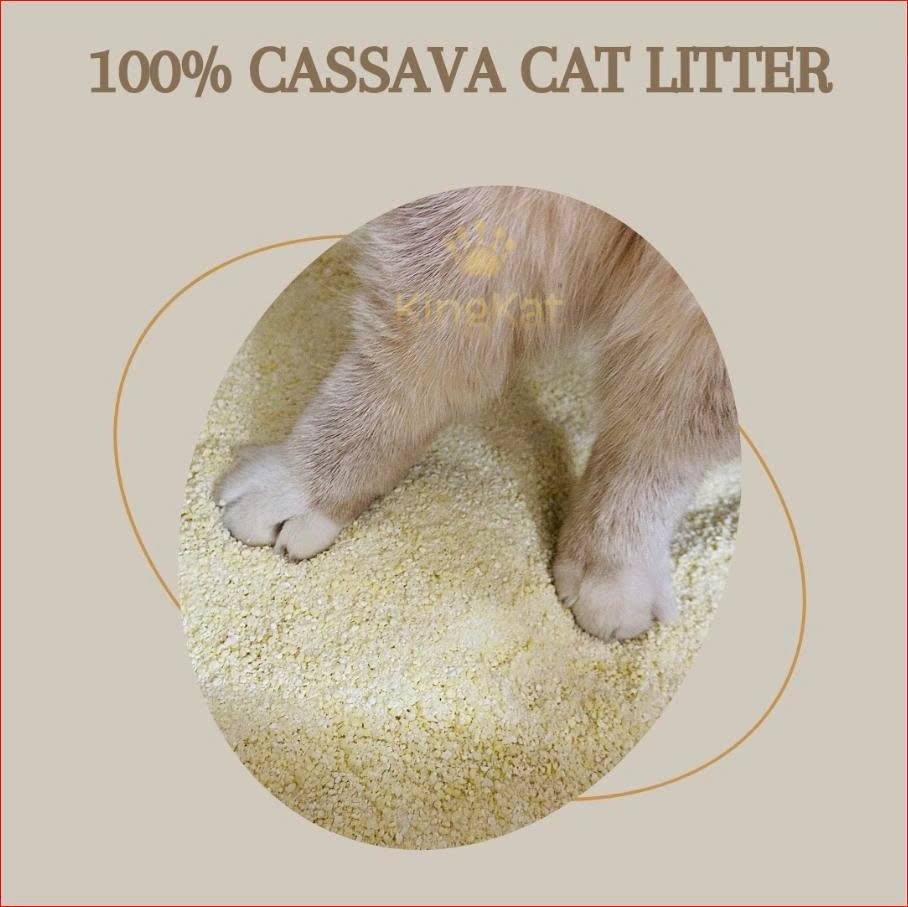
Consistency is one of the most important factors when selecting a tapioca cat litter supplier.
A sample may look good, but commercial buyers need to consider whether future production can maintain similar characteristics.
Important areas to observe include:
Natural and plant-based raw materials may show some variation, so buyers should define realistic acceptance criteria.
A clearly agreed specification is more useful than relying on subjective descriptions such as “premium quality” or “very good clumping.”
Clumping is one of the central performance characteristics of many cat litter products.
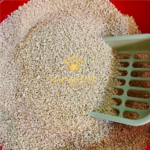
When testing tapioca cat litter, buyers can observe how the product responds after contact with moisture.
Useful questions include:
There is no universal clumping standard that fits every pet brand.
Some customers may prefer firmer clumps, while others may prioritize faster formation or easier scooping.
The target should therefore be defined according to the intended product positioning.
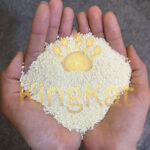
Particle size influences several aspects of the user experience.
It may affect:
A professional clumping cat litter supplier should be able to explain the intended particle characteristics of the product.
Buyers should evaluate not only the average granule size but also whether the product contains excessive:
Consistency can be particularly important for brands that want the same product experience across multiple shipments.
Dust is another common concern in cat litter sourcing.
However, buyers should distinguish between:
low dust and dust-free.
It is generally safer to evaluate dust as a performance characteristic rather than assume any litter produces absolutely no dust.
Dust can be affected by:
During sample testing, buyers may evaluate the product when:
The same assessment should ideally be repeated after the product has been transported.
Plant-based litter products should be stored appropriately.
Exposure to excessive moisture may affect product condition before use.
A supplier should provide appropriate storage instructions for the specific product.
In general, commercial buyers should consider:
Importers should also consider the conditions the product may experience during:
Product performance should not be evaluated independently from storage and logistics.
Different markets may prefer different product concepts.
Some buyers may request scented tapioca cat litter, while others may prefer an unscented version.
If fragrance is used, buyers should discuss:
A strong fragrance should not automatically be treated as evidence of better odor management.
Odor management depends on the full litter system, including:
Brands should avoid making absolute claims that the product will completely eliminate odor.
For private-label buyers, packaging is not simply decoration.
It affects:
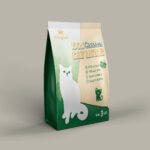
A professional tapioca cat litter supplier should be able to discuss available packaging formats according to project requirements.
Potential considerations include:
Actual packaging capabilities should always be confirmed before the buyer finalizes artwork.
A supplier may be capable of producing litter but not necessarily prepared for complex private-label programs.
Before placing a branded order, buyers should confirm the workflow for:
The buyer should also confirm applicable regulatory and labeling requirements in the destination market.
Private-label projects usually require more coordination than standard bulk orders.
A serious B2B sourcing decision should be supported by technical documentation.
The buyer may request documents such as:
The exact documents available will vary by supplier and market.
The specification should help both parties define the agreed product rather than relying only on the physical sample.
A product sample is an important part of the evaluation process.
Buyers can test:
For a professional evaluation, testing should reflect the intended use as closely as possible.
If the product will be marketed for a particular litter-box system, for example, the buyer should test it with that type of equipment before making compatibility claims.
A supplier should not automatically claim universal compatibility with every litter box or automatic cleaning device.
One sample provides useful information, but it does not necessarily demonstrate long-term production consistency.
Before scaling a project, professional buyers may also want to evaluate:
This helps identify differences between laboratory-style samples and commercial production.
Communication quality is often overlooked during supplier selection.
A good B2B partner should communicate clearly about:
Fast replies alone are not enough.
Accurate replies are more important.
If a supplier makes absolute claims without technical support, buyers should ask for clarification.
Private-label cat litter projects may involve different commercial requirements depending on:
Buyers should therefore request project-specific confirmation instead of assuming one standard MOQ applies to every configuration.
The same applies to:
These should be confirmed in the quotation or contract.
A lower unit price does not necessarily mean a lower total sourcing cost.
Buyers should consider:
A sourcing problem discovered after goods reach the destination market can be significantly more difficult to manage than a small price difference during quotation.
Professional procurement therefore focuses on total value and supply reliability.
Marketing claims should be based on evidence.
Buyers should be cautious with statements such as:
Real-world performance can vary with:
Accurate communication helps build stronger long-term customer expectations.
Cat litter can occupy significant shipping volume.
Packaging dimensions and loading configuration can therefore influence logistics.
Before finalizing a private-label project, buyers may want information regarding:
The most visually attractive retail package may not always be the most efficient option for international shipping.
Packaging design and logistics should therefore be reviewed together.
One useful B2B approach is to establish:
Approved sample + agreed specification + packaging approval
before mass production.
This gives both buyer and supplier a clearer reference.
The approved sample may help align expectations regarding:
The written specification then provides a more formal technical reference.
Before choosing a supplier, buyers can ask:
Clear answers to these questions can help buyers compare suppliers more professionally.
A simple sourcing checklist can cover five areas:
Product
Packaging
Quality
Commercial
Logistics
This provides a more complete evaluation than price comparison alone.
Private-label pet products represent the buyer’s brand in the market.
If the litter performs inconsistently, consumers usually associate the experience with the retail brand rather than the original manufacturer.
That makes supplier selection a strategic decision.
The process should be:
Define requirements → Review specifications → Test samples → Confirm packaging → Agree commercial terms → Approve production references.
This reduces unnecessary assumptions and creates clearer expectations between both parties.
Start with product specifications and samples. Evaluate clumping behavior, particle size, dust, appearance, and the intended product positioning.
Compatibility should not be assumed. Follow the equipment manufacturer’s recommendations and test the actual litter before making compatibility claims.
Not necessarily. “Low dust” and “dust-free” are different claims, and absolute claims should require appropriate supporting evidence.
Private-label options depend on the supplier’s product and packaging capabilities. Buyers should confirm packaging, artwork, printing, MOQ, and commercial requirements for the specific project.
No. Buyers should also evaluate consistency, documentation, packaging, communication, logistics, and private-label support.
Selecting a tapioca cat litter supplier should be treated as a professional procurement process rather than a simple price comparison.
B2B buyers should evaluate:
product consistency + clumping + particle size + dust + packaging + documentation + logistics + private-label readiness.
Samples are important, but they should be supported by an agreed specification.
Marketing claims should also remain realistic and supported by actual product performance.
For importers and private-label pet brands, the strongest sourcing process is:
Define → Test → Verify → Approve → Scale.
This approach helps both buyer and supplier establish clear expectations before commercial production begins.
Abimex Group supplies Vietnamese tapioca-based cat litter for international pet-product distributors, retailers, importers, and private-label projects.
Buyers can contact us to discuss:
Contact Abimex Group to discuss tapioca cat litter for your pet-care brand or distribution market.