
CASHEW NUT SHELL OIL

White spots on soft dried mango can cause concern for buyers, distributors, retailers, and consumers because they may appear unexpectedly during storage or after opening a package. In some cases, a whitish coating may be related to crystallized sugars on the fruit surface. In other cases, white or pale growth may raise concerns about mold or another quality issue.
However, appearance alone is not enough to determine what the spots are.
A white surface deposit should not automatically be considered harmless sugar crystallization, and it should not automatically be diagnosed as mold based only on a photograph, description, or visual inspection. Product history, storage conditions, packaging integrity, sensory changes, and—when necessary—laboratory testing may all be needed to reach a reliable conclusion.
For B2B buyers, the most important approach is not to guess, but to follow a structured product-quality review.
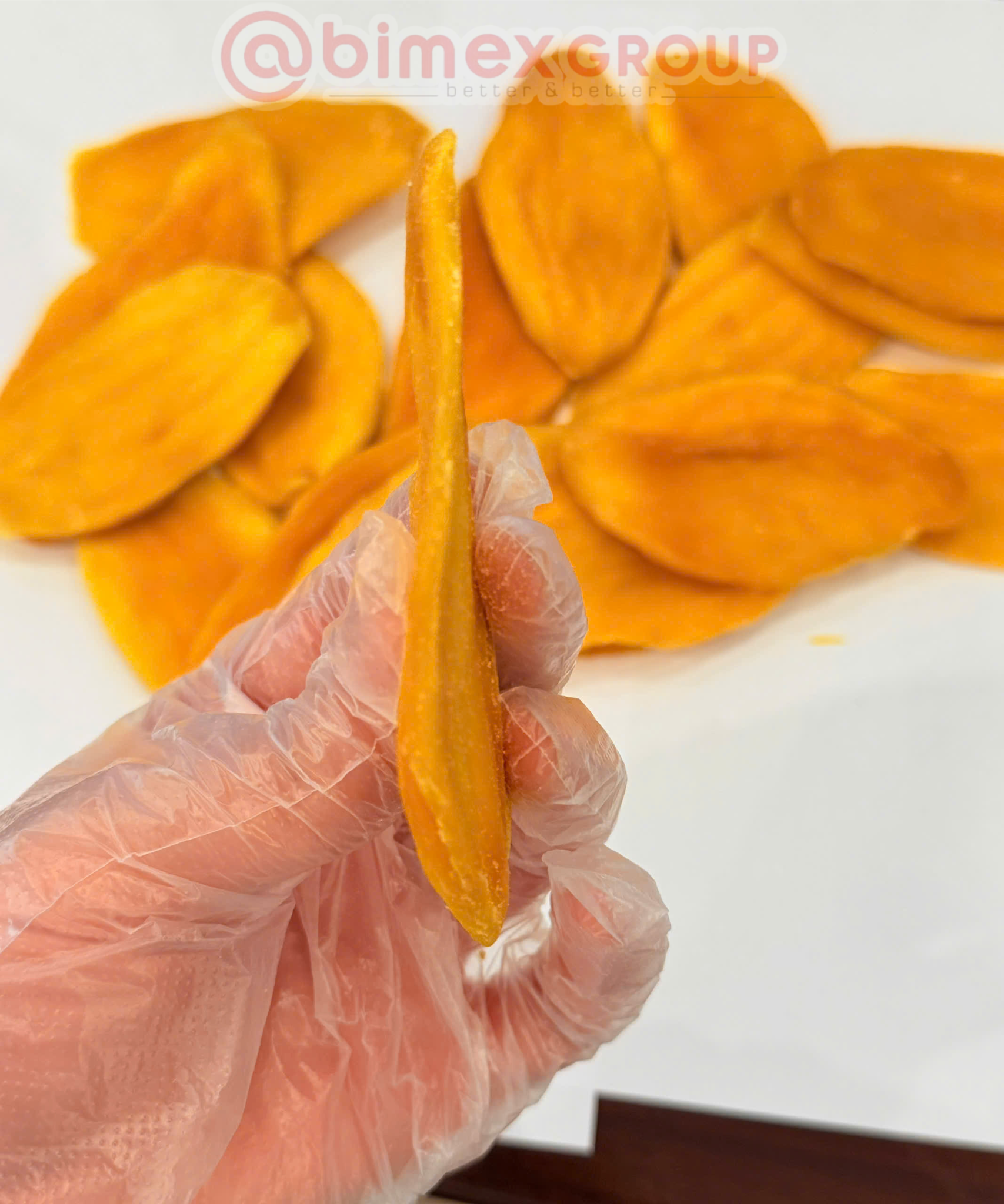
Soft dried mango naturally contains sugars, and drying concentrates many of the components already present in the fruit. Depending on the formulation, processing method, storage conditions, and movement of moisture within the product, sugars may sometimes become more visible on the surface.
At the same time, dried fruit is still a food product that can experience quality deterioration if storage, packaging, handling, or environmental conditions are unsuitable.
This is why white spots on soft dried mango should always be evaluated cautiously.
Two products may look similar while having very different causes behind the surface appearance. A powdery-looking deposit, a crystalline film, or pale spots may each require additional context before a conclusion can be made.
One possible explanation for pale or white material on dried fruit is sugar crystallization.
As fruit dries and water is removed, naturally occurring sugars become more concentrated. Depending on the product formulation and storage environment, some sugars may migrate toward the surface and form visible crystals.
This can sometimes create:
However, these characteristics are only general observations. They should not be used as a definitive test.
Even if a surface resembles sugar crystals, buyers should avoid assuming that the product is safe to consume without considering the full condition of the product.
Mold does not always look dark green, blue, or black.
Some fungal growth can initially appear pale, white, fuzzy, dusty, or patchy. This means white spots on soft dried mango cannot be classified safely based on color alone. According to the USDA Food Safety and Inspection Service, molds can take many forms and colors, so visual checks should always be supported by other evidence.
If the surface appearance is accompanied by unusual changes such as off-odors, visible fuzzy growth, unexpected softening, package swelling, moisture accumulation, or other signs of deterioration, the product should be treated cautiously.
When mold is suspected, the safer approach is to stop using or consuming the product and contact the supplier, manufacturer, or relevant quality team for further evaluation.
For commercial buyers, the affected lot may also need to be isolated while the issue is investigated.
Photos can be useful for documenting a complaint, but they are limited.
Lighting, camera quality, surface reflections, sugar crystals, fruit fibers, and packaging films can all change how a white area appears in an image.
A photograph cannot reliably confirm whether a white deposit is sugar, mold, or another substance.
For this reason, white spots on soft dried mango should not be diagnosed from pictures alone.
A supplier or quality-control team may request additional information such as:
This information can help determine what further investigation is appropriate.
Smell can provide useful information when checking dried fruit quality, although it should not be used as the only diagnostic tool.
Soft dried mango should normally have an aroma consistent with its formulation and processing style. If the product develops an unusual, musty, fermented, sour, or otherwise abnormal odor, it should not be ignored.
If white spots on soft dried mango appear together with an unfamiliar or unpleasant smell, the product should not be consumed or used until the issue has been properly assessed.
For manufacturers and distributors, unusual odor can be a reason to quarantine the affected product and contact the supplier for guidance.
Packaging is one of the first areas buyers should review when investigating a dried-fruit quality concern.
Look for signs such as:
A package that has lost its integrity may expose the product to environmental conditions that were not intended during production and storage.
However, intact packaging does not automatically prove that a product is free from a quality issue. It is simply one part of the investigation.
Storage history can provide valuable context when white spots on soft dried mango are reported.
Buyers should review where the product was stored, how long it had been opened, whether it was resealed correctly, and whether it was exposed to heat, humidity, or repeated handling.
For bulk or foodservice packs, opening and closing the packaging repeatedly can create different conditions from those of the original sealed product.
For retail products, storage after purchase may also differ significantly from controlled warehouse conditions.
The goal is not to assign blame, but to understand whether environmental exposure may have contributed to the product change.
For B2B buyers, an approved sample can be very useful when investigating surface changes.
If the commercial batch looks noticeably different from the original approved product, that difference should be documented.
Comparison points may include:
An approved reference sample does not replace laboratory testing, but it can help quality teams identify whether the reported condition represents normal product variation or an unexpected change.
In some cases, visual and sensory checks will not be enough to identify the cause.
If there is genuine concern about microbial growth or contamination, laboratory testing may be necessary.
The appropriate test method should be selected by a qualified laboratory, manufacturer, or food-safety professional based on the nature of the concern.
Importantly, there is no reliable home test that can universally distinguish sugar crystals from mold in every dried mango product.
This is another reason why buyers should avoid making a safety decision from appearance alone.
When white spots on soft dried mango appear in a commercial shipment, a structured response can help avoid unnecessary assumptions.
A useful process may include:
The exact response should follow the buyer’s internal food-safety procedures and applicable market requirements.
The main takeaway is that white spots on soft dried mango can have more than one possible explanation.
Sugar crystallization may create a pale or whitish appearance, but mold or other product-quality issues can also present with light-colored surface changes. Without sufficient evidence, buyers should not assume that a white deposit is harmless.
Likewise, not every white spot automatically means mold.
A careful evaluation should consider appearance, smell, texture, packaging, storage history, batch information, supplier feedback, and laboratory testing where appropriate.
When mold is suspected, when the product has an unusual odor, or when its condition is uncertain, the safest approach is to stop using the product and contact the supplier or manufacturer for guidance.
Understanding white spots on soft dried mango is part of a broader quality-control process that includes product specifications, packaging, storage, sensory evaluation, and supplier communication.
Abimex Group supports international B2B buyers sourcing soft dried mango and other processed fruit products for retail, wholesale, private-label, snack, and food-manufacturing applications.
From product specifications and sample discussions to packaging requirements, documentation, and export coordination, Abimex Group works with buyers to support reliable sourcing for different markets.
Contact Abimex Group to discuss your soft dried mango requirements, packaging preferences, product specifications, and sourcing needs.