
CASHEW NUT SHELL OIL

The growing use of automatic litter boxes has created a new question for pet brands: can plant-based litter products, including tapioca cat litter, work effectively with automated cleaning systems?
The answer depends on more than the raw material.
Before promoting a tapioca cat litter automatic litter box combination, pet brands should evaluate several physical characteristics of the litter and compare them with the equipment manufacturer’s requirements.
Three areas are especially important:
A litter may perform well in a standard litter tray but behave differently inside a rotating, sifting, or self-cleaning unit.
For that reason, brands should avoid claiming universal compatibility unless the product has been tested with the relevant equipment.
Users should always follow the instructions provided by the automatic litter box manufacturer.
Traditional litter boxes rely mainly on manual scooping.
Automatic systems may involve:
These mechanisms can interact differently with litter particles.
For example, a product that forms very soft clumps may break during movement.
A product with particles that are too large or too small may not pass through a sifting system as intended.
This is why a clumping cat litter designed for general use should not automatically be assumed to work in every automatic box.
Clumping is one of the most important factors.
Automatic litter boxes often rely on the litter forming a mass that can be separated from clean particles.
A suitable clumping cat litter should generally create clumps that are cohesive enough to remain together during the cleaning cycle.
However, clumping behavior can vary depending on:
Pet brands should test the actual product under realistic use conditions.
If a clump is too weak, it may break into smaller pieces during the automatic cleaning cycle.
This can make separation less efficient.
On the other hand, a very hard or oversized clump may also behave differently depending on the machine design.
There is no universal “best” clump for every device.
The goal is to confirm that the litter forms a stable enough clump for the intended system.
Some automatic boxes begin cleaning after a programmed delay.
This means the litter may need enough time to form a stable clump before the cycle starts.
If the machine starts too quickly relative to the litter’s clumping behavior, the result may be different from manual use.
Brands should therefore evaluate the interaction between:
Again, the equipment manufacturer’s recommendations should take priority.
Dust is another important consideration.
Many consumers look for low dust cat litter, especially for indoor use.
However, “low dust” should not be treated as the same as “dust-free.”
No litter should be described as producing zero dust unless this is supported by appropriate testing.
Automatic litter boxes may create additional movement compared with manual trays.
This can include:
Such movement may affect how fine particles behave.
Brands should evaluate:
The result may depend on both the litter and the equipment.
A product that appears low-dust during manual pouring may behave differently after repeated mechanical movement.
Therefore, dust performance should be assessed under realistic conditions.
Marketing language should remain accurate.
Instead of saying:
“No dust”
a brand may use a more careful description such as:
only if that claim is supported by product testing.
For B2B buyers, dust level should be discussed as a measurable quality characteristic rather than a guaranteed absolute.
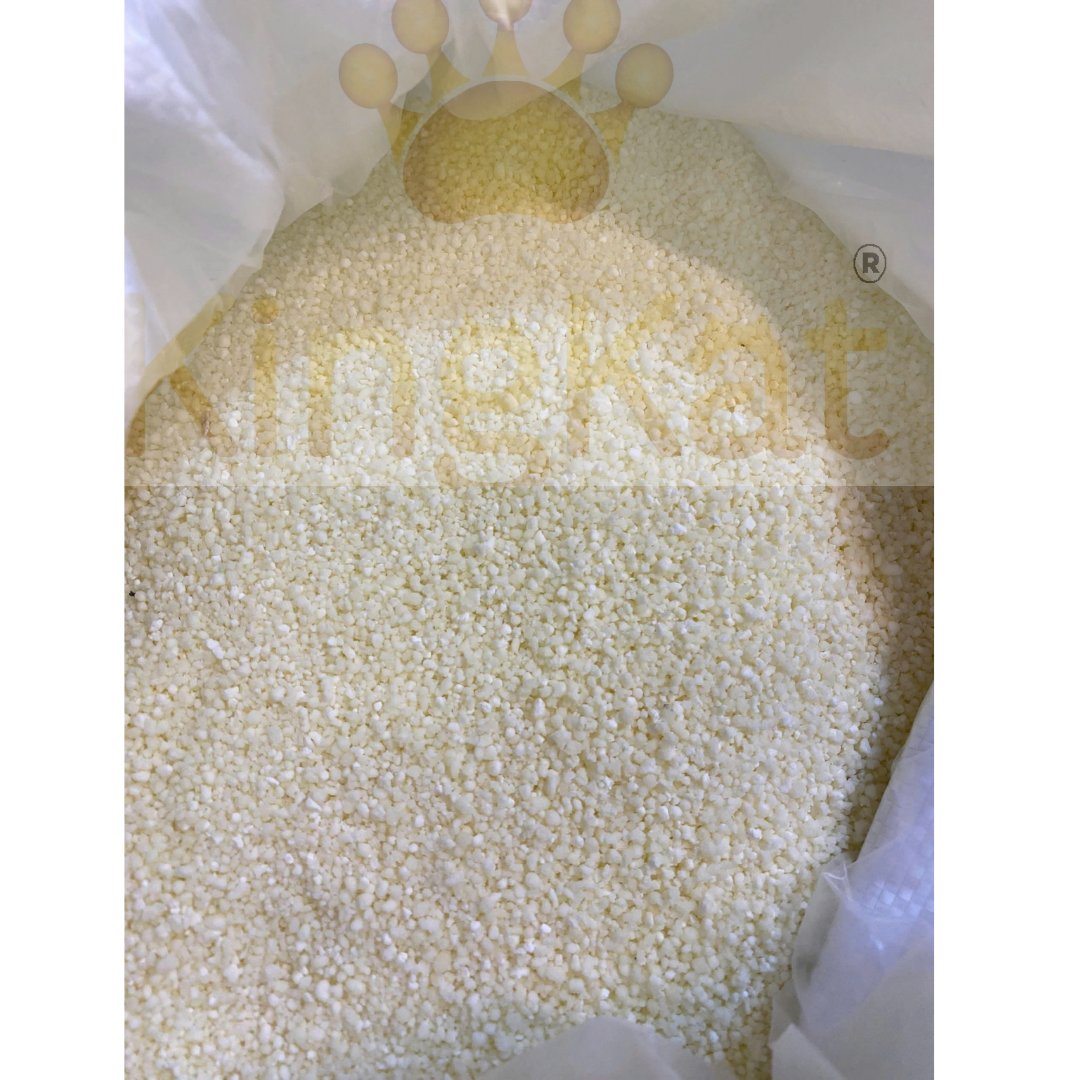
Particle size can strongly affect automatic litter box performance.
Different devices may use:
The litter needs to move through these components as intended.
Particles that are too large may not pass through certain openings.
Particles that are too fine may move through too easily or create more dust.
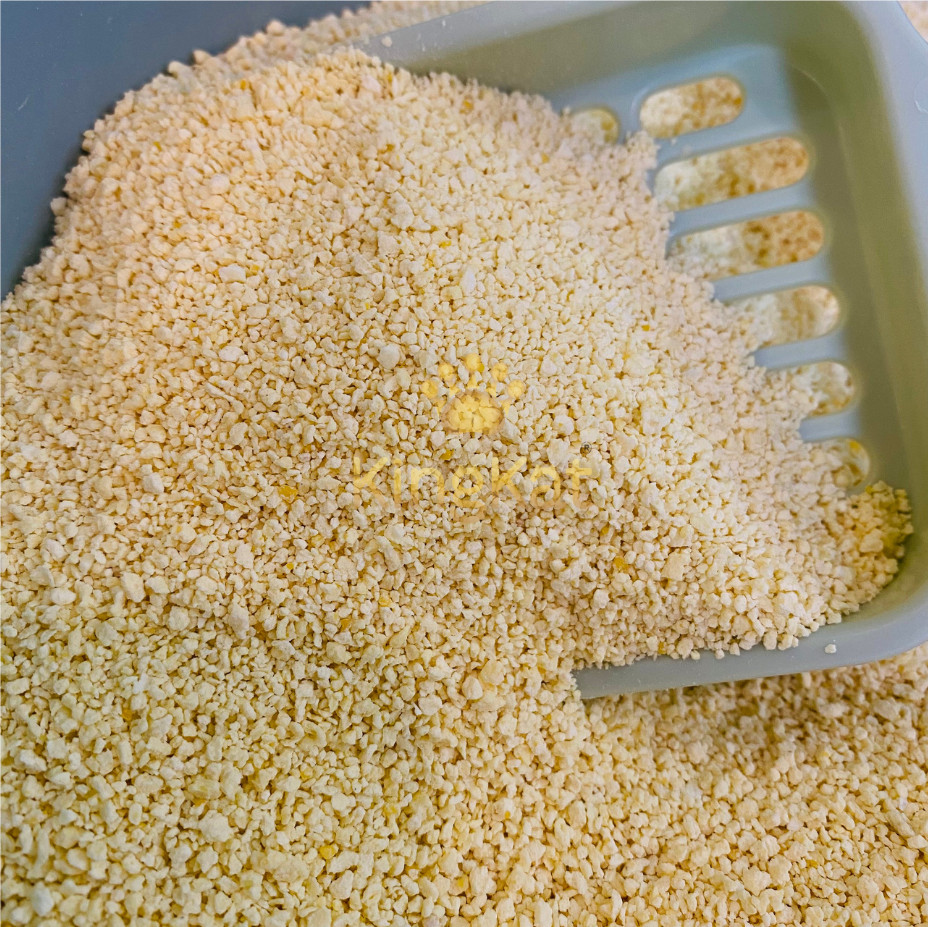
This is why particle size should be one of the first specifications reviewed for a tapioca cat litter automatic litter box project.
It is not enough to look only at average particle size.
A litter may contain:
If the particle size distribution is inconsistent, automatic separation performance may also become inconsistent.
Pet brands may therefore want to evaluate:
The target should be matched to the intended equipment design.
Particle shape can also influence how litter moves.
Granules may be:
These shapes can affect:
For automatic systems, consistent particle shape may help create more predictable behavior.
However, actual performance still needs to be tested.
A litter should not only clump well; it should also move through the machine properly.
Automatic boxes may:
Pet brands should observe whether the litter:
This type of testing can reveal issues that are not visible in a standard litter box.
One cleaning cycle may not be enough.
Repeated mechanical movement can change particle condition over time.
For example, some granules may gradually break into smaller pieces.
This can influence:
Therefore, brands should evaluate the litter after repeated use rather than testing only a fresh sample.
Tapioca-based litter can respond to moisture because of its plant-based starch composition.
This moisture response is part of what supports clumping.
However, the same property means brands should evaluate how clumps behave inside automatic equipment.
Important questions include:
These factors depend on the actual formulation.
Unused litter should be stored properly.
General storage guidance may include:
If litter absorbs moisture before use, its behavior may change.
This could influence:
For automatic litter box applications, consistent storage can help maintain consistent performance.
Not all tapioca-based litters have the same formulation.
Differences may include:
As a result, one tapioca litter may behave differently from another.
Pet brands should evaluate the exact product they plan to sell.
Automatic litter boxes also vary significantly.
Different machines may use different cleaning mechanisms.
One system may rely on a rotating drum.
Another may use a rake.
Another may use a sifting tray.
Because of these differences, compatibility with one machine does not automatically imply compatibility with another.
This is an important limitation for B2B marketing.
Before recommending a litter for use with an automatic box, review the equipment manufacturer’s instructions.
The manufacturer may specify:
These instructions should take priority over general recommendations.
If the manufacturer does not clearly approve a certain litter type, brands should avoid making unsupported compatibility claims.
A common marketing risk is claiming that a litter:
“will not jam”
or
“will never cause machine problems.”
Such statements are too absolute unless supported by extensive testing across the relevant device.
Machine performance depends on:
Therefore, brands should use more cautious language.
Even a compatible litter may not perform correctly if the machine is overfilled or underfilled.
Automatic box manufacturers often provide fill recommendations.
Pet owners should follow those instructions rather than applying a universal litter depth.
Too much litter may affect movement.
Too little may reduce clumping coverage.
The correct level depends on the device.
Automatic litter boxes still require maintenance.
Owners may need to:
A litter should not be expected to compensate for poor machine maintenance.
Pet brands should avoid suggesting that a particular litter eliminates the need for cleaning.
Scent is another variable.
A scented formulation may behave similarly to an unscented version in some cases, but added ingredients can affect the final product.
For automatic box applications, the key considerations remain:
Scent should be treated separately from mechanical compatibility.
A low dust cat litter can be attractive for automatic boxes because the machine may move litter frequently.
However, dust should still be evaluated under actual operation.
Testing can include:
This gives brands a more realistic view of performance.
When sourcing tapioca litter for automatic-box applications, pet brands may want to ask about:
The supplier should also understand that the product may be used in automatic equipment.
This helps guide sample selection and product testing.
Before making compatibility claims, brands should test the actual litter.
A useful evaluation can include:
Testing should be completed with the actual device or equipment type being considered.
Even if the litter performs well in one automatic box, that does not prove universal compatibility.
A different machine may have:
Therefore, test results should be described accurately.
For example:
“Tested with selected equipment under specific conditions”
is more accurate than:
“Works with all automatic litter boxes.”
If a brand wants to communicate potential automatic-box use, packaging should remain cautious.
Useful information may include:
The label may also advise users to:
“Check the automatic litter box manufacturer’s instructions before use.”
This helps reduce the risk of overpromising compatibility.
Consumers may assume that any clumping litter will work in any automatic box.
That is not always the case.
Pet brands can help by explaining that compatibility depends on:
Clear information can reduce confusion.
Claims such as:
should be avoided unless they are fully supported.
These statements can create unrealistic expectations.
A more responsible approach is to describe tested characteristics and advise customers to follow device instructions.
Before recommending tapioca litter for automatic boxes, pet brands can review:
Does the litter form cohesive clumps under realistic use?
How much fine dust appears during pouring and repeated cycles?
Does the particle range match the equipment requirements?
Does the litter move correctly during the cleaning cycle?
Do particles break down significantly over time?
Does the device manufacturer allow this litter type?
This checklist can help brands avoid making unsupported claims.
Marketing should follow technical validation.
If a brand promotes compatibility before testing, it may create:
A better process is:
Select litter → Review specifications → Test with intended equipment → Document results → Develop accurate marketing claims.
This approach is more reliable for both brands and consumers.
A tapioca cat litter automatic litter box combination can be considered, but compatibility should never be assumed.
Pet brands should focus on three primary characteristics:
Other factors such as flow, repeated mechanical movement, moisture interaction, fill level, and device maintenance also matter.
A clumping cat litter that performs well in a traditional tray may behave differently in an automatic system.
Similarly, a product marketed as low dust cat litter should still be evaluated during actual machine operation.
Most importantly, users should follow the automatic litter box manufacturer’s instructions.
Pet brands should avoid claiming that a product is compatible with every machine, completely dust-free, or guaranteed not to cause mechanical problems unless these claims are supported by appropriate testing.
The safest approach is simple:
Check the device requirements → Test the actual litter → Evaluate clumping, dust, and particle size → Communicate only verified results.
Abimex Group supplies Vietnamese tapioca-based cat litter for international distributors, pet retailers, and private-label projects.
Buyers can contact us to discuss:
Contact Abimex Group to discuss tapioca cat litter for your pet-care product line and application testing requirements.