
CASHEW NUT SHELL OIL

Desiccated coconut quality depends on much more than whether the product looks white and smells like coconut. For importers, distributors, food manufacturers, and private-label buyers, several factors can influence how the ingredient performs during production and how it appears, tastes, and feels in the final product.
Raw coconut condition, maturity, particle size, moisture, fat characteristics, processing, packaging, storage, and batch consistency can all play a role.
This is why evaluating desiccated coconut should involve more than checking one specification or looking at a sample. A product may appear suitable at first glance but behave differently when it is mixed, baked, coated, stored, or transported.
Understanding the main quality factors can help buyers ask better questions and compare suppliers more effectively.
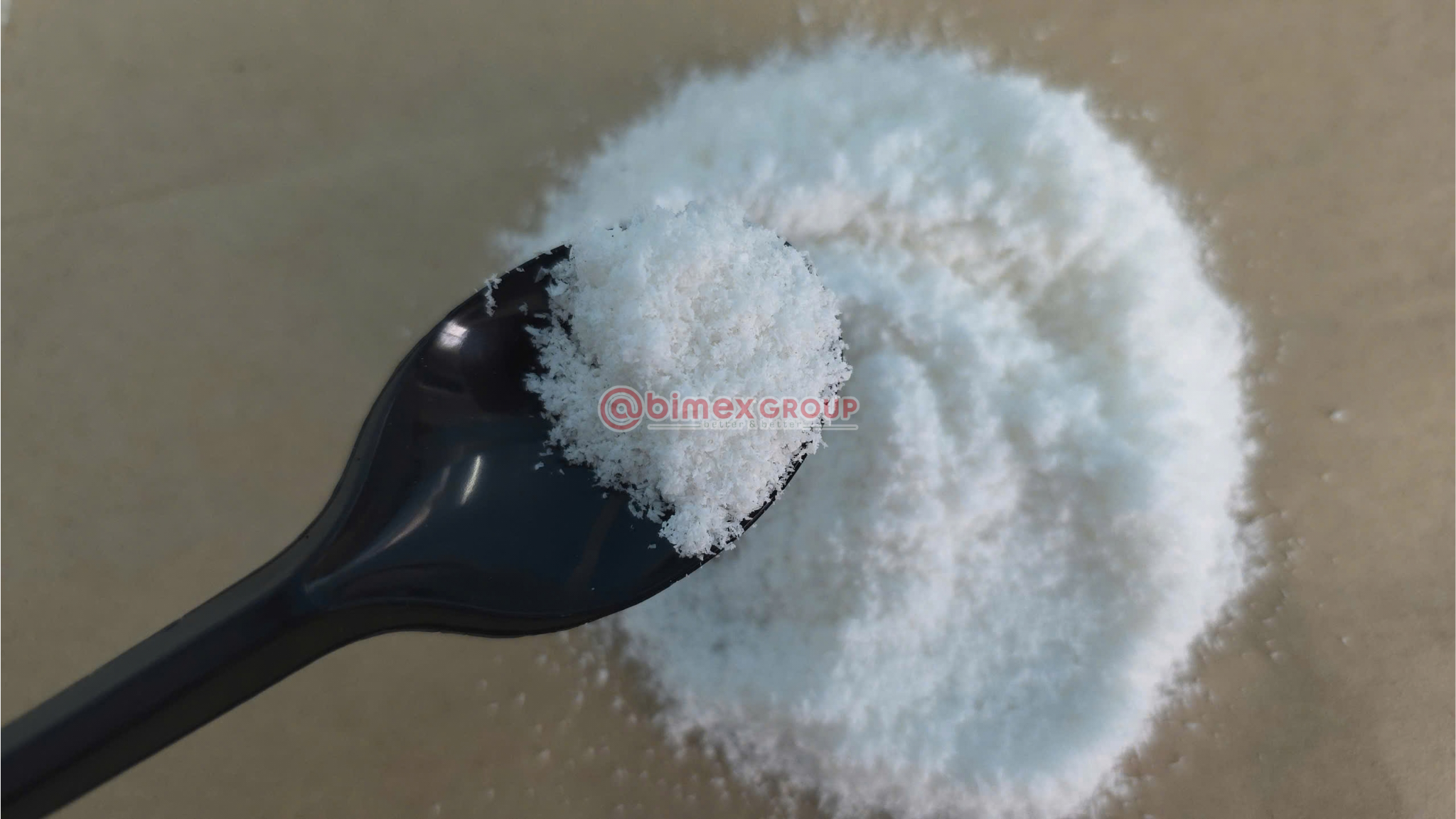
The characteristics of the raw coconut create the foundation for the finished ingredient.
Processors generally need coconuts at an appropriate stage of maturity for producing desiccated coconut. Differences in raw material condition can influence characteristics such as texture, aroma, color, and fat-related properties.
Because coconut is an agricultural product, some natural variation is expected. Growing conditions, harvest timing, handling, and storage before processing may all influence the raw material.
For buyers, this means desiccated coconut quality begins before the coconut reaches the production line.
A reliable sourcing and raw-material selection process can therefore be important for maintaining consistency across commercial batches.
Desiccated coconut is available in different particle sizes and cuts.
Depending on the supplier, products may be described using terms such as fine, medium, or other grade classifications. However, grade names alone may not always tell buyers exactly how the particles are distributed.
Particle size can influence:
A finer grade may blend more easily into certain products, while larger particles can create a more visible coconut identity and stronger bite.
Neither is automatically better.
The most suitable grade depends on the application, whether the coconut is being used in bakery products, confectionery, cereal bars, coatings, fillings, snack mixes, or another food format.
Moisture is another important factor in desiccated coconut quality.
It can affect texture, storage behavior, flow, and how the coconut interacts with surrounding ingredients.
For example, a coconut ingredient used in a dry snack mix may behave differently from the same ingredient used in a moist filling or syrup-containing cereal bar.
Buyers should therefore review the agreed moisture specification while also considering how the product will be used.
It is also important to remember that moisture content alone does not provide a complete picture of food stability or texture. Other product characteristics and storage conditions should also be considered.
Rather than relying on a universal moisture number, buyers should work from the supplier specification and the requirements of their specific application.
Coconut naturally contains fat, which contributes to its characteristic richness, flavor, and mouthfeel.
Different desiccated coconut products may have different fat-related characteristics depending on the raw material and processing method.
For food manufacturers, this can influence how coconut performs alongside ingredients such as chocolate, bakery fats, nuts, cereal, sugar systems, or fillings.
A product with a different fat profile may not necessarily be higher or lower quality. It may simply create a different sensory result.
This is why buyers should evaluate fat-related specifications in the context of their finished product rather than using them as a stand-alone quality ranking.
Color is one of the first characteristics buyers notice.
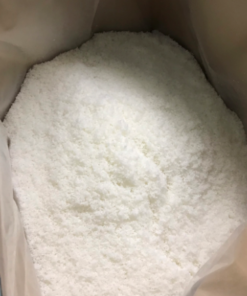
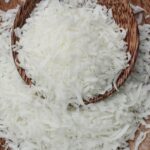
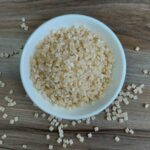
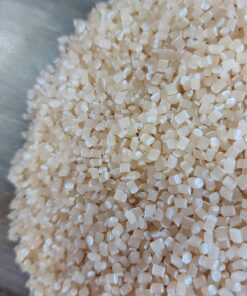
Desiccated coconut is generally expected to have a natural white to creamy-white appearance, although some variation may occur depending on raw materials and processing.
Unexpected yellowing, excessive browning, dark particles, or significant differences from an approved sample may require further investigation.
However, color alone cannot identify the exact cause of a quality issue.
Changes may relate to multiple factors, including raw material condition, processing, storage, oxidation, heat exposure, or other circumstances.
When assessing desiccated coconut quality, buyers should compare color together with aroma, texture, packaging condition, documentation, and product history rather than drawing conclusions from appearance alone.
A good desiccated coconut product should have a sensory profile that matches the agreed product specification.
Because coconut aroma can be influenced by processing and storage, buyers should not evaluate the ingredient only by appearance.
Exposure to oxygen, heat, unsuitable storage conditions, or strong surrounding odors may affect aroma over time.
This is particularly important because coconut can be stored or transported alongside other food ingredients and materials.
If packaging protection is insufficient, unwanted odors can potentially influence the sensory experience.
For this reason, aroma evaluation should be part of sample approval and routine quality checks.
Packaging does more than make the product easier to transport.
It also helps protect the ingredient from external conditions that may affect quality.
Depending on the supply chain, packaging may need to help protect against:
Seal integrity is particularly important during long-distance transport and warehouse storage.
A product that leaves the processing facility in good condition can still be affected if packaging is damaged during handling or if storage conditions are unsuitable.
This is why desiccated coconut quality should be considered across the entire supply chain, not only at the point of production.
Desiccated coconut should generally be stored according to the manufacturer or supplier’s recommended conditions.
Heat, humidity, strong odors, damaged packaging, and poor warehouse practices may influence product condition over time.
For distributors and food manufacturers, good inventory management is also important.
Appropriate stock rotation, clean storage areas, pest-control practices, packaging inspection, and separation from strong-smelling materials can help maintain the ingredient in its intended condition.
Buyers should always follow validated storage instructions rather than assuming that the same storage approach applies to every product.
Microbiological testing can form an important part of food-safety and quality-control programs for desiccated coconut.
Depending on the product specification and destination market, buyers may review parameters such as general microbial counts, yeast and mold, or specific pathogens.
However, acceptable limits and test requirements may differ depending on the customer, market, product specification, and applicable regulations, including international food standards published by the Codex Alimentarius Commission.
For this reason, universal numerical limits should not be assumed.
A better approach is to confirm the required microbiological specification, testing method, sample basis, and relevant documentation with the supplier.
Testing should also be considered alongside broader controls such as hygiene, good manufacturing practices, food-safety systems, and supplier quality management.
For many industrial buyers, consistency is one of the most important indicators of desiccated coconut quality.
A sample may perform very well during product development, but commercial production requires similar performance across future batches.
Variation in particle size, moisture, color, aroma, or other characteristics can potentially influence:
This is why approved samples and clearly defined specifications can be valuable.
Rather than expecting every agricultural ingredient to be visually identical, buyers should define which characteristics are critical for their application and what level of variation is acceptable.
When evaluating desiccated coconut quality, buyers can look beyond price and ask suppliers about several areas:
The exact checklist should depend on the application and destination market.
A bakery manufacturer may prioritize different characteristics from a snack-mix producer, confectionery brand, or cereal-bar manufacturer.
There is no single parameter that defines desiccated coconut quality by itself.
Particle size, moisture, fat characteristics, color, aroma, microbiological controls, packaging, storage, and consistency all contribute to the overall product experience.
More importantly, a specification that works well for one food application may not be ideal for another.
For B2B buyers, the most effective approach is to combine technical specifications with physical samples, supplier documentation, and actual application testing.
Instead of asking which desiccated coconut is universally “best,” manufacturers can ask a more useful question:
Does this product consistently meet the specifications and performance requirements of our application?
That question creates a stronger foundation for supplier comparison, product development, and long-term sourcing decisions.
Understanding the factors behind desiccated coconut quality can help buyers make more informed sourcing decisions and reduce unexpected differences during production.
Abimex Group supports international B2B buyers sourcing desiccated coconut for bakery, confectionery, snacks, cereals, fillings, coatings, and other food-manufacturing applications.
From product specifications and sample discussions to packaging requirements, documentation, and export coordination, Abimex Group works with buyers to identify suitable options for different markets and applications.
Contact Abimex Group to discuss your desiccated coconut requirements, preferred grade, packaging needs, and sourcing plans.