CASHEW NUT SHELL OIL

CASHEW NUT SHELL OIL
RICE PROTEIN POWDER
RICE PROTEIN POWDER
DESICCATED COCONUT
Soft Dried Mango combines tropical flavor, convenient storage, and flexible applications, making it an attractive product for importers, distributors, food manufacturers, and retail brands worldwide. Unlike crispy fruit snacks, this product retains a soft and chewy texture that closely reflects the natural eating experience of ripe mango.
As international buyers continue to expand their tropical fruit portfolios, mango products can serve multiple market segments. They may be sold as ready-to-eat snacks, packed under private labels, used as bakery ingredients, or incorporated into cereals and snack mixes. However, choosing the right product requires buyers to evaluate more than appearance and price. Texture, flavor, moisture control, packaging, production consistency, and supplier reliability all influence long-term commercial success.
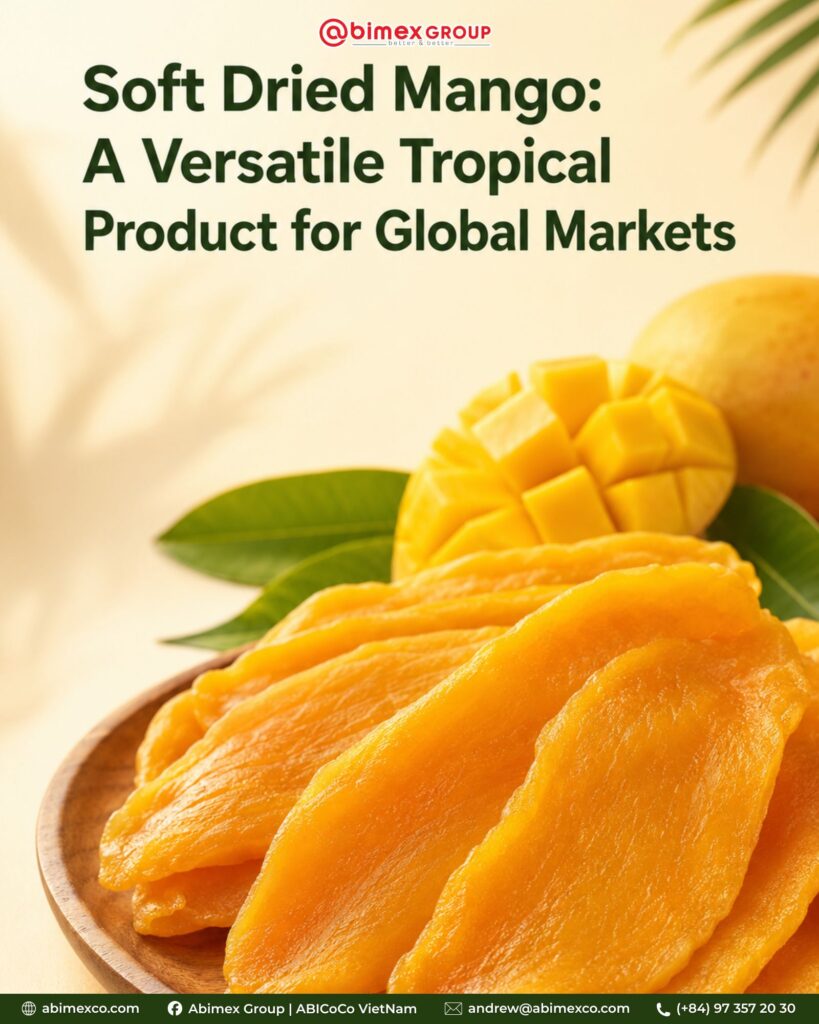
Table of Contents
ToggleSoft Dried Mango offers a distinctive balance between convenience and sensory appeal. It delivers the recognizable sweetness and aroma of mango in a format that is easier to store, transport, and distribute than fresh fruit.
For retail buyers, its bright color and tropical identity can help create an attractive product presentation. For distributors, it provides opportunities to serve supermarkets, convenience stores, specialty food shops, hotels, and food-service businesses. Food manufacturers can also use dried mango pieces as ingredients in value-added products.
Its versatility allows businesses to position it in different ways, including:
This range of applications makes it possible for buyers to serve several customer groups with one tropical fruit category.
In the retail sector, Soft Dried Mango can be packed in small consumer pouches, family-sized bags, or premium gift packaging. Resealable pouches are particularly practical because they help consumers store the product after opening while supporting convenient, on-the-go consumption.
Retail brands can also adjust the packaging design and pack size according to their positioning. A clean and simple pouch may suit health-focused stores, while colorful packaging can target mainstream snack consumers. Transparent windows may allow shoppers to see the product before purchasing, although buyers should also consider the effect of light and storage conditions on product quality.
For food manufacturers, dried mango can add sweetness, chewiness, color, and tropical character to formulated products. Depending on the intended application, buyers may request specific cuts or piece sizes. Larger slices may be suitable for direct snacking, while strips, cubes, or smaller pieces may be more appropriate for cereal, bakery, confectionery, or automated packing processes.
When selecting a cut size, buyers should consider production cost and operational requirements. Additional cutting or customized processing may increase labor requirements, affect lead time, and influence the final quotation.
When sourcing Soft Dried Mango, buyers should review the complete specification instead of evaluating samples based only on sweetness or color. Two products may look similar but perform differently during storage, transportation, and packing.
Important quality factors include:
The product should have a pleasantly soft and chewy texture without becoming excessively wet or sticky. Moisture must be controlled carefully because it affects mouthfeel, shelf stability, and performance during packing.
For buyers using automatic packing machines, free-flowing performance can be especially important. Pieces that stick together may slow production or cause inconsistent filling. Therefore, buyers should communicate their packing method to the supplier before confirming the specification.
A suitable product should maintain the recognizable flavor and aroma of ripe mango. However, the final sensory profile can vary depending on mango variety, ripeness, processing method, and formulation.
Buyers should evaluate whether the flavor suits the preferences of their target consumers instead of assuming that one standard profile will work in every market.
Natural agricultural products may show some variation in color, size, and shape. Excessively strict visual requirements can increase sorting losses and production costs. Importers should establish realistic tolerances that protect product consistency without creating unnecessary waste or pricing pressure.
Buyers should confirm whether the product contains added sugar, preservatives, or other ingredients. Requirements vary among markets and customer segments, so the agreed formulation must be clearly reflected in the specification, label, and commercial documents.
Appropriate packaging helps protect Soft Dried Mango from moisture, oxygen, contamination, and physical damage during international transportation. The right format depends on whether the product will be imported in bulk, repacked locally, or delivered as a retail-ready item.
Bulk packaging may be suitable for food manufacturers and distributors with local repacking facilities. Retail-ready packaging can reduce handling requirements for buyers that want finished products under their own brands.
When discussing OEM or private-label projects, buyers should confirm:
Packaging decisions should be made early because customized materials and printed designs can require additional preparation time. Buyers should also allow sufficient time for artwork approval, packaging production, product processing, inspection, and shipment.
Purchasing Soft Dried Mango successfully requires more than finding the lowest quotation. Mango is an agricultural product, so raw material availability, harvest timing, fruit quality, labor costs, packaging requirements, and order volume can affect both pricing and lead time.
Importers should communicate their forecast, expected shipment schedule, target pack sizes, quality requirements, and destination-market standards as early as possible. Clear planning allows the supplier to assess raw material availability and arrange production more effectively.
Samples are useful for initial evaluation, but a sample alone does not guarantee that the commercial shipment will meet every operational requirement. Buyers should approve a written specification and clarify inspection criteria before mass production. If the product will run through an automated line, a larger production trial may provide more meaningful information than a small tasting sample.
Long-term cooperation can also improve production planning. Regular forecasts and realistic purchasing schedules give both parties more time to prepare raw materials, packaging, documentation, and shipment arrangements.
A reliable supplier should be able to explain the product specification, available cuts, formulation options, packaging formats, order requirements, and production lead time clearly. Buyers should also review relevant certifications, quality-control procedures, export experience, and document-handling capabilities according to their market.
Before placing an order for Soft Dried Mango, consider asking the supplier for:
These checks help reduce misunderstandings and allow both parties to establish measurable expectations before production begins.
Soft Dried Mango offers flexible opportunities for snack distributors, food manufacturers, supermarkets, and private-label brands seeking a distinctive tropical product from Vietnam.
Abimex Group supports international buyers with product specifications, sample evaluation, bulk supply, customized packaging, and OEM or private-label solutions. We work closely with each customer to understand their intended application, target market, quality requirements, and shipment plans.
Contact Abimex Group to discuss your sourcing needs and request further information about our Vietnamese soft dried mango products.