
CASHEW NUT SHELL OIL

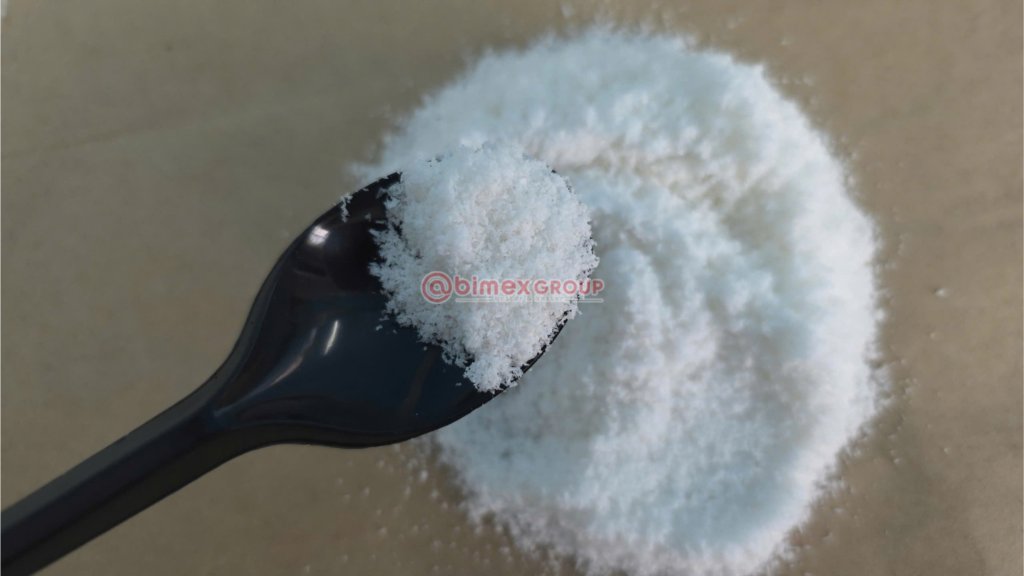
Desiccated coconut for Lamingtons may look like a simple bakery ingredient, but particle size and texture can make a noticeable difference to the finished product.
Lamingtons are widely recognized for their combination of soft cake, chocolate coating, and an outer layer of coconut. Because the coconut remains clearly visible and contributes directly to the eating experience, the choice of coconut grade matters.
A very fine coconut can create a more uniform coating. A coarser product may provide more visible texture and a stronger coconut bite. Neither option is automatically better.
The most suitable choice depends on the bakery formula, coating viscosity, desired appearance, target market, and production method.
For commercial bakeries, ingredient importers, and food manufacturers, understanding how grind size affects the product can help reduce trial-and-error during sourcing.
In many bakery applications, coconut is mixed into a dough or filling.
In Lamingtons, it is different.
The coconut is typically applied to the outside of the product, where it becomes one of the first things the consumer sees and feels.
This means desiccated coconut for Lamingtons can influence:
Because the coconut is exposed on the surface, particle characteristics may be more noticeable than in applications where coconut is blended into the recipe.
Grind generally refers to the size and structure of the coconut particles.
Commercial desiccated coconut may be supplied in different grades such as:
For Lamingtons, fine and medium grades are often the most relevant categories to discuss.
However, grade names can vary between suppliers.
One supplier’s “Fine” may not be identical to another supplier’s “Fine.”
For that reason, B2B buyers should review:
rather than relying only on the grade name.
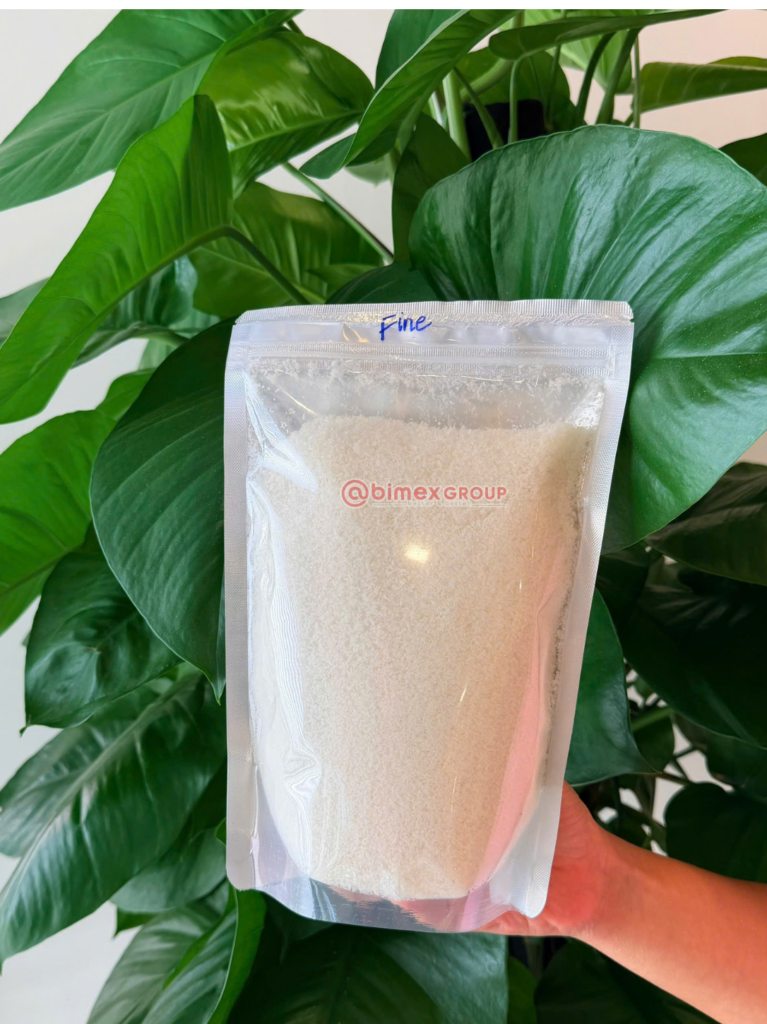
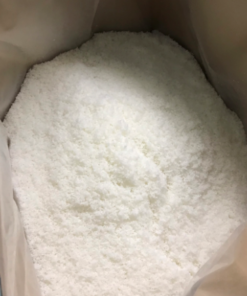
Fine desiccated coconut for Lamingtons generally consists of smaller particles.
Because the particles are relatively small, they may adhere more evenly to the chocolate or cocoa-based coating.
This can support a finished appearance that is:
Fine coconut may be attractive for industrial production where bakeries want relatively even coverage from piece to piece.
It may also create a softer coconut texture because the individual particles are less prominent during eating.
However, the actual result depends on the coating system.
If the coating is too thin, too thick, too warm, or insufficiently tacky, even fine coconut may not adhere as intended.
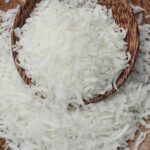
Medium-grade coconut has a more noticeable particle structure.
On a Lamington, this can create:
This may suit products where the brand wants the coconut layer to look rustic, generous, or more visually distinctive.
However, larger particles can behave differently during coating.
They may not fill small gaps as easily as fine coconut, and the final surface can appear less uniform.
Again, this is not necessarily a disadvantage.
It depends on the desired product style.
The coconut needs to remain attached to the surface after the cake is coated.
Several factors influence adhesion:
Smaller coconut particles may provide more contact points with the wet coating.
Larger particles may create a more dimensional surface but may require a coating with enough body to hold them.
This is why desiccated coconut for Lamingtons should be tested with the actual bakery formulation.
A coconut grade that works well with one chocolate coating may behave differently with another.
Particle size also affects how the coconut feels during eating.
Fine coconut may contribute:
Medium coconut may contribute:
For some consumers, a more noticeable coconut bite is desirable.
For others, a finer coating may feel smoother and more refined.
There is no universal preference.
The target market and bakery positioning should guide the decision.
Lamingtons combine several textures at once:
The contrast between these components is an important part of the eating experience.
If the coconut is too coarse relative to the cake, it may dominate the texture.
If it is extremely fine, the coconut layer may feel less distinct.
The goal is usually balance.
This is why manufacturers should evaluate the complete product rather than judging the coconut separately.
Appearance is especially important in retail bakery.
Fine coconut may create a smoother, snow-like coating.
Medium coconut may create a more textured and visibly fibrous surface.
The effect can influence how the product is perceived.
A bakery may want:
Each visual target may call for a different coconut grade.
For Lamingtons, coconut is usually highly visible.
Buyers therefore often expect a clean white to creamy-white appearance.
Color can be influenced by:
Dark specks or yellowing can become particularly noticeable on the outside of a light-colored coconut coating.
For this reason, color should be reviewed together with particle size.
Moisture content can influence how desiccated coconut behaves during handling and storage.
If the product absorbs too much moisture, it may:
A well-controlled product should remain sufficiently free-flowing for the intended bakery process.
However, moisture should always be evaluated according to the agreed supplier specification rather than assuming that “drier is always better.”
Desiccated coconut can be supplied in different fat ranges.
Higher-fat coconut generally retains more of the natural coconut oil.
This may contribute to:
For Lamingtons, where coconut is directly consumed as part of the outer layer, these sensory differences may be noticeable.
However, fat level should be chosen based on the complete recipe and target product.
It should not be selected independently from grind size.
The same particle-size considerations can apply to other bakery products.
Possible uses include:
Fine coconut may work well where even distribution is preferred.
Medium coconut may be more suitable when visible texture is desired.
The best option still depends on the application.
There is no single answer.
The choice should be confirmed through production trials.
Hand-coated Lamingtons and industrially coated Lamingtons may have different requirements.
Manual production allows operators to adjust:
Automated production may require more consistent flow and particle behavior.
For larger factories, particle uniformity can therefore become especially important.
In automated systems, coconut may need to move through:
If the product contains excessive lumps or highly inconsistent particles, it may create operational issues.
A consistent grade can help support smoother production.
This is another reason bakery manufacturers should evaluate more than appearance alone.
Even within the same nominal grade, the proportion of very fine particles can affect the finished coating.
Excess powder may:
On the other hand, an excessive proportion of large particles may reduce uniform coverage.
A balanced particle-size distribution can therefore be important for commercial applications.
Desiccated coconut is hygroscopic enough that storage conditions matter.
Packaging should help protect the ingredient from:
For export shipments, packaging quality becomes even more important because the product may travel through different climates before reaching the bakery.
The buyer should follow the supplier’s storage recommendations and keep bags properly sealed before use.
When sourcing desiccated coconut for Lamingtons, buyers should communicate more than just “Fine” or “Medium.”
Useful purchasing information may include:
This helps the supplier understand the intended use and recommend an appropriate specification.
A specification sheet cannot fully show how coconut will look on a finished Lamington.
Buyers should test representative samples in the actual production process.
A practical bakery trial can evaluate:
If possible, both Fine and Medium grades can be tested side by side.
This often makes the difference easier to understand than reading technical specifications alone.
Different Lamington recipes can vary in:
Because of these differences, one coconut grade cannot be guaranteed to perform identically in every formulation.
The appropriate product should be selected through practical trials.
This is particularly important for high-volume commercial production.
Larger coconut flakes may provide a very strong visual effect, but they create a very different surface from conventional finely desiccated coconut.
They may suit specialty products, but they should not automatically be considered interchangeable with Fine or Medium grades.
For traditional-style Lamington coating, buyers should first define the desired texture and appearance before choosing a larger cut.
For commercial bakeries, consistency matters as much as initial sample quality.
Changes in particle size can alter:
A supplier should therefore work within an agreed particle-size specification.
Batch documentation and incoming quality checks can help buyers monitor consistency.
Two coconut grades may differ slightly in price but perform differently in production.
A cheaper product may not create the expected finished appearance if:
For industrial bakeries, total production performance may matter more than ingredient price alone.
Desiccated coconut for Lamingtons is not simply a decorative topping.
Its particle size and texture can influence:
Fine coconut can provide more uniform surface coverage and a softer texture, while Medium coconut may create a more visible and pronounced coconut layer.
Neither option is automatically right for every product.
Bakery manufacturers should consider the full recipe, coating system, production method, and desired consumer experience.
The best sourcing approach is to:
This gives manufacturers a more reliable basis for choosing the right coconut grade.
Abimex Group supplies Vietnamese desiccated coconut for international bakeries, food manufacturers, importers, distributors, and ingredient buyers.
Different cuts and specifications can be discussed according to application requirements, including Fine and Medium grades.
Buyers can request product specifications, samples, available certifications, quality documentation, and quotations.
Contact Abimex Group to discuss the suitable desiccated coconut grade for Lamingtons and other bakery applications.