
CASHEW NUT SHELL OIL

As demand for plant-based cat litter grows, tapioca, corn, and wheat have become familiar raw materials in alternative litter formulations. Each offers distinct characteristics that can influence clumping, odor control, and everyday handling.
For pet product distributors, private-label brands, and importers, understanding these differences is essential when selecting products for their target markets.
This guide explores tapioca vs corn and wheat cat litter, focusing on general material properties rather than unverified performance claims.
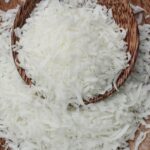
Tapioca cat litter, also known as cassava cat litter, is produced using starch derived from cassava roots. Cassava starch has water-binding properties that make it suitable for developing clumping litter formulations.
Corn cat litter uses corn-derived materials, including processed corn particles or starch. Its characteristics depend on the composition, particle structure, and production method.
Wheat cat litter incorporates wheat-based materials, such as processed wheat particles or fibers. Wheat contains starch and other components that can contribute to moisture absorption and clump formation.
Although all three originate from plants, their final performance depends on formulation and manufacturing conditions.
Clumping is an important consideration because it influences litter removal and daily maintenance.
Clump firmness, cohesion, and ease of removal cannot be determined by raw material alone. Particle size, moisture content, and processing techniques also influence the final result.
Odor management is another important factor when evaluating plant-based cat litter.
Tapioca-based formulations can absorb moisture through their starch-containing structure. However, moisture absorption does not automatically establish odor-neutralizing performance.
Corn-based litter also uses moisture-absorbing plant components, while wheat-based products rely on their particular combination of starch and plant materials.
Across all three categories, odor-control performance may be influenced by:
Therefore, comparative odor-control claims should be supported by standardized testing rather than assumptions about the base material.
Handling affects the experience of filling, scooping, and maintaining a litter box.
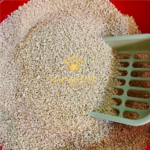
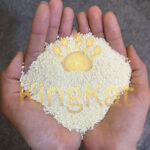
Cassava cat litter can be manufactured in different granule sizes and shapes, allowing manufacturers to develop products with specific handling characteristics.
Corn cat litter may feature granular or processed plant-based particles, while wheat cat litter can have varying textures depending on whether it uses milled materials or other processed forms.
Dust generation, tracking, and ease of scooping depend significantly on particle design, production quality, and packaging conditions.
No single plant-based material guarantees a particular dust level or tracking behavior without product-specific evaluation.
For importers and private-label distributors, selecting between tapioca, corn, and wheat litter involves more than comparing raw materials.
Important considerations include formulation consistency, granule specifications, packaging options, and documented product performance.
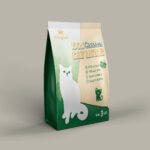
As a cassava cat litter manufacturer, we focus on developing tapioca-based litter solutions for different market requirements. We recognize that material selection should reflect customer preferences, intended applications, and verified product specifications.
The comparison of tapioca vs corn and wheat cat litter highlights how different plant-derived ingredients contribute to clumping, moisture management, and handling.
Rather than identifying one universally superior material, buyers should evaluate complete product formulations and request relevant performance documentation.
Looking for a reliable cassava cat litter manufacturing partner? Contact us to discuss tapioca-based litter formulations, product specifications, and private-label manufacturing requirements.