CASHEW NUT SHELL OIL

If you work in food manufacturing, bakery production, or ingredient sourcing, desiccated coconut is likely already on your radar. But with multiple grades, fat contents, and certifications available on the market, understanding exactly what desiccated coconut is — and which type suits your application — can make a significant difference to your product quality and bottom line. In this complete guide on what is desiccated coconut, we cover everything you need to know: the 5 main types, how it’s made, its key specifications, and what to look for when sourcing at scale.
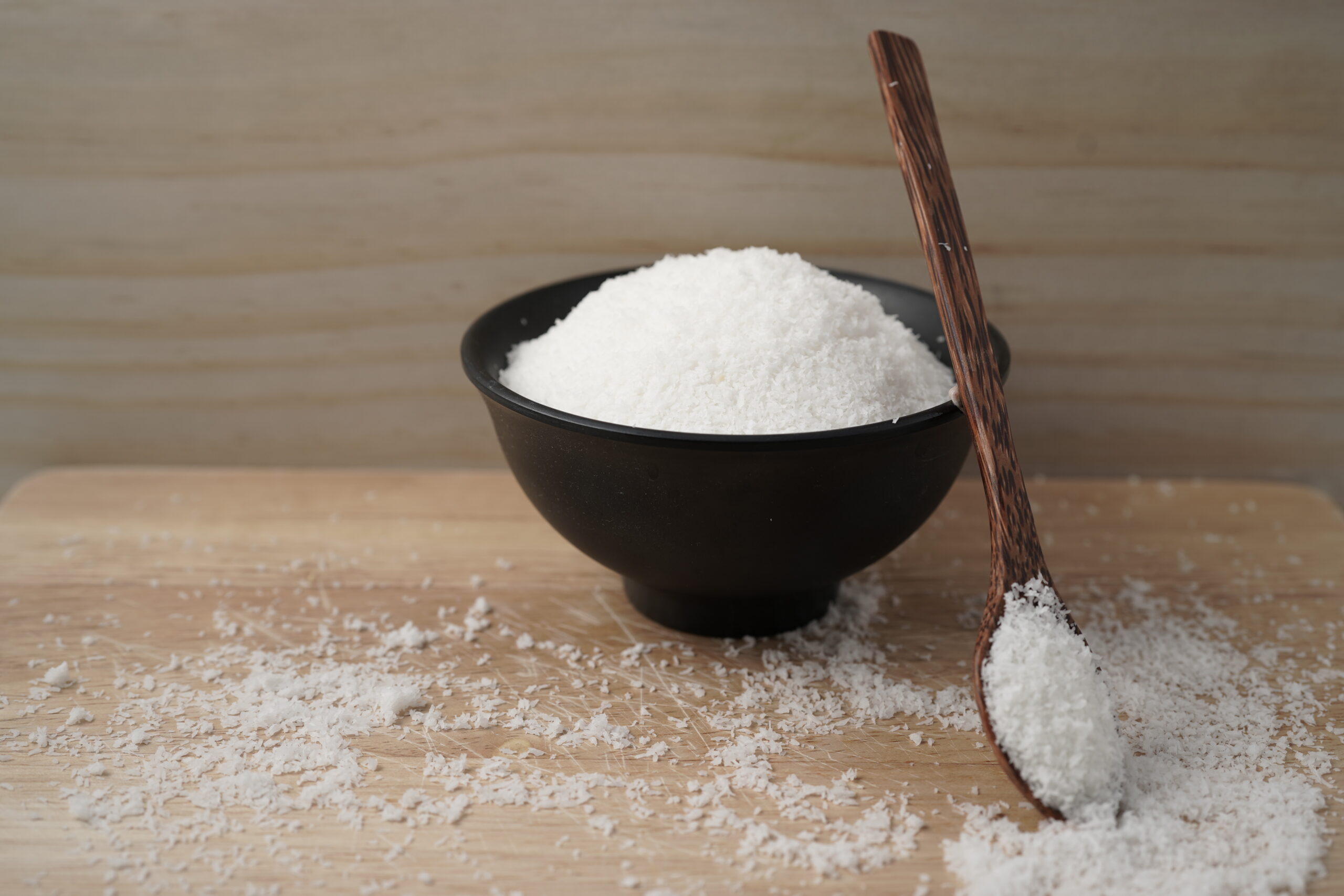
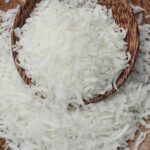
Desiccated coconut is the dried, shredded or grated white flesh (kernel) of mature coconuts (Cocos nucifera). Unlike fresh coconut, desiccated coconut has had nearly all of its moisture removed — to a maximum of 3% — through a controlled drying process, resulting in a shelf-stable ingredient with a 12-month shelf life and consistent performance across food manufacturing applications.
Desiccated coconut is distinct from:
When asking what is desiccated coconut, it is important to understand it is not a single product — it comes in multiple grades and fat variants, each suited to different applications. Among these, fine and medium grades are the most widely used in commercial food manufacturing, accounting for the majority of global desiccated coconut trade.
| Grade | Fat Content | Popularity |
|---|---|---|
| Fine — High-Fat | 60–65% | ⭐ Most Popular |
| Fine — Low-Fat | 35–40% | ⭐ Most Popular |
| Medium | 60–65% | ⭐ Most Popular |
| Flakes | 60–65% | Standard |
| Chips | 60–65% | Standard |
Fine high-fat is the most finely milled form of desiccated coconut, with a fat content of 60–65%. It blends smoothly into batters, doughs, and fillings without creating visible pieces, while delivering full coconut flavour and rich mouthfeel.
Best for: Cakes, biscuits, confectionery coatings, chocolate fillings, energy bars, coconut cream blends
Produced by partially removing coconut oil from the kernel before processing, low-fat fine grade retains the same smooth texture as its high-fat counterpart — with a fat content of 35–40%. It is the only low-fat grade available, purpose-built for health-positioned formulations.
Best for: Protein bars, reduced-fat snacks, dietary supplements, meal replacement products, clean-label formulations with fat-reduction claims
Medium grade offers a balance between texture and blendability — fine enough to incorporate evenly, coarse enough to provide a noticeable coconut bite in the finished product. Fat content: 60–65%.
Best for: Cookies, muffins, granola, breakfast cereals, snack bars, coconut macaroons
Wider, thinner pieces that provide distinctive visual appeal and a lighter, more delicate texture. Often toasted for enhanced flavour and colour. Fat content: 60–65%.
Best for: Granola toppings, trail mix, breakfast cereals, confectionery decoration, health food products
The largest and thickest grade — crispy, substantial pieces that hold their shape in finished products. Increasingly popular in premium snack and artisan food applications. Fat content: 60–65%.
Best for: Premium trail mix, snack packs, chocolate bark, artisan granola, retail snacking
| Parameter | Specification |
|---|---|
| Moisture content | ≤ 3% |
| Fat content — High-Fat | 60–65% |
| Fat content — Low-Fat Fine | 35–40% |
| SO2 residual | ≤ 100 ppm (or as per customer requirement) |
| Shelf life | 12 months in sealed packaging |
| Raw material | Mature coconuts, harvested at 11–13 months |
Only fully mature coconuts — harvested at 11–13 months — are selected for desiccated coconut production. At this age, the kernel has reached optimal thickness, fat content, and flavour intensity required for a consistent, high-quality finished product.
The outer husk and hard shell are removed, and the white desiccated coconut kernel is carefully separated. The brown inner skin (testa) is pared off to produce a clean, white kernel — essential for achieving the bright white colour expected in premium desiccated coconut.
In what is desiccated coconut production, the pared kernel is washed thoroughly and briefly blanched to reduce microbial load and inactivate enzymes that could affect colour and flavour stability during storage and international shipping.
The blanched kernel — now on its way to becoming what is desiccated coconut in its final form — is milled and cut to the desired grade using precision equipment. Consistent particle size is critical for uniform performance across food manufacturing applications.
The milled desiccated coconut is dried using hot-air tunnel drying to reduce moisture content to ≤ 3%. Temperature and drying time are carefully controlled — excessive heat causes browning and flavour deterioration, while insufficient drying compromises shelf life and microbial stability.
The finished product is sieved for particle size consistency, then tested for moisture, fat content, SO2 residual (≤ 100 ppm or as specified), microbial load, and foreign matter. It is packed in food-grade sealed bags — with fumigation or modified atmosphere packaging options — to maintain quality throughout a 12-month shelf life. For more information on food safety standards for coconut products, visit International Coconut Community.
Fine and medium desiccated coconut grades are workhorses in cakes, biscuits, cookies, chocolate truffles, lamingtons, and coconut macaroons — delivering consistent flavour and texture — this is what makes desiccated coconut a staple in high-volume production.
Flakes and chips — two answers to what is desiccated coconut used for in snacking — add visual appeal and texture to granola, muesli, trail mix, and premium snack packs. Low-fat fine grade is increasingly used in health-positioned cereal and bar formulations.
What is desiccated coconut used for in beverages and dairy? It is widely used in coconut-flavoured yoghurts, ice creams, smoothie blends, and as a base ingredient in coconut milk and cream production.
What is desiccated coconut low-fat grade good for? Low-fat fine grade suits protein bars, meal replacement products, and dietary supplements targeting clean-label, reduced-fat, or high-fibre claims.
Chefs use desiccated coconut across Asian, Middle Eastern, and Western cuisines — in curries, desserts, coatings, and garnishes.
| Certification | What It Covers |
|---|---|
| ISO 22000 | International food safety management — full supply chain coverage |
| BRC | Global food safety benchmark recognised by major retailers worldwide |
| Halal | Required for Middle East, Southeast Asia, and Muslim-majority markets |
| Kosher | Required for US, European, and Israeli markets |
| FDA Registration | Required for export to the United States |
At Abimex Group, our premium desiccated coconut carries full certification coverage — ISO 22000, BRC, Halal, Kosher, and FDA — ensuring seamless compliance and market access for our global customers.
Desiccated coconut has a moisture content of ≤ 3%, making it significantly drier and more shelf-stable than shredded coconut, which typically retains higher moisture. Desiccated coconut offers a 12-month shelf life — this is what makes desiccated coconut purpose-built for large-scale food manufacturing and international distribution.
No. Desiccated coconut is dried coconut flesh that retains its natural fat content (35–65% depending on grade). Coconut flour is the defatted, dried residue left after coconut milk extraction — very high in fibre, very low in fat, and a fundamentally different ingredient.
Understanding what is desiccated coconut starts with knowing its grades. Five grades are available: Fine High-Fat, Fine Low-Fat, Medium, Flakes, and Chips. Fine and medium grades are the most widely used in commercial food manufacturing. Low-fat is available in fine grade only (35–40% fat).
SO2 (sulphur dioxide) is used as a preservative to maintain colour and inhibit microbial growth. Food-grade desiccated coconut typically specifies SO2 at ≤ 100 ppm, though this can be adjusted to meet specific market requirements or customer specifications.
Store in a cool, dry place away from direct sunlight and strong odours, in sealed food-grade packaging. Properly stored desiccated coconut has a shelf life of 12 months from the date of manufacture.
So, what is desiccated coconut in summary? Desiccated coconut It is one of the most versatile and shelf-stable coconut-derived ingredients available to food manufacturers worldwide — offered in five grades across two fat variants, with a clean technical specification and a certification profile that opens doors across global markets.
Looking for a certified desiccated coconut supplier? At Abimex Group, we supply desiccated coconut in all five grades — fine high-fat, fine low-fat, medium, flakes, and chips — fully certified to ISO 22000, BRC, Halal, Kosher, and FDA standards. Contact us to request product specifications, samples, and bulk pricing.