CASHEW NUT SHELL OIL

CASHEW NUT SHELL OIL
RICE PROTEIN POWDER
RICE PROTEIN POWDER
DESICCATED COCONUT
Table of Contents
ToggleThe global shift towards plant-based and sustainable raw materials has propelled tapioca starch into the spotlight, used in industries from food production to biodegradable packaging. Traditionally dominated by Thailand, the tapioca starch market is now seeing a strong rise in Vietnam as a key exporter, thanks to a combination of growing export volume, favorable trade agreements, reliable quality, and cost efficiency.
According to official data, Vietnam exported approximately 2–3 million metric tons of cassava-related products annually, with tapioca starch accounting for a significant share. In 2023, the export value of Vietnam’s cassava starch sector reached USD 1.03 billion, and nearly USD 484 million was recorded in just the first five months of 2024. These figures show stable growth and a strong position in global supply chains.
China, Philippines, Malaysia, Taiwan, and South Korea are the largest importers.
China alone accounts for over 90% of Vietnam’s starch exports in recent months (as of mid-2025).
Tay Ninh, Gia Lai, Kon Tum, Dak Lak, and Binh Phuoc – areas with vast cassava plantations and industrial-scale starch factories.
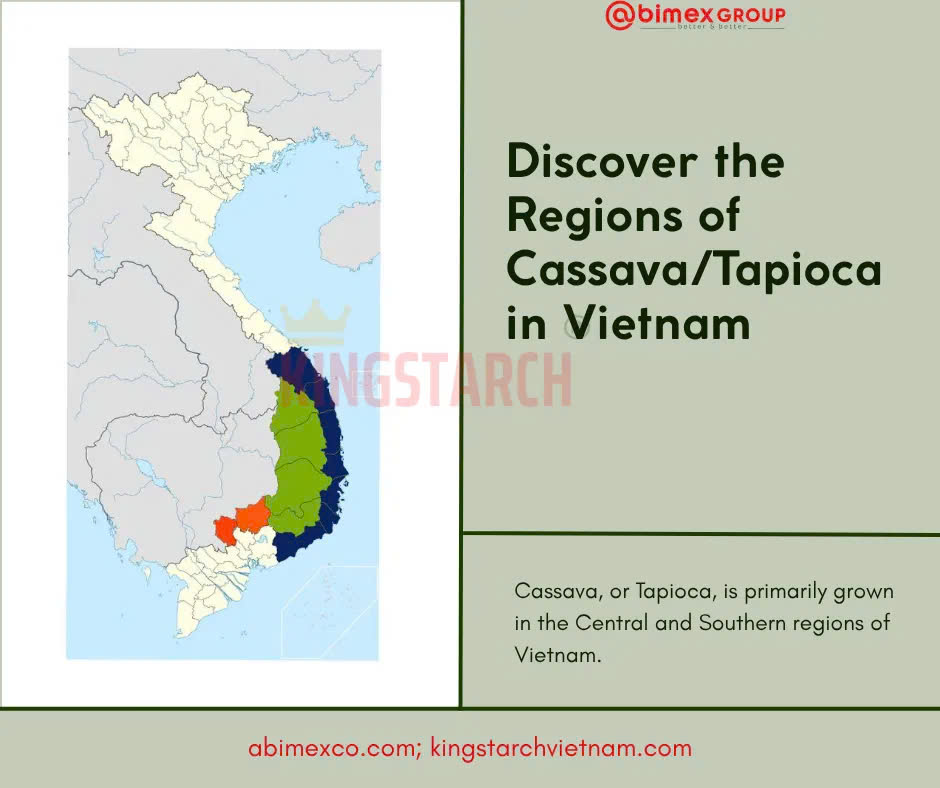
Vietnam cultivates over 500,000 hectares of cassava, primarily in the southern and central highland provinces. Improved farming techniques have enhanced yield and sustainability, ensuring reliable feedstock for starch processing.
While Thailand remains the top exporter, increasing domestic costs and tighter environmental regulations have made Vietnam more attractive. Vietnamese tapioca starch offers lower FOB prices, especially from ports like Cat Lai (Ho Chi Minh), Quy Nhon, and Hai Phong.
Vietnam benefits from a strong network of Free Trade Agreements (FTAs) that reduce tariffs and ease market access:
EVFTA – preferential access to the European Union.
RCEP – covering key Asian markets including China, Japan, and Korea.
CPTPP – access to Australia, Canada, Mexico, and more.
These FTAs significantly improve Vietnam’s export competitiveness, particularly for customers seeking duty-free or low-duty sourcing.
Over the past decade, Vietnamese factories have invested in modern starch separation, drying, and packaging systems. Leading producers—like Abimex Group—offer products with GMP, HACCP, Halal, and Kosher certifications, meeting global food and industrial safety standards.
Tapioca starch is increasingly used in bioplastics, paper, pet care, and gluten-free foods, making Vietnam an attractive supplier for eco-conscious brands. Demand for PFAS-free and sustainable packaging further strengthens Vietnam’s market potential.
As one of the top-tier tapioca starch exporters with many years of experience, Abimex Group provides:
Abimex is a trusted supplier to businesses across various industries, including food processing, biodegradable packaging, pet product manufacturing, and more.
With strong production capacity, competitive pricing, broad market access through FTAs, and global-grade quality standards, Vietnam is no longer just an alternative—it is an emerging leader in the global tapioca starch industry. As sustainability, transparency, and supply chain diversification become top priorities, Vietnam—and exporters like Abimex Group—are perfectly positioned to meet global demand. Why Tapioca Starch Buyers Should Act Now.
Looking to source high-quality tapioca starch from Vietnam? Partner with Abimex Group – where quality meets reliability.