CASHEW NUT SHELL OIL

CASHEW NUT SHELL OIL
RICE PROTEIN POWDER
RICE PROTEIN POWDER
DESICCATED COCONUT
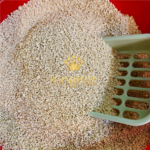
For B2B distributors evaluating the next generation of clumping cat litter, clumping speed is often one of the first product characteristics considered. However, comparing tapioca cat litter with traditional clay litter is not simply a question of which material is “faster.”
The real difference starts with how each raw material interacts with moisture.
As a cassava cat litter manufacturer, we believe distributors should understand these mechanisms before selecting a formula, private-label specification, or market positioning strategy.
Table of Contents
ToggleTapioca is derived from cassava starch, a carbohydrate mainly composed of amylose and amylopectin. Its interaction with water can be influenced by starch structure, processing conditions, particle design, and formulation.
Research into cassava starch shows that processing can substantially affect characteristics such as water absorption, swelling, solubility, and gel formation.
In cassava cat litter, these properties can be engineered so that particles absorb moisture and bind together into a scoopable mass.
This is fundamentally different from mineral-based clumping.
Most conventional clumping clay cat litter relies heavily on bentonite, whose principal swelling mineral is montmorillonite.
When exposed to water, hydration occurs between the mineral layers, causing the material to swell.
This swelling behavior is one reason bentonite has become a widely established material for clumping litter.
Therefore, cassava-based litter and bentonite litter should not be described as performing identically: one relies primarily on a starch-based formulation, while the other relies on hydrating clay minerals.
Raw material alone does not determine performance.
For tapioca cat litter, manufacturers must also control:
These parameters influence how quickly liquid penetrates the litter bed and how effectively adjacent particles bond.
Consequently, two products both labelled “cassava cat litter” may deliver noticeably different clumping behavior.
Leading plant-based litter products increasingly use blended formulations rather than relying on one ingredient alone.
For example, PETKIT markets formulations combining tofu-based material with cassava particles, while other products combine plant fibers, starches, minerals, or odor-control ingredients.
For B2B distributors, this highlights an important purchasing principle:
Do not evaluate cat litter only by its headline ingredient. Evaluate the complete formulation and measurable product specifications.
Cassava starch can contribute to moisture interaction and clump formation, but final performance depends on the full manufacturing system.
Some consumer brands promote clumping within a specified number of seconds. PETKIT, for example, currently markets certain tofu-based products around rapid clumping claims.
Such claims should not automatically be transferred to every cassava formula.
For distributors developing their own brands, laboratory testing should define parameters such as clump formation time, clump strength, breakage rate, liquid absorption, dust level, tracking, and stability after storage.
This creates stronger product positioning and reduces the risk of unsupported marketing claims.
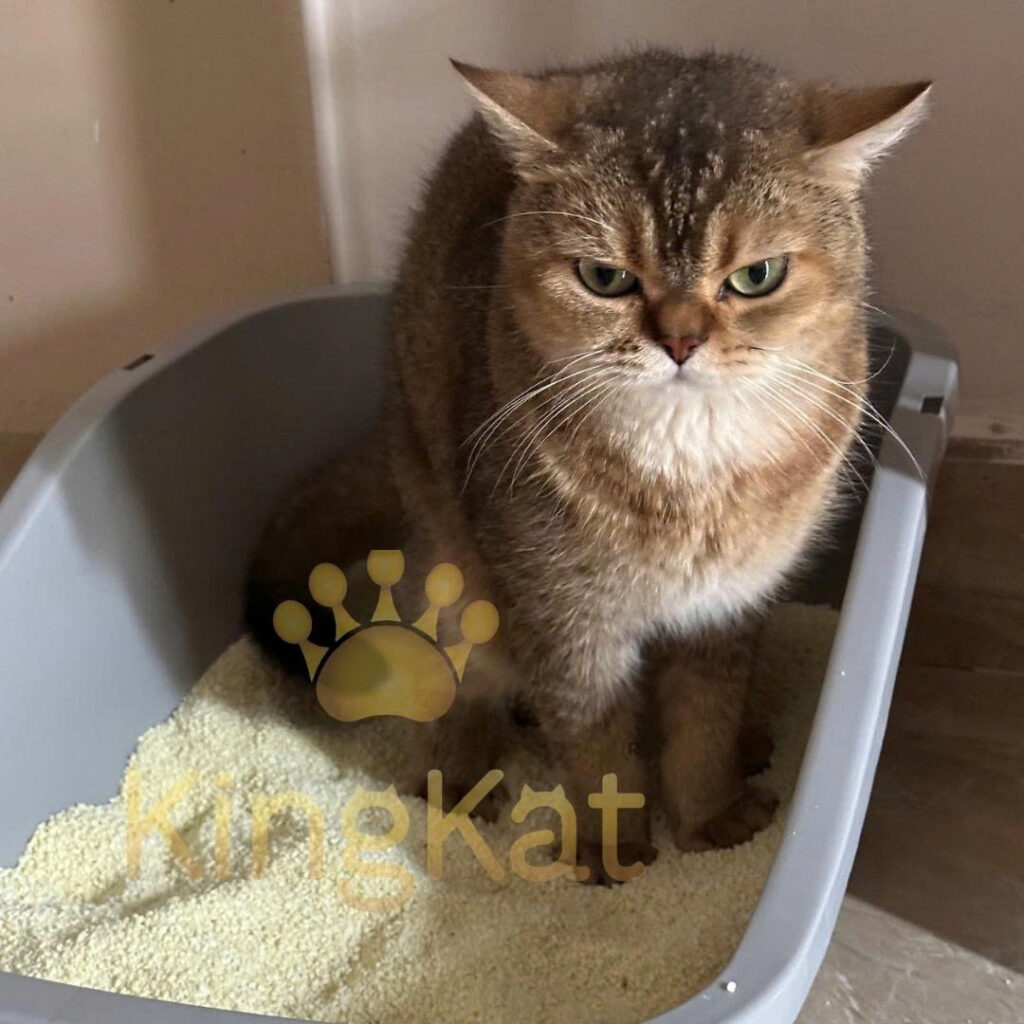
The key advantage of tapioca cat litter is not that it can universally be declared faster than clay.
Its commercial value lies in providing manufacturers and distributors with a plant-based formulation platform whose clumping characteristics can be engineered through starch selection, particle structure, and processing technology.
For importers and distributors entering the natural cat litter category, understanding these variables is essential when comparing suppliers.
As a cassava cat litter manufacturer, we work with B2B partners to develop specifications based on target market requirements, packaging strategy, product positioning, and verified performance parameters.
Looking for a cassava cat litter supplier or private-label manufacturing partner? Contact our team to discuss formulation options, samples, OEM/ODM requirements, and distributor opportunities for your market.