CASHEW NUT SHELL OIL

CASHEW NUT SHELL OIL
RICE PROTEIN POWDER
RICE PROTEIN POWDER
DESICCATED COCONUT
Soft Dried Mango Cut selection can directly affect product presentation, packaging efficiency, manufacturing performance, and purchasing cost. For importers, distributors, food manufacturers, and private-label brands, choosing between whole slices, strips, and broken pieces should be based on the intended application rather than appearance alone.
Whole slices may create a premium retail presentation, while strips offer convenient portioning and versatility. Broken pieces can be a practical option for bakery, cereal, confectionery, and other food-processing applications where uniform appearance is less important.
Understanding the characteristics of each format helps buyers select the right Soft Dried Mango Cut for their products and avoid paying for a presentation grade that does not add value to the final application.
Buyers who source a Soft Dried Mango Cut in bulk often benefit from requesting side-by-side samples of whole slices, strips, and broken pieces before finalizing an order. Comparing texture, moisture content, and color consistency across each Soft Dried Mango Cut format makes it easier to match the product to specific shelf-life requirements and target markets. A dependable Soft Dried Mango Cut supplier should also provide clear moisture and grading specifications for every format, which helps importers minimize waste and maintain consistent quality from one production batch to the next.
Packaging strategy is another factor that depends heavily on the chosen Soft Dried Mango Cut format. Whole slices of Soft Dried Mango Cut are often displayed in clear pouches to showcase their premium appearance, while strips and broken pieces are commonly used in resealable bags, bulk cartons, or as ingredients blended into trail mixes and baked goods. Because pricing, freight efficiency, and end-use application all vary by cut, working closely with your Soft Dried Mango Cut supplier on packaging format can help control costs while still meeting quality expectations.
In short, the best Soft Dried Mango Cut choice ultimately depends on your product application, budget, and presentation goals, so it pays to test more than one format before committing to a long-term contract.
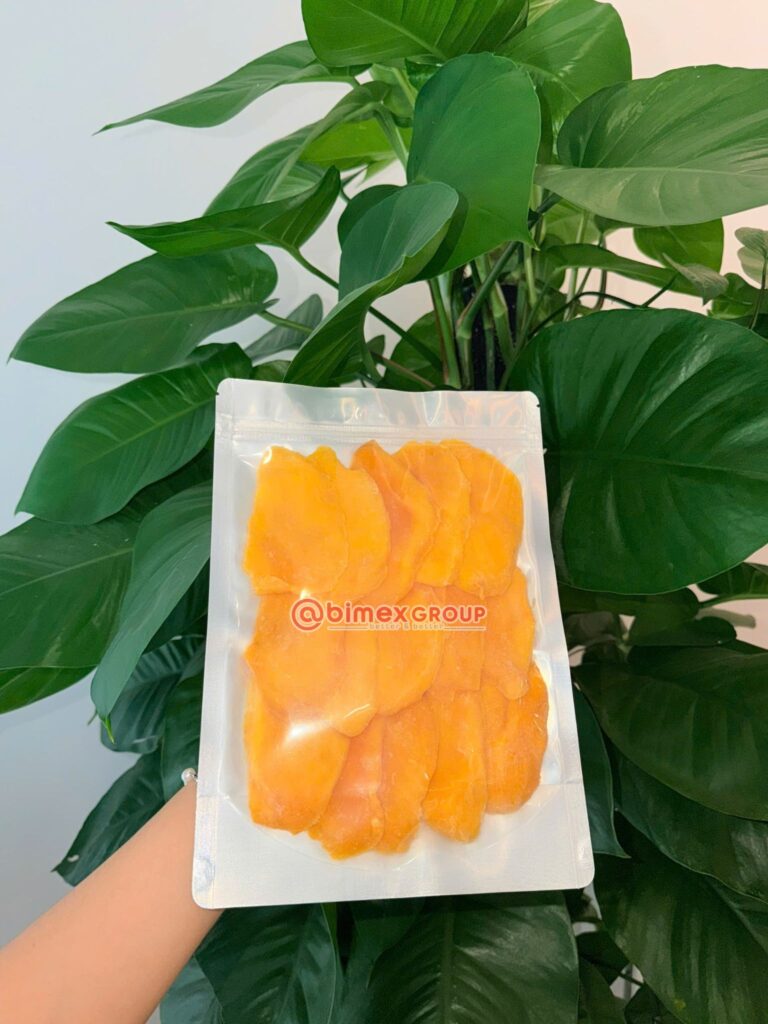
Table of Contents
ToggleCut format is more than a visual detail. It can influence how the mango is packed, handled, portioned, mixed, and presented to consumers.
The most suitable format depends on several factors:
Cut style should always be evaluated together with moisture, texture, surface stickiness, thickness, and formulation. Two products with the same dimensions may perform differently if their physical characteristics are not the same.
Whole slices are usually selected when the mango itself is the main visual feature of the finished product. Their larger and more recognizable shape can support an attractive presentation in transparent retail pouches, gift packs, snack assortments, and premium dried-fruit ranges.
Potential applications include:
Whole slices may require more careful raw-material selection and cutting. Natural mango cheeks vary in shape and size, so buyers should not expect every piece to be completely identical.
Before ordering, buyers should define:
Selecting this Soft Dried Mango Cut mainly for visual presentation may increase the importance of size uniformity and piece integrity. Buyers should therefore review representative samples and define realistic tolerances in the product specification.
Strips offer a balance between visual appeal and functional convenience. They are easier to portion than whole slices and can be suitable for both retail snacks and food-processing applications.
Common uses include:
For buyers choosing a strip-style Soft Dried Mango Cut, width and thickness are especially important. Very thin strips may dry or soften differently from thicker pieces, while excessive variation can affect portioning and the appearance of the finished pack.
Manufacturers using automatic weighing or packing equipment should also evaluate how the strips flow through the line. Soft and sticky pieces may cling together, regardless of their dimensions. A production trial is therefore more useful than assuming that a particular strip size will automatically run smoothly.
Buyers should request information about:
Broken pieces are smaller or irregular portions produced during cutting, handling, drying, or sorting. They should not automatically be considered defective.
When flavor and ingredient functionality matter more than visual uniformity, broken pieces can be a commercially efficient option. They may be suitable for:
This Soft Dried Mango Cut may reduce the need for the buyer to pay for whole-piece appearance when the mango will eventually be chopped, mixed, or hidden inside another product.
However, “broken pieces” is a broad commercial description. Buyers should not assume that every supplier uses the same size range. One batch may contain useful chunks, while another may include a high proportion of very small fragments.
A proper specification should define:
Broken pieces should still meet the agreed food-safety and quality requirements. Lower visual uniformity does not justify poor flavor, excessive discoloration, unsuitable texture, or contamination.
Different cut formats occupy package space differently. Whole slices may require larger pouches or more careful arrangement, while strips and smaller pieces may settle more compactly.
However, smaller pieces are not guaranteed to produce better packaging performance. Soft dried mango can be sticky, and compact packing may increase the tendency of pieces to press together. Package dimensions, net weight, barrier properties, sealing quality, and storage temperature must all be considered.
Retail buyers should assess how the product looks inside the final package. Manufacturers should focus more on handling efficiency, portion control, and compatibility with production equipment.
A trial using the intended packaging format can reveal issues that may not be visible when reviewing a small sample bag.
Cut size and thickness can influence drying behavior because they affect the distance that moisture must travel during processing. If pieces vary significantly in thickness, the finished batch may also show greater variation in texture or moisture.
Nevertheless, cut format alone does not determine quality. The final result also depends on:
Buyers should therefore compare the complete specification rather than judging the product only by shape.
Whole slices may carry a higher price because they can require more selective raw material and greater control over appearance and handling. Strips and broken pieces may offer different cost structures depending on processing requirements, sorting, order volume, and availability.
However, buyers should not compare prices without confirming that all other conditions are equivalent. The price of each Soft Dried Mango Cut may also be affected by:
A lower-priced product may not create real savings if it produces excessive waste, packing difficulties, inconsistent portions, or poor performance in the final application.
The most useful comparison is cost in use: how much acceptable finished product the buyer can produce from each kilogram of mango.
A small, carefully selected sample may not show the normal size distribution of commercial production. Buyers should ask whether the sample represents a regular production batch or a specially prepared presentation sample.
Before approving a Soft Dried Mango Cut, examine:
For manufacturing use, test the sample in the actual formulation or packing line. This is particularly important when the mango will be automatically weighed, dosed, mixed, or cut again.
Where appropriate, the buyer and supplier can retain approved reference samples, but these should be supported by measurable specifications and agreed tolerances.
Choose whole slices when product presentation and recognizable fruit shape are priorities.
Choose strips when you need convenient portions, versatility, and a balance between appearance and processing functionality.
Choose broken pieces when the mango will be used as an inclusion, filling, topping, or ingredient and uniform shape provides limited value.
There is no universally superior format. The best choice is the one that meets the technical, visual, operational, and commercial requirements of the final product.
Abimex Group supplies soft dried mango from Vietnam for importers, distributors, food manufacturers, and private-label businesses. Available cut formats and customization possibilities are subject to the agreed product specification and production requirements.
Our team can provide product information, specifications, packaging options, and samples for evaluation.
Contact Abimex Group to discuss your preferred Soft Dried Mango Cut, formulation, size requirements, packaging format, order quantity, and intended application.