CASHEW NUT SHELL OIL

CASHEW NUT SHELL OIL
RICE PROTEIN POWDER
RICE PROTEIN POWDER
DESICCATED COCONUT
Soft dried mango is known for its appealing golden-yellow to orange color, a visual quality that strongly influences how consumers perceive freshness, flavor, and overall product quality. For food brands, importers, and ingredient buyers, maintaining this attractive appearance during processing and storage can be just as important as preserving taste and texture.
But how can dried mango retain its bright color without relying heavily on artificial dyes?
The answer lies in understanding what causes fruit to darken and how controlled processing can help slow those reactions. In many cases, careful preparation, drying conditions, moisture management, and packaging all contribute to better color retention.
It is important to note that specific processing methods can vary from one manufacturer to another. Any claim regarding “all-natural processing,” “no artificial additives,” or similar statements should therefore be confirmed with the production and quality assurance teams before being used in commercial communication.
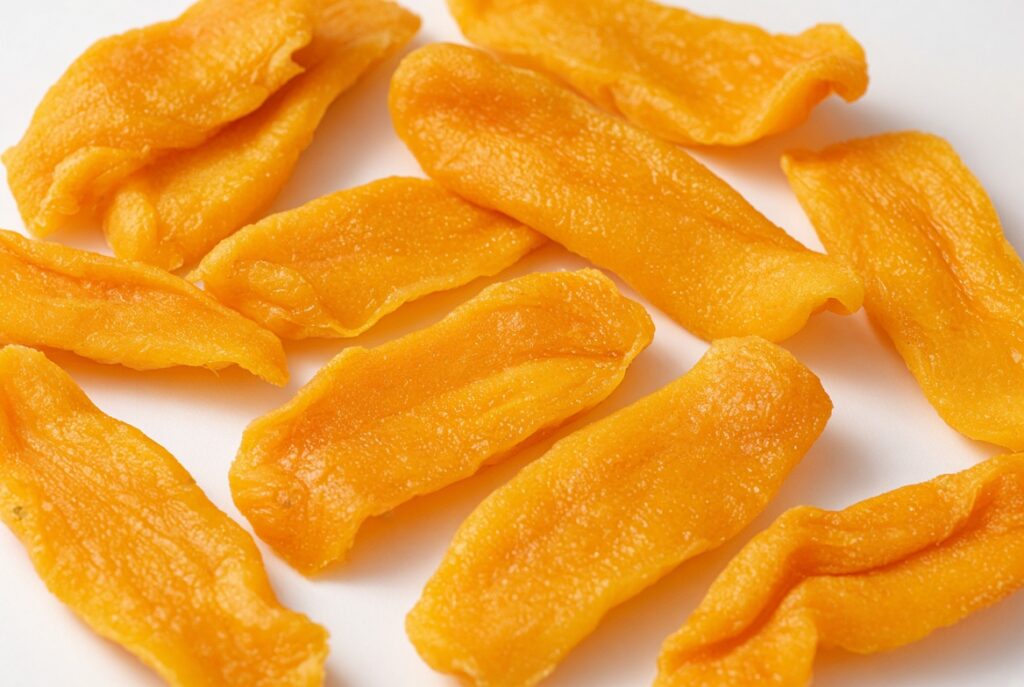
Table of Contents
ToggleFresh mango contains natural pigments, including carotenoids, that give the fruit its characteristic yellow and orange tones. These pigments are responsible for much of the attractive appearance consumers associate with ripe mango.
However, once mangoes are peeled, sliced, and exposed to air, several chemical and enzymatic reactions can begin.
One of the most common is oxidation.
When fruit tissue is cut, oxygen can interact with enzymes and other natural compounds within the mango. Over time, this process may cause browning or a gradual loss of brightness. Heat, light, moisture, and storage conditions can also influence the stability of the fruit’s natural pigments.
For manufacturers of soft dried mango, the challenge is therefore not simply to dry the fruit. The goal is to reduce moisture while limiting unnecessary color degradation.
This requires careful control throughout the production process.
Color preservation begins before drying even starts.
The ripeness of the mango can affect its final color, sweetness, texture, and flavor. Mangoes that are harvested or processed at an appropriate stage of maturity generally have more developed natural pigments than underripe fruit.
At the same time, excessively ripe fruit may become too soft for consistent slicing and processing.
Manufacturers typically aim for raw materials with suitable maturity, color, and firmness to create a more uniform finished product. Consistency in raw mango quality also helps reduce variation between production batches.
For buyers evaluating soft dried mango, the quality of the raw fruit is therefore an important factor behind the final appearance of the product.
Once the fruit has been prepared, processing conditions become critical.
Drying removes water, which helps extend shelf life, but excessive exposure to heat can also affect natural color compounds. If temperatures are too high or drying takes too long, mango slices may become darker than desired.
Controlled drying is designed to balance several factors at the same time:
Rather than applying extreme temperatures, many dried-fruit processing systems use carefully managed heat and airflow.
The exact temperature, drying duration, and equipment will depend on the manufacturer’s production process and target product specifications.
This control is especially important for soft dried mango, where consumers expect both an attractive color and a chewy, tender texture.
Oxidation begins when sliced mango comes into contact with oxygen.
Because of this, the time between peeling, slicing, preparation, and drying can influence the final appearance of the fruit. Efficient production processes can help reduce unnecessary exposure before the drying stage begins.
Depending on the product formulation and production method, processors may also use permitted food-processing aids or ingredients to help manage oxidation and color stability.
However, the exact substances used—and whether they can be described as natural, clean-label, additive-free, or free from artificial colors—should always be verified against the actual formulation and manufacturing documentation.
From an SEO and marketing perspective, this distinction is important. Claims about soft dried mango should accurately reflect production records rather than rely on general assumptions about dried-fruit processing.
Heat is necessary for moisture reduction, but temperature management is essential for maintaining attractive color.
Very high temperatures can accelerate certain browning reactions and affect naturally occurring pigments. A controlled drying environment helps manufacturers gradually remove moisture while minimizing excessive thermal damage.
Airflow is another important part of the process.
Consistent circulation allows moisture to leave the mango slices more evenly. This helps reduce the risk of some pieces being overdried while others retain too much moisture.
When temperature, airflow, slice thickness, and drying time are properly managed, processors can produce fruit with a more consistent golden to orange appearance.
The objective is not to freeze the fruit’s color permanently. Natural food products may still show slight variation from batch to batch because factors such as mango variety, harvest season, maturity, and growing conditions can influence pigment levels.
Moisture plays an important role in both shelf stability and sensory quality.
If too much moisture remains, the product may face greater stability challenges. If too much moisture is removed, the mango can become hard, dry, or less appealing.
Finding the right balance is particularly important for soft dried mango, which is expected to remain flexible and easy to chew.
Moisture management can also indirectly affect appearance. A consistent drying process helps reduce uneven browning and supports a more uniform final product.
Food manufacturers normally establish target moisture levels based on their product specifications, packaging system, expected shelf life, and food-safety requirements.
Color preservation does not end when drying is complete.
After processing, dried mango can continue to react with oxygen, light, humidity, and temperature. Packaging therefore becomes another important part of maintaining product quality.
Suitable packaging can help reduce exposure to environmental factors that may accelerate color changes.
For example, packaging materials with appropriate moisture and oxygen barriers can support longer-lasting product stability. Storage conditions should also be controlled according to the manufacturer’s recommendations.
Excessive heat, direct sunlight, or high humidity during transportation and warehousing may affect color, texture, and overall product quality.
For international buyers, packaging specifications should therefore be considered alongside product specifications when evaluating soft dried mango for retail, foodservice, or industrial applications.
One important point for buyers and consumers to understand is that natural fruit does not always look identical.
Mango color can vary depending on variety, growing region, weather conditions, harvest timing, maturity, and processing parameters. As a result, slight differences between batches may occur even when the production process remains consistent.
A bright yellow color is not automatically proof of superior quality, just as a slightly darker golden color does not necessarily indicate poor quality.
Instead, professional buyers should evaluate multiple factors, including flavor, aroma, texture, moisture, microbiological specifications, ingredient composition, packaging, and overall product consistency.
When evaluating soft dried mango, color should be considered as one part of a broader quality assessment.
For food brands, distributors, wholesalers, and private-label businesses, sourcing dried mango involves more than simply comparing prices.
Buyers should ask suppliers about raw material selection, processing controls, moisture specifications, ingredient declarations, packaging options, quality documentation, and storage recommendations.
They should also verify any marketing claims related to artificial colors, preservatives, added ingredients, or natural processing directly with the supplier.
Clear technical communication helps buyers choose a product that matches both their market positioning and regulatory requirements.
If you are looking for a reliable sourcing partner for soft dried mango and other processed fruit products, Abimex Group can support discussions around product specifications, packaging requirements, documentation, and supply needs for different markets.
Contact Abimex Group to explore suitable mango products for your retail, wholesale, foodservice, or ingredient business and discuss the specifications that best fit your target market.