
CASHEW NUT SHELL OIL

Jackfruit harvest seasons in Vietnam can influence raw-material availability, production planning, and sourcing decisions for jackfruit chip manufacturers and international buyers. While jackfruit can be available during much of the year in Vietnam, this does not mean that harvest volume, fruit characteristics, or commercial availability remain identical every month.
Vietnam has several jackfruit-growing areas, particularly in the southern regions and Mekong Delta, and different cultivars, farming practices, weather patterns, and crop-management methods can create overlapping harvest periods. Published seasonal calendars also differ: some describe broad peak periods in spring and summer, while others note year-round commercial availability for certain varieties and production areas. This variation is one reason buyers should avoid treating one fixed calendar as applicable to every supplier.
For businesses sourcing jackfruit chips, understanding this seasonal variation can support better forecasting without assuming that harvest season directly determines finished-product availability.
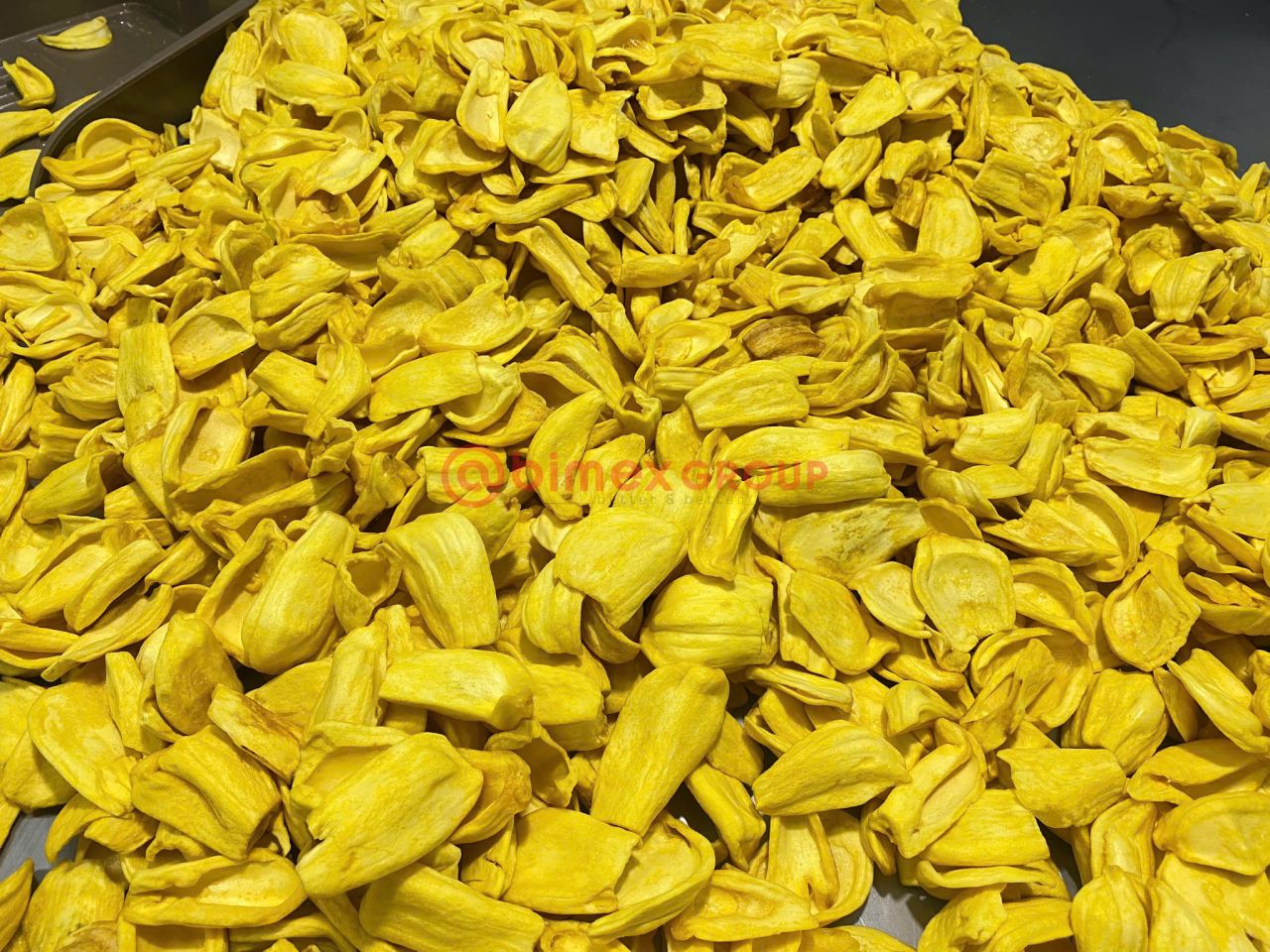
There is no single harvest window that represents every cultivar and growing area.
Vietnam’s tropical southern regions can support extended fruit production, while different jackfruit types may reach harvest maturity at different times. For example, Vietnam’s tourism information has historically noted an earlier March-to-June harvest period for To Nu jackfruit, while other recent sources describe broader or later peak periods for jackfruit generally.
Research published in 2025 also confirms that multiple jackfruit genotypes are cultivated in the Mekong Delta and that they differ in morphological and compositional characteristics.
For sourcing teams, the practical takeaway is simple: jackfruit harvest seasons in Vietnam should be viewed as a series of overlapping supply patterns rather than one nationwide start and end date.
This is especially relevant for processed products such as jackfruit chips, where raw fruit must also meet processing requirements.
Even when jackfruit is technically available, the amount of suitable fruit entering the market can vary.
Periods of stronger harvest may give processors access to more raw material, while lower-volume periods can require closer coordination with growers, collectors, or processing partners.
This does not automatically mean that jackfruit chips become unavailable during lower-harvest periods. Finished-product inventory, contracted raw material, sourcing networks, production schedules, and supplier planning can all influence availability.
However, buyers placing large or recurring orders should avoid assuming that fresh-fruit availability is completely uniform throughout the year.
Early communication with suppliers can help both sides align expected quantities with realistic production planning.
Agricultural calendars are useful for general planning, but nature does not always follow a fixed schedule.
Rainfall patterns, temperature, irrigation conditions, flowering, fruit development, and extreme weather can influence when fruit reaches a suitable harvesting stage.
As a result, an expected harvest period can move from one year to another.
This is why seasonal sourcing plans should include some flexibility rather than relying entirely on specific calendar dates.
For chip manufacturers, jackfruit harvest seasons in Vietnam may therefore affect not only the amount of available fruit but also the timing of procurement and production.
Buyers planning promotional campaigns, private-label launches, or large seasonal orders may benefit from discussing their forecasts with suppliers well in advance.
A jackfruit being available in the market does not necessarily mean that every fruit is equally appropriate for making chips.
Processors may look for raw material with characteristics suited to their specific production method. These can include fruit maturity, flesh firmness, sweetness, fiber structure, color, and other physical characteristics.
Different cultivars can also vary in composition and morphology, meaning raw fruit selection can affect the characteristics of the processed product.
For jackfruit chips, fruit maturity can be particularly relevant because the raw fruit needs to withstand preparation and processing while contributing to the desired flavor and texture.
Therefore, buyers should distinguish between general jackfruit availability and availability of fruit suitable for a particular chip specification.
Vietnam grows more than one type of jackfruit.
Different cultivars may have different agricultural characteristics, harvest timing, fruit structure, sweetness, aroma, color, and processing behavior.
This creates both opportunities and challenges.
Overlapping production from different growing areas or cultivars can support broader sourcing windows. At the same time, changing raw-material sources may create differences that processors need to manage if the finished product is expected to remain consistent.
For B2B buyers, this means cultivar and raw-material sourcing strategy can be worth discussing when consistency is important.
A buyer does not always need to specify a cultivar by name, but it can be useful to define the finished chip characteristics that matter most, such as crunch, sweetness, aroma, piece appearance, or color range.
For chip processors, fresh jackfruit procurement is only one stage of the supply chain.
Raw fruit still needs to be received, inspected, prepared, processed, cooled, packed, and prepared for shipment. Production capacity also needs to be allocated across customer orders.
Because jackfruit harvest seasons in Vietnam may create periods of stronger or weaker raw-material inflow, production schedules can sometimes become more concentrated.
This is important for customers ordering large quantities.
Rather than looking only at ocean or road transit time, buyers should also consider:
production planning, packaging preparation, quality checks, documentation, order consolidation, and export coordination.
These activities can contribute to total lead time even when fresh jackfruit itself is readily available.
It may be tempting to assume that more fruit always means lower purchasing prices.
In reality, pricing can be influenced by many factors beyond harvest volume, including domestic demand, export demand, fruit grade, labor, processing costs, packaging materials, energy, logistics, and competition for raw material.
Weather disruptions can also change market conditions quickly.
For this reason, jackfruit harvest seasons in Vietnam can be one factor in commercial planning, but they should not be used alone to predict exact future prices.
B2B buyers may benefit more from requesting updated quotations for their required specification and order period rather than relying on a general seasonal assumption.
Fresh fruit seasonality and processed-product availability are related, but they are not identical.
A processor may produce finished goods during stronger raw-material periods and manage inventory to support future customer orders. Other suppliers may operate closer to confirmed purchase orders.
The supply model depends on the manufacturer, product specification, packaging format, inventory policy, and customer requirements.
Therefore, a lower fresh-fruit harvest period does not automatically mean there are no jackfruit chips available.
Likewise, strong fruit availability does not guarantee immediate finished-product capacity if production lines or packaging schedules are already committed.
This distinction is particularly important for importers planning container orders or private-label programs.
Because jackfruit harvest seasons in Vietnam can vary by region, cultivar, weather, and production strategy, buyers can improve planning by discussing several factors with their supplier:
For ongoing programs, sharing a purchasing forecast may help suppliers plan production more effectively than receiving unexpected large-volume orders with short notice.
Understanding jackfruit harvest seasons in Vietnam does not mean buyers need to become agricultural experts.
The main goal is to recognize that raw-material supply is dynamic.
Jackfruit may be commercially available across much of the year, especially when suppliers work across different farms, regions, cultivars, or production cycles. However, volumes and fruit characteristics can still fluctuate, and published harvest calendars should be treated as general guidance rather than guaranteed supply schedules.
For international buyers, better planning comes from combining seasonal awareness with supplier communication, realistic forecasts, clear product specifications, and sufficient production and logistics lead time.
If your team is planning purchases around jackfruit harvest seasons in Vietnam, working with a supplier that can discuss raw-material availability, product specifications, packaging, and production planning can make the sourcing process clearer.
Abimex Group supports international B2B buyers sourcing jackfruit chips and other processed fruit products for retail, wholesale, distribution, private-label, and snack applications.
From product specifications and samples to packaging requirements, documentation, and export coordination, Abimex Group works with buyers to support sourcing plans for different markets.
Contact Abimex Group to discuss your jackfruit chip requirements, expected order schedule, packaging options, and export needs.