
CASHEW NUT SHELL OIL

Jackfruit Chips Sample Evaluation is an essential step for importers, distributors, retailers, and private-label brands before placing a bulk order. A product may look attractive in photographs, but only a physical sample can reveal its actual color, aroma, flavor, crispness, oiliness, piece size, and packaging performance.
However, approving a sample based on personal taste alone can be risky. Buyers need a consistent evaluation method that connects sensory quality with commercial specifications and the requirements of the target market.
A structured Jackfruit Chips Sample Evaluation helps buyers identify potential quality issues before committing to commercial production. It also creates a clear reference point for future shipments.
Natural differences in raw jackfruit, maturity, processing conditions, frying time, oil management, seasoning, and handling can affect the finished product. Two samples described as “crispy jackfruit chips” may differ significantly in color, sweetness, texture, oiliness, and broken-piece ratio.
Sample approval should therefore answer three important questions:
The following checklist can help buyers conduct a more objective and commercially useful assessment.
Before opening the sample, inspect its packaging carefully. Look for punctures, weak seals, air leakage, moisture, oil stains, or other visible damage.
If the package has lost its seal, the product may have absorbed moisture or oxygen during transport. This can affect crispness, aroma, and flavor, meaning the sample may no longer represent its original production quality.
Buyers should also confirm:
A small sample pouch may not perform in exactly the same way as the final retail or bulk packaging. Buyers should clarify this difference with the supplier.
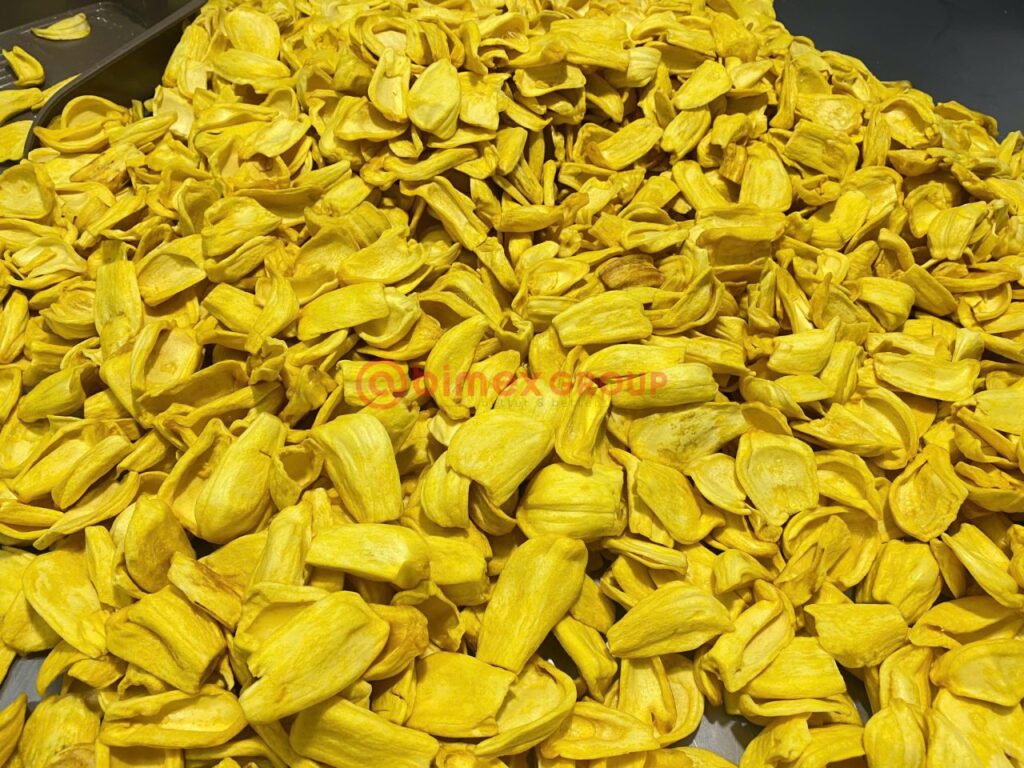
Good jackfruit chips should have a color appropriate to the raw material and processing method. The appearance may range from pale yellow to golden yellow, but the acceptable shade should be agreed upon between buyer and supplier.
During Jackfruit Chips Sample Evaluation, check whether the color is reasonably uniform throughout the package. A high number of dark brown pieces may indicate excessive heat exposure, while unusually pale pieces may suggest uneven processing or variation in raw material.
Buyers should also inspect the product for:
Because color descriptions are subjective, an approved physical sample or calibrated product photograph can be useful as a future reference.
Open the package in a clean environment without strong external odors. Smell the product immediately, as the first aroma can reveal important information about freshness and storage stability.
The sample should have a recognizable jackfruit aroma without unpleasant odors. Warning signs may include stale, rancid, burnt, chemical, musty, or excessively oily smells.
A weak aroma does not automatically mean poor quality, since aroma intensity may depend on the jackfruit variety, maturity, and process. The important point is whether the aroma matches the buyer’s target product and remains free from undesirable notes.
Crispness is one of the most important characteristics of jackfruit chips. Test several pieces rather than relying on one piece from the top of the package.
The chips should deliver the intended crunch without being excessively hard, leathery, or soft. Texture should also be reasonably consistent across the sample.
Consider the following questions:
Texture can deteriorate quickly after exposure to humid air. For a fair comparison, evaluate all supplier samples under similar conditions and within a controlled period after opening.
Flavor assessment should cover more than sweetness. Buyers should consider the balance between natural jackfruit flavor, added sugar if used, frying oil, and any seasoning.
Taste several pieces and evaluate:
A stronger flavor is not always better. The appropriate profile depends on the target consumer, retail positioning, and whether the product will be sold as a plain snack or used in a snack mix.
If the product contains added sugar, salt, or flavoring, buyers should confirm that these ingredients are declared correctly and accepted in the destination market.
Jackfruit chips are often produced through vacuum frying, but the final oil content and surface feel still depend on the formulation and processing controls.
Place several pieces on clean paper and observe whether they leave excessive visible oil. Also check whether the chips feel greasy in the hand or leave a heavy oily coating in the mouth.
A product should not be rejected based only on a simple paper test, as this is not a laboratory measurement. However, unusual surface oiliness is a useful warning sign and may affect consumer acceptance, packaging appearance, and storage stability.
For objective comparison, buyers should request the relevant specification or test result from the supplier.
Piece size directly affects product positioning and cost. Large, attractive pieces may be preferred for premium retail packs, while smaller pieces may be acceptable for food-service applications, snack mixes, toppings, or ingredient use.
During the evaluation, separate the contents into:
Weighing each group provides a more objective result than estimating visually. There is no universal broken-piece limit suitable for every order, so the buyer and supplier should agree on the definition, test method, and acceptable ratio.
Transportation can also increase breakage. The commercial packaging, carton strength, loading method, palletization, and shipping conditions must therefore be considered alongside the product sample.
A good sample should be reasonably consistent in color, thickness, flavor, crispness, and piece size. Excessive variation may indicate inconsistent raw material selection or processing control.
One attractive piece does not represent the entire package. Buyers should select pieces from the top, middle, and bottom when conducting a Jackfruit Chips Sample Evaluation.
For larger sourcing projects, it is better to assess samples from more than one production batch. A specially prepared sample may demonstrate what a supplier can produce, but multiple batch samples provide more evidence of routine consistency.
Sensory evaluation alone cannot confirm food safety or technical compliance. Buyers should request relevant documents according to their market and company requirements, such as:
The required parameters and limits should be agreed upon before the order. Buyers should avoid assuming that one country’s or customer’s standard automatically applies to another market.
If the product will be repacked, mixed with other snacks, or sold under a private label, test it in the actual intended application.
For retail products, evaluate how the chips perform in the proposed pouch after several weeks of storage. Check whether they remain crisp, whether oil becomes visible on the package, and whether the aroma changes.
For snack mixes, determine whether moisture transfers from other ingredients. Softer dried fruit, nuts, coatings, or seasonings may affect the texture and flavor of jackfruit chips during storage.
A successful Jackfruit Chips Sample Evaluation should therefore include both the ingredient itself and its behavior in the finished commercial format.
To make a fair comparison, evaluate all samples using the same checklist, environment, and scoring scale. Buyers can create a simple scorecard covering appearance, aroma, flavor, crispness, oiliness, piece size, breakage, packaging, documents, and overall suitability.
Price should not be evaluated separately from quality. A lower-priced sample may create higher costs later if it contains excessive crumbs, inconsistent pieces, weak packaging, or unstable texture.
Documenting every Jackfruit Chips Sample Evaluation also reduces misunderstandings. Approved samples should be identified, sealed, dated, and retained by both buyer and supplier whenever practical.
A professional Jackfruit Chips Sample Evaluation goes beyond deciding whether the product tastes good. It helps buyers connect sensory characteristics with measurable specifications, packaging performance, and target-market expectations.
The approved sample should become a reference for commercial production, but it should not replace a written specification. The strongest purchasing agreement combines representative samples, clearly defined quality criteria, agreed testing methods, and proper shipment inspection.
Abimex Group supplies Vietnamese crispy dried jackfruit chips for importers, distributors, retailers, and private-label businesses. We can provide product specifications and samples for evaluation based on your sourcing requirements.
Contact Abimex Group to discuss specifications, packaging options, quotations, or jackfruit chips samples for your market.