
CASHEW NUT SHELL OIL

Tapioca starch for shelf life is gaining attention among food manufacturers because starch does more than simply thicken a product. Depending on the formulation and starch grade, tapioca starch can also help manage water, support texture stability, reduce separation, and maintain product consistency during storage.
These functions can indirectly support shelf-life performance in processed foods.
However, it is important to be precise: tapioca starch does not automatically “extend shelf life” in every product, and it should not be treated as a preservative by default.
Actual shelf life depends on many factors, including microbiological control, packaging, temperature, pH, water activity, formulation, processing conditions, and storage environment.
For this reason, tapioca starch is best understood as a functional ingredient that can help maintain product quality during storage, rather than as a universal shelf-life solution.
Shelf life is the period during which a food product remains acceptable under defined storage conditions.
That can involve several different quality dimensions:
A product may still be microbiologically safe but lose quality because its texture changes.
For example:
This is where tapioca starch for shelf life can play a useful supporting role.
One of the most important functions of starch is its ability to interact with water.
When tapioca starch is heated in the presence of water, the starch granules can absorb moisture, swell, and gelatinize.
This creates a thicker structure that can hold water within the food system.
Water management matters because uncontrolled water movement can cause quality problems during storage.
Depending on the product, excess water migration may contribute to:
By helping bind or organize water within the product matrix, tapioca starch can support more stable texture over time.
Water separation is a common problem in many processed foods.
Examples include:
When water separates from the main product, the food can look unstable or unappealing.
A properly selected starch can help create a more cohesive structure and reduce visible separation under suitable conditions.
This is one reason tapioca starch for shelf life is used in products where manufacturers want better stability during storage.
However, the result depends strongly on starch type and processing conditions.
Native starch may work well in simple applications, while more demanding systems may require modified tapioca starch.
Texture often changes during storage.
A product that feels smooth and stable immediately after production may become:
Starch can help maintain structure by supporting viscosity and water distribution.
For sauces, soups, and fillings, this may mean better consistency over time.
For noodle or snack applications, starch may help support product structure before and after cooking.
The exact effect depends on the complete formulation.
This is why manufacturers should test tapioca starch for shelf life under realistic storage conditions rather than relying on theoretical performance alone.
Syneresis refers to water being expelled from a gel or structured food system.
This can happen during:
Visible water release can negatively affect product appearance and texture.
Certain modified tapioca starches are designed to improve stability under these conditions.
For example, some modified starches are selected for better:
These properties can help manufacturers reduce texture breakdown in challenging applications.
Still, the correct starch grade must be matched to the process.
Frozen foods are particularly demanding.
During freezing, water forms ice crystals.
During thawing, that water can migrate back into the product.
If the food structure cannot manage this movement effectively, the product may become watery, separated, or uneven.
Modified tapioca starch may help support freeze-thaw stability in products such as:
The starch helps create a structure that can better tolerate water movement through the freeze-thaw cycle.
However, not every tapioca starch grade is designed for frozen applications.
Manufacturers should select the correct product based on process requirements.
Viscosity is important in many processed foods.
A sauce that is too thin may not coat properly.
A filling that becomes too thick may be difficult to pump or dispense.
Tapioca starch can help manufacturers build the desired viscosity during production.
More importantly, some starch grades can help maintain that viscosity during storage.
This can support more consistent:
For industrial food production, consistency between production day and later consumption is often just as important as initial texture.
The difference between native and modified tapioca starch is important.
Native starch is extracted from cassava without further functional modification.
It can be suitable for applications with relatively mild processing conditions.
Typical applications may include:
However, native starch can be more sensitive to:
Modified starch is designed to provide more specific functional properties.
Depending on the grade, it may offer better resistance to:
For processed foods requiring stronger stability, modified tapioca starch may therefore be more suitable.
Many processed foods rely on a stable internal structure.
Examples include:
If the structure weakens during storage, the product may lose its intended appearance or eating quality.
Tapioca starch can help reinforce the continuous phase of the food system by increasing viscosity and supporting water binding.
This can help reduce movement of ingredients and liquid within the product.
The result may be improved visual and textural consistency.
Bakery products also depend on moisture balance.
Too much moisture migration can make one part of the product soggy while another becomes dry.
For example, in filled bakery products, moisture can move between:
Starch-based fillings can help control water movement by holding moisture within the filling structure.
This may help maintain the intended texture balance for longer.
Again, the final effect depends on formulation, packaging, storage conditions, and processing.
A common misunderstanding is that “shelf life” refers only to microbial safety.
In reality, commercial shelf life also includes quality stability.
A product may be safe to eat but commercially unacceptable because:
Tapioca starch can support the quality side of shelf life by helping maintain structure and water distribution.
It should not be presented as a replacement for proper microbiological controls.
This distinction is important.
Tapioca starch is generally used as a functional carbohydrate ingredient, not as a conventional antimicrobial preservative.
It does not automatically prevent microbial growth.
Food safety still depends on factors such as:
Therefore, marketing claims should avoid language such as:
“Tapioca starch prevents spoilage.”
A more accurate statement would be:
“Tapioca starch can help support texture and moisture stability during storage.”
That describes its functional role without overstating its effect.
Sauces are one of the clearest examples of how starch can influence shelf-life quality.
A well-designed starch system can help maintain:
For products that undergo retorting, pasteurization, hot filling, refrigeration, or freezing, the starch must tolerate the relevant process conditions.
Modified tapioca starch may be selected where the process involves stronger thermal or mechanical stress.
Starch performance is strongly influenced by manufacturing conditions.
Important variables include:
The same starch may behave differently in two products because the overall formulation is different.
This is why tapioca starch for shelf life should be evaluated within the actual food system.
Even if starch improves product stability, packaging remains critical.
Packaging can influence:
A stable formulation inside poor packaging may still lose quality quickly.
For this reason, manufacturers should develop shelf-life performance through a combination of:
Formulation + processing + packaging + storage control
rather than relying on one ingredient alone.
Temperature affects water movement and product structure.
A refrigerated sauce may behave differently from the same sauce stored frozen.
A shelf-stable product may experience different stresses during transportation.
Manufacturers should therefore test products under the storage conditions expected in the actual supply chain.
This is particularly important for export products that may experience long transit times or varying climates.
Some processed foods undergo very high heat treatment.
These processes can challenge starch structure.
Native starch may break down under severe heat and shear.
Certain modified tapioca starches are designed to tolerate stronger processing conditions.
Depending on the application, this can help maintain:
after processing and during storage.
Acidic products create another challenge.
Low pH can weaken certain starch systems during heating.
Products such as:
may therefore require starches with suitable acid stability.
Modified tapioca starch can be selected specifically for these conditions.
The correct grade depends on the product’s pH and process.
No ingredient supplier can responsibly guarantee shelf life based only on starch selection.
Manufacturers need real shelf-life testing.
Testing may include:
Tests should be conducted under realistic storage conditions.
Accelerated testing may also be used where appropriate, but it should be interpreted carefully.
Manufacturers consider tapioca starch because of its functional versatility.
Depending on the application, it can support:
Its relatively neutral flavor can also make it suitable for many processed food formulations.
This combination explains why tapioca starch is used across:
Before selecting tapioca starch for shelf life, food manufacturers should provide the supplier with information about the application.
Useful questions include:
This helps the supplier recommend a more appropriate starch grade.
A technical data sheet is useful, but it cannot fully predict performance in every food system.
Two formulations with the same starch can behave differently because of differences in:
Therefore, manufacturers should always conduct practical trials.
Pilot testing is especially important before commercial-scale production.
Statements such as:
“This starch adds six months of shelf life.”
should be avoided unless supported by controlled testing for the exact product.
There is no universal shelf-life extension period.
A more accurate technical statement is:
“The selected starch may help maintain texture and moisture stability during storage under suitable formulation and processing conditions.”
This keeps the claim technically responsible.
Tapioca starch for shelf life works mainly by helping processed foods manage water, maintain viscosity, reduce separation, and preserve texture.
These functions can support product quality over time.
Modified tapioca starch can offer additional stability under demanding conditions such as:
However, starch is only one part of a complete shelf-life strategy.
Actual shelf life depends on formulation, food safety controls, processing, packaging, storage, and distribution.
For this reason, food manufacturers should select starch based on application requirements and confirm performance through real product testing.
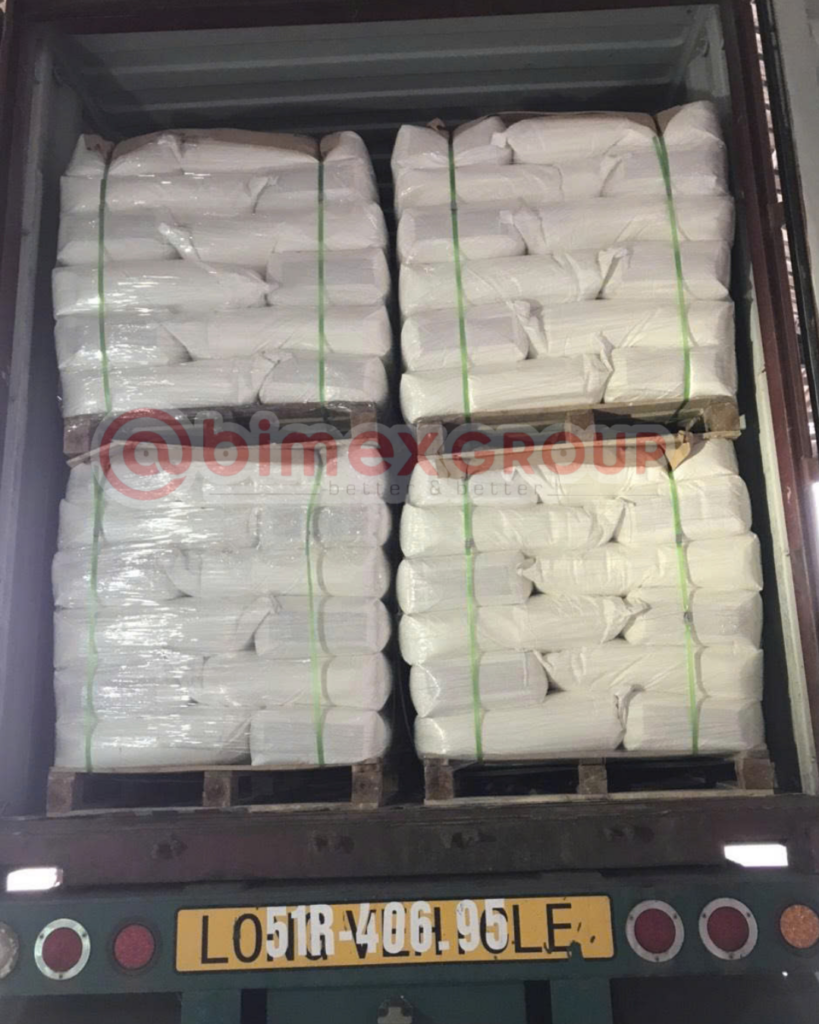
Abimex Group supplies Vietnamese native and modified tapioca starch for international food manufacturers, ingredient distributors, and industrial customers.
Different starch grades can be discussed for applications such as sauces, noodles, snacks, bakery, fillings, frozen products, and other processed foods.
Buyers can request specifications, samples, available technical documentation, and quotations based on their application requirements.