CASHEW NUT SHELL OIL

CASHEW NUT SHELL OIL
RICE PROTEIN POWDER
RICE PROTEIN POWDER
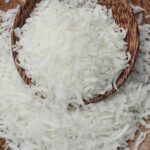
DESICCATED COCONUT
Fresh coconut quality plays a crucial role in the global coconut trade. As international demand for natural beverages and tropical fruits continues to grow, importers and distributors are paying closer attention to the quality of fresh coconuts rather than focusing only on price. For exporters, maintaining stable and consistent fresh coconut quality is essential to building trust with buyers and ensuring long-term business relationships.
Fresh coconuts are widely used in beverage production, retail markets, food service industries, and health-focused products. However, not all coconuts are suitable for export markets. Several important factors influence fresh coconut quality throughout the production and supply chain. Understanding these factors helps exporters deliver products that meet international standards.
Below are five important factors that determine fresh coconut quality for export markets.
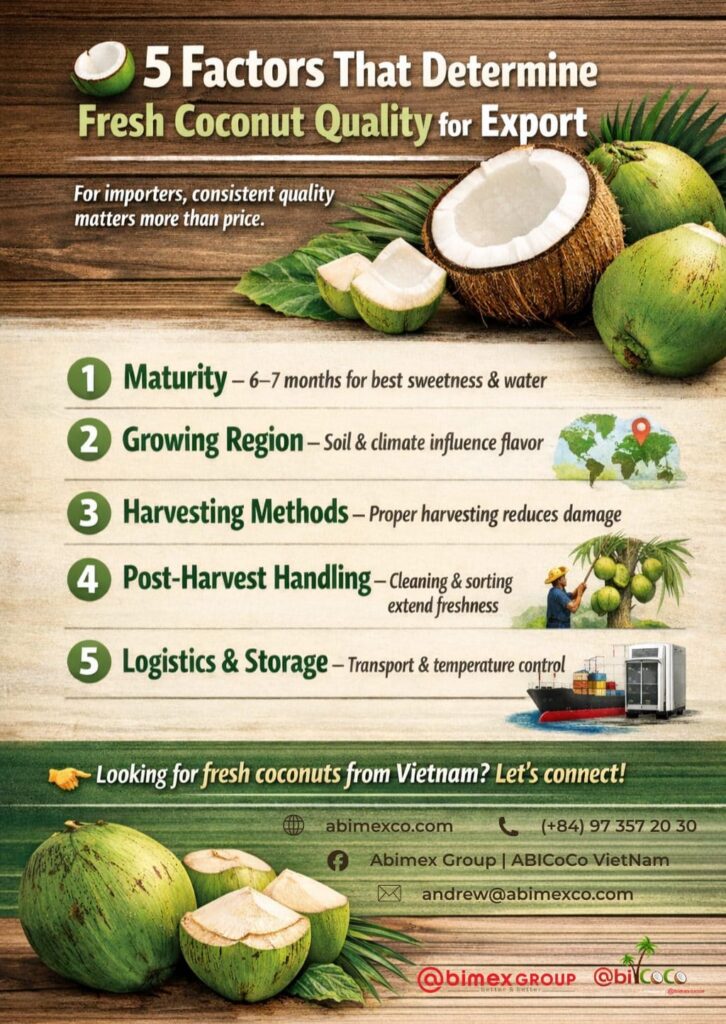
Table of Contents
ToggleOne of the most critical elements affecting fresh coconut quality is the maturity level of the coconut at harvest. Coconuts harvested at around 6 to 7 months are generally considered ideal for fresh consumption.
At this stage, coconuts contain a balanced combination of sweetness, coconut aroma, and water volume. If coconuts are harvested too early, they may contain less water and weaker flavor. If harvested too late, the coconut flesh becomes thicker while the water content decreases. Both situations can negatively affect fresh coconut quality in export markets.
Maintaining the correct maturity ensures that coconuts deliver the refreshing taste and quality that international buyers expect.
The growing environment is another important factor that influences fresh coconut quality. Soil fertility, rainfall, temperature, and water sources all contribute to the taste and characteristics of coconuts.
Regions with tropical climates and stable weather conditions often produce coconuts with naturally sweeter coconut water and better aroma. Southeast Asia is known as one of the world’s leading coconut production regions due to its favorable growing conditions.
Vietnam, for example, has become an increasingly important supplier in the global coconut market thanks to its fertile soil and suitable climate for coconut cultivation. These conditions contribute to maintaining stable fresh coconut quality for export.
Professional harvesting methods also play a significant role in preserving fresh coconut quality. Skilled harvesting teams carefully cut coconuts from the trees to prevent physical damage.
Improper harvesting may cause cracks or bruises on the coconut shell. These damages can shorten shelf life and reduce product quality during transportation. Proper handling during harvest helps maintain the structural integrity of the coconut and protects the quality of the fruit.
Export-oriented farms often train workers in proper harvesting techniques to ensure that coconuts meet international quality standards.
After harvesting, coconuts go through several post-harvest processes that help maintain fresh coconut quality. These processes typically include cleaning, trimming, sorting, and quality inspection.
Sorting helps remove damaged or defective coconuts before shipment. Cleaning and trimming improve the appearance of the product and make it more attractive to buyers in retail markets.
In some export supply chains, coconuts may also undergo treatment processes designed to preserve freshness and extend shelf life during international transportation.
Effective post-harvest handling ensures that coconuts remain fresh, hygienic, and suitable for export.
The final factor that determines fresh coconut quality is the efficiency of logistics and transportation systems. Since fresh coconuts are transported over long distances, proper shipping conditions are essential.
Temperature control, ventilation, and well-organized shipping schedules help prevent quality deterioration. Without proper logistics management, coconuts may lose freshness, develop mold, or suffer from dehydration during transit.
Reliable logistics partners and efficient supply chains allow exporters to maintain stable fresh coconut quality until the products reach international markets.
Maintaining high fresh coconut quality requires careful management across the entire supply chain—from cultivation and harvesting to post-harvest processing and logistics. Coconut maturity, growing conditions, harvesting techniques, post-harvest handling, and transportation all play key roles in ensuring export-quality coconuts.
While price is always an important consideration in international trade, experienced buyers understand that consistent fresh coconut quality is even more valuable. Exporters who focus on these factors are better positioned to build strong relationships with global partners and succeed in the competitive coconut export market.
At Abimex Group, we work closely with coconut farmers and production partners in Vietnam to ensure stable fresh coconut quality for international customers. Through strict quality control and efficient logistics, we aim to provide reliable coconut products for global markets.
👉 If you are looking for a trusted supplier of fresh coconuts from Vietnam, feel free to connect with Abimex Group.