
CASHEW NUT SHELL OIL

Desiccated coconut vs coconut flour vs coconut milk powder is an important comparison for food manufacturers because these three coconut ingredients may come from the same fruit but serve very different functions in a formulation.
Desiccated coconut is generally used when manufacturers want recognizable coconut particles, texture, and flavor. Coconut flour is a finely milled ingredient commonly associated with coconut solids and fiber. Coconut milk powder, meanwhile, is designed to bring coconut milk characteristics into a convenient dry format that can be reconstituted or incorporated into dry formulations.
They should not be treated as direct substitutes for one another.
The right ingredient depends on what the coconut needs to contribute: visible texture, dry solids, water absorption, coconut flavor, creaminess, or ease of dispersion.
Understanding desiccated coconut vs coconut flour vs coconut milk powder helps procurement and R&D teams avoid a common mistake: selecting ingredients based only on the word “coconut.”
Processing changes the physical structure and functionality of each ingredient.
Codex defines desiccated coconut as a product prepared from coconut kernel that is comminuted, dried, and may be offered in different particle sizes and special cuts.
Coconut flour can be produced through different processes, including from coconut solids remaining after milk extraction or after further oil removal, followed by drying and milling. The Philippine Coconut Authority notes that different coconut flour processes can result in different fat, fiber, color, and flavor characteristics.
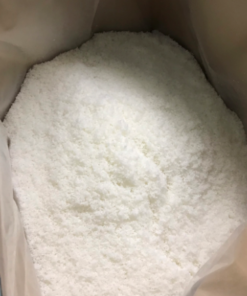
Coconut milk powder is instead produced from a coconut milk system, commonly through drying processes such as spray drying. Depending on the formulation and technology, carrier or emulsifying ingredients may also be used to support powder production and performance.
These differences matter once the ingredient enters an actual food formula.
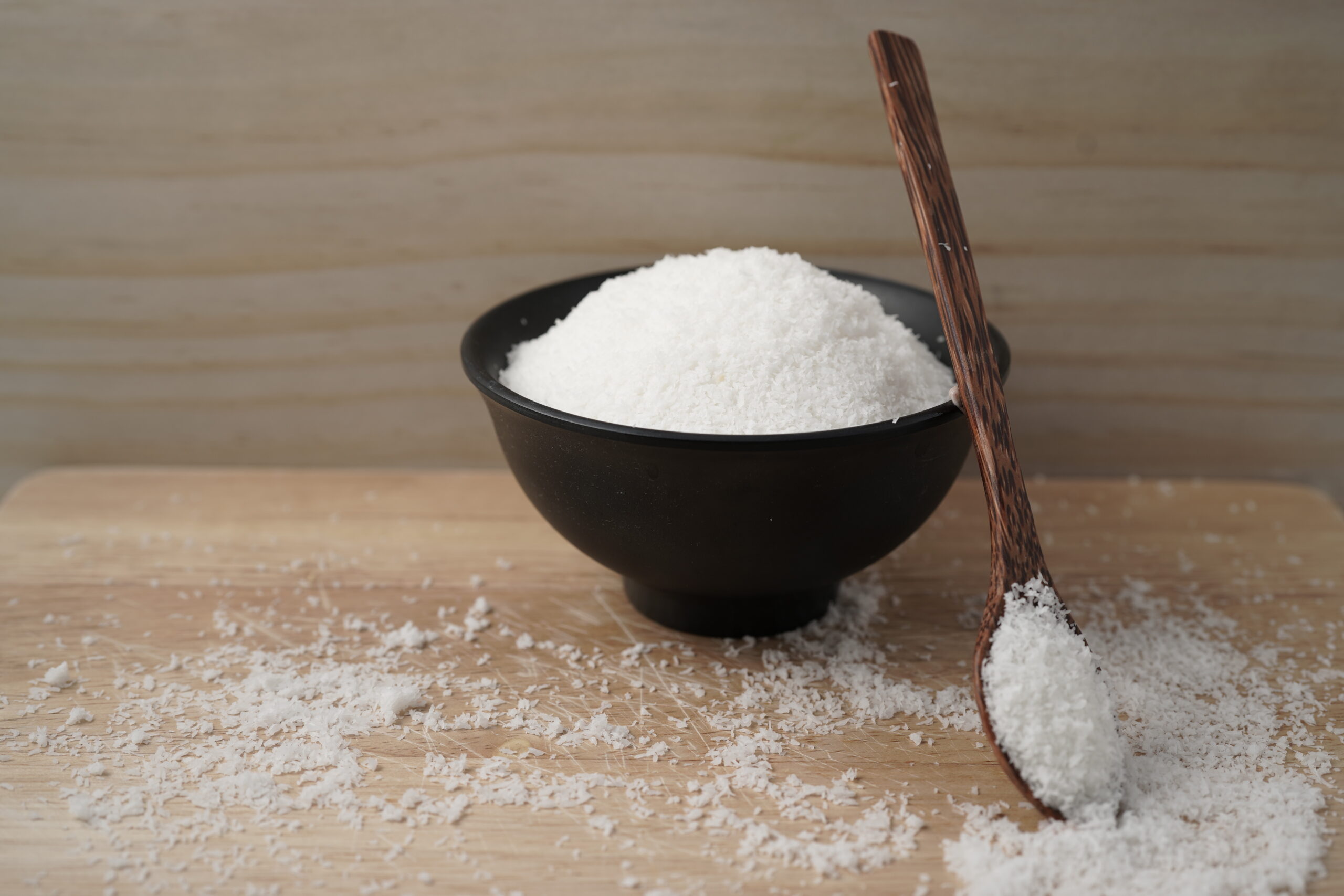
In the desiccated coconut vs coconut flour vs coconut milk powder comparison, desiccated coconut is the most physically recognizable form.
It retains coconut particles rather than becoming a uniform powder. Depending on the grade, manufacturers may work with fine, medium, shredded, flaked, or other cuts.
This makes desiccated coconut useful in products where coconut should remain part of the eating experience.
Potential applications include:
Fine particles may integrate more evenly into a formulation, while larger cuts can create more visible texture and a stronger bite.
The most appropriate grade depends on the finished product. A coconut coating may require a different particle profile from a cereal bar or bakery filling.
Manufacturers should therefore consider particle size, moisture, fat-related specification, aroma, color, and application performance together rather than selecting desiccated coconut based only on grade name.
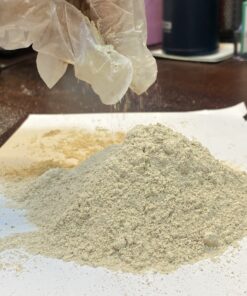
Coconut flour behaves differently from desiccated coconut because it is milled much more finely and may be produced after coconut milk or oil extraction.
The Philippine Coconut Authority describes coconut flour as a screened food-grade product obtained after drying and extracting most of the oil or milk from coconut meat, while also recognizing that different production methods create different flour types.
Research also shows that processing and particle size can influence the hydration properties of coconut flour or coconut residue.
This is important in the desiccated coconut vs coconut flour vs coconut milk powder decision because coconut flour can affect a formulation very differently from visible coconut particles.
It may contribute:
Because of its hydration behavior, replacing another flour with coconut flour without reformulation can significantly change texture.
Likewise, grinding desiccated coconut into smaller pieces does not automatically make it equivalent to a commercial coconut flour. The processing history, fat content, fiber structure, and particle profile may differ.
Coconut milk powder begins from a different product concept.
Instead of preserving coconut pieces or creating a fibrous flour, manufacturers produce a dry powder from coconut milk or a related coconut emulsion.
Spray drying is one commonly studied method for producing coconut milk powder. Because coconut milk contains substantial fat in an emulsion, powder production may involve carriers or emulsifying ingredients depending on the formulation and processing system.
For manufacturers comparing desiccated coconut vs coconut flour vs coconut milk powder, this makes coconut milk powder particularly different in functional purpose.
It may be considered for applications such as:
The ingredient can provide coconut flavor and milk-like characteristics without adding visible coconut pieces.
However, manufacturers should always check the ingredient declaration. Commercial coconut milk powders can differ in coconut solids, carrier ingredients, emulsifiers, processing methods, and reconstitution behavior.
One supplier’s coconut milk powder should not automatically be assumed to perform exactly like another.
Texture provides one of the easiest ways to understand these three ingredients.
Desiccated coconut provides particles.
Coconut flour provides a fine milled solid.
Coconut milk powder provides a dispersible powder based on coconut milk or a coconut emulsion.
That distinction can strongly influence the final product.
If a manufacturer wants consumers to see and feel coconut pieces, coconut milk powder will not create the same effect as desiccated coconut.
If the objective is to increase dry solids or modify dough structure, large coconut flakes may not perform like coconut flour.
If the goal is to create coconut milk character in an instant beverage or sauce, coconut flour will not necessarily disperse or function like coconut milk powder.
This is why desiccated coconut vs coconut flour vs coconut milk powder is fundamentally a functionality question rather than simply a comparison of three coconut products.
Manufacturers should also review fat and fiber-related specifications.
Desiccated coconut generally retains much of the structural characteristics of coconut kernel, although specifications can vary by product and processing system.
Coconut flour may have a different fat profile depending on whether coconut milk or oil has been removed before milling. The Philippine Coconut Authority describes multiple types of coconut flour produced through different extraction and processing routes.
Coconut milk powder is based on coconut milk, so its formulation emphasizes the milk emulsion rather than the fibrous structure of coconut meat.
These differences can influence:
Manufacturers should rely on the supplier’s actual technical specification rather than assuming nutritional or functional properties from the ingredient name alone.
Another important distinction is how each ingredient interacts with water.
Coconut flour can absorb water and affect the thickness or structure of a formulation.
Coconut milk powder is generally developed with dispersion or reconstitution in mind, although actual performance depends on its formulation and manufacturing process.
Desiccated coconut behaves differently again. Instead of dissolving, the particles may absorb some moisture while remaining physically present in the finished product.
For manufacturers evaluating desiccated coconut vs coconut flour vs coconut milk powder, this can be critical in products containing water, syrups, sauces, or other liquid ingredients.
Application testing should therefore evaluate not only the dry ingredient but also how it behaves after mixing and during storage.
One of the most important practical points for product developers is that these ingredients should not normally be exchanged on a simple one-to-one basis without testing.
Replacing desiccated coconut with coconut flour could reduce visible coconut texture and significantly change moisture interaction.
Replacing coconut flour with desiccated coconut could change particle distribution and product structure.
Replacing coconut milk powder with coconut flour would introduce a completely different physical system and may change dispersion, mouthfeel, and flavor delivery.
Even products within the same category can differ between suppliers.
For this reason, formulation changes should be validated in the actual product and manufacturing process.
There is no universal winner in the desiccated coconut vs coconut flour vs coconut milk powder comparison.
The choice depends on the manufacturer’s objective.
Choose desiccated coconut when visible particles, coconut bite, coating, topping, or textural inclusions are important.
Consider coconut flour when a fine coconut-derived solid, fiber-related functionality, or water absorption is relevant to the formulation.
Consider coconut milk powder when the goal is coconut milk character, dry-mix convenience, or reconstitution into a liquid or creamy system.
These are general guidelines rather than guarantees of suitability.
Final performance depends on the specific ingredient, formulation, processing conditions, and supplier specification.
When comparing desiccated coconut vs coconut flour vs coconut milk powder, procurement teams should review more than product names.
Useful questions include:
Samples can also be valuable.
A technical specification explains measurable characteristics, while application testing shows how the ingredient actually behaves in the finished formulation.
The main difference in desiccated coconut vs coconut flour vs coconut milk powder is function. Desiccated coconut delivers visible particles and texture, coconut flour adds fine dry solids and absorbs water, and coconut milk powder recreates coconut milk creaminess in dry form.
Usually not on a 1:1 basis. Because desiccated coconut vs coconut flour vs coconut milk powder differ in particle size, fat, fiber, and hydration, any substitution should be validated through application testing.
For toppings, fillings, coatings, and snack bars where coconut should be seen and felt, desiccated coconut is typically the better fit. Coconut flour suits dough or batter structure, while coconut milk powder suits creamy mixes and fillings.
Buyers should request a technical specification, ingredient declaration, certificates, and samples. Reviewing desiccated coconut vs coconut flour vs coconut milk powder with real samples in the target formulation is the most reliable way to choose.
The key takeaway from desiccated coconut vs coconut flour vs coconut milk powder is that all three come from coconut, but they are designed to perform different jobs.
Desiccated coconut emphasizes particle texture and visible coconut identity. Coconut flour functions more like a finely milled coconut solid with its own hydration characteristics. Coconut milk powder focuses on delivering coconut milk characteristics in a dry, convenient format.
For manufacturers, choosing correctly starts with defining the desired function rather than simply requesting a “coconut ingredient.”
Once the functional goal is clear, specifications, samples, ingredient declarations, processing requirements, and application testing can help identify the most appropriate option.
Abimex Group supports international B2B buyers sourcing desiccated coconut and other processed coconut ingredients for bakery, confectionery, snacks, cereals, private-label, and food-manufacturing applications.
From product specifications and samples to packaging requirements, documentation, and export coordination, Abimex Group works with buyers to support sourcing decisions for different markets and product concepts.
Contact Abimex Group to discuss your coconut ingredient requirements, preferred specifications, packaging options, and sourcing plans.