
CASHEW NUT SHELL OIL

For international buyers comparing Vietnamese dried mango with dried mango Philippines products, the most important differences are not simply country of origin.
The finished product can vary according to:
Philippine dried mango is strongly associated with the well-known Carabao mango, while Vietnamese processors may work with varieties such as Cát Chu and Cát Hòa Lộc, depending on the product line, season, and supplier.
These differences can influence the eating experience of soft dried mango, including sweetness, aroma, chewiness, color, and slice structure.
For importers, the right question is therefore not:
“Which country makes better dried mango?”
A more useful question is:
“Which mango origin and specification best fit my target market and product positioning?”
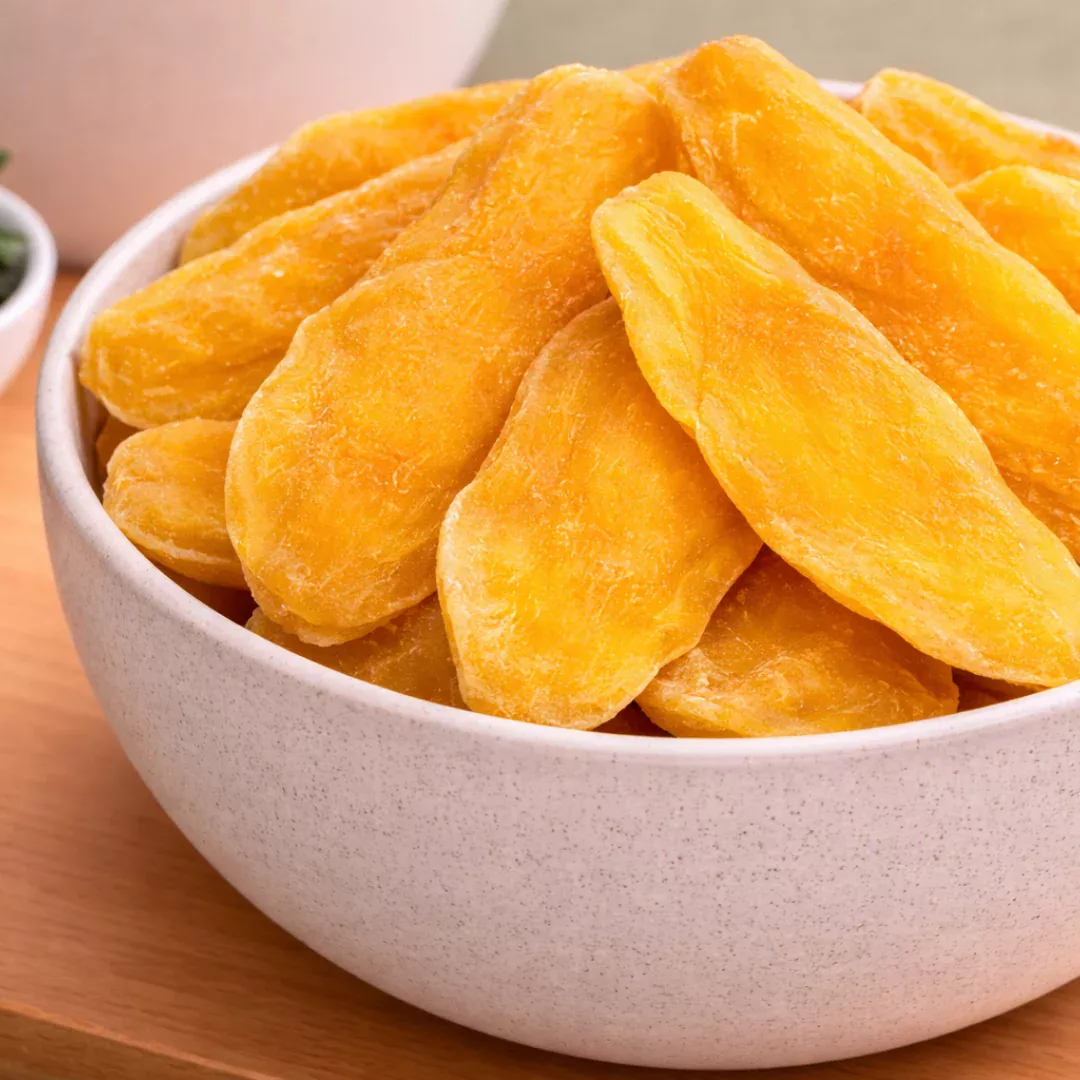
The Philippines has a long-established dried mango industry, and the Carabao mango is one of the country’s most recognized mango varieties.
Carabao mango is known for its tender flesh, aromatic character, and naturally sweet profile. It is also one of the major commercial mango varieties cultivated in the Philippines.
When processed into dried mango, these characteristics may contribute to a product with:
However, the final sensory profile still depends heavily on processing.
Two Philippine suppliers using similar mango varieties may produce noticeably different dried mango because of differences in:
Origin alone should therefore never be treated as a complete specification.
Vietnam grows several commercial mango varieties, particularly in the Mekong Delta.
Among the best known are:
For dried mango production, Cát Chu is especially relevant because it is associated with soft-dried mango processing and has a balanced sweet-aromatic profile. Cát Hòa Lộc is also recognized for aromatic sweetness and relatively low fiber, although it is often positioned strongly in premium fresh-fruit channels.
This gives Vietnamese processors flexibility when developing different soft dried mango concepts.
Depending on the raw material and processing method, Vietnamese dried mango may be designed with:
Again, these are general tendencies rather than guaranteed specifications.
Sweetness is one of the first characteristics buyers notice.
Carabao mango is widely recognized for its naturally sweet character, which is one reason it is strongly associated with Philippine dried mango.
Vietnamese varieties such as Cát Chu and Cát Hòa Lộc can also provide distinct sweetness, but their flavor balance may be different.
For example, Cát Chu is commonly described as having a good sugar-to-acid balance, which can create a more balanced dried-fruit profile rather than sweetness alone.
For importers, this distinction matters.
Some markets may prefer:
a stronger sweet profile
while others may prefer:
a balanced sweet-tart mango character.
Neither is automatically better.
The correct choice depends on the intended consumer.
Texture is another major difference when comparing Vietnamese dried mango and dried mango Philippines products.
The term “soft dried mango” itself does not define one exact texture.
A product may be:
Texture depends on several variables, including:
Vietnamese Cát Chu mango is often used for soft-dried applications partly because of its flavor and flesh characteristics.
Carabao mango also has tender flesh, which can contribute to a pleasant dried texture when processed appropriately.
Therefore, importers should compare actual samples rather than assuming all dried mango from one country will have a specific level of softness.
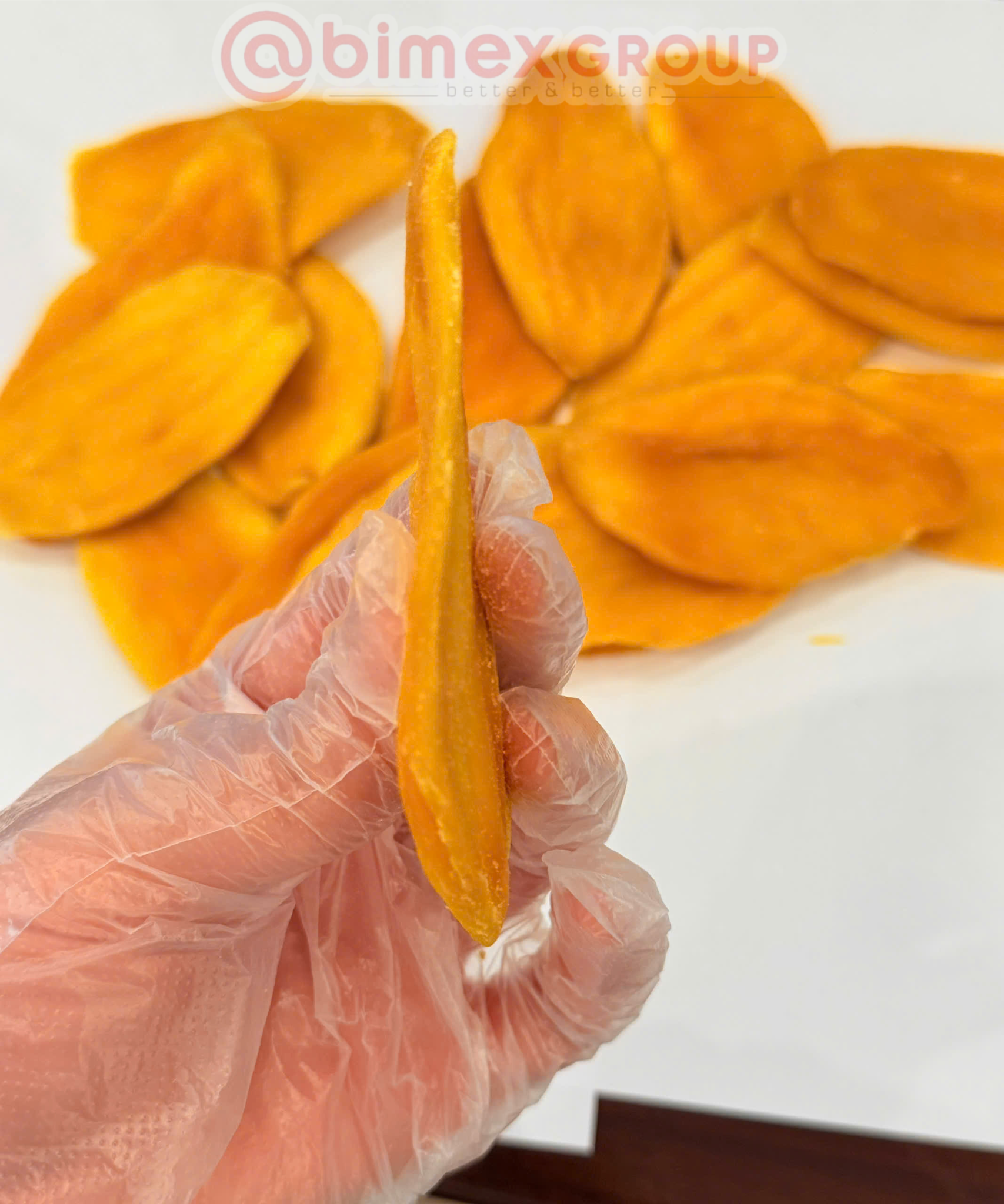
One practical way to communicate texture is through a simple visual test.
Take a piece of soft dried mango and gently tear it apart.
Buyers can observe:
This makes dried mango especially suitable for short-form video.
A 10–30 second video can communicate texture much faster than a written description.
For example:
Open → Bend → Tear → Close-Up → Bite
This format works well on:
Mango aroma depends heavily on variety and maturity.
Carabao mango is known for a distinct aromatic character.
Vietnamese Cát Hòa Lộc is also strongly associated with aromatic sweetness, while Cát Chu offers its own recognizable mango profile.
Drying changes the aroma compared with fresh mango.
As moisture is removed, the fruit character may become:
The exact result depends on processing conditions.
For this reason, aroma should be evaluated through samples rather than country stereotypes.
Fiber can influence whether dried mango feels:
Different mango varieties naturally have different fiber structures.
This can affect:
For B2B buyers, fiber level can become important when sourcing premium whole slices or visually consistent retail packs.
A product intended for small diced pieces may have different requirements from one intended for large soft slices.
Both Vietnamese and Philippine dried mango may range from:
depending on fruit and processing.
Color can be influenced by:
Therefore, importers should avoid assuming that a darker or brighter mango is automatically better.
The most professional approach is to define:
approved color range + reference sample + agreed specification.
Philippine mango availability follows seasonal production patterns, although agricultural techniques can also extend supply beyond the main natural harvest window.
Industry references note that Carabao mango availability can extend across a broad period of the year, with production also influenced by flower induction and regional conditions.
For dried mango buyers, this means seasonality can still affect:
Importers should request a supply calendar directly from the supplier rather than assuming identical availability every month.
Vietnam also benefits from multiple mango-growing regions and varieties.
For Cát Chu, the main crop in the Mekong Delta is commonly associated with the spring-to-summer period, while different regions and production methods can extend availability beyond a single harvest window.
This diversified origin structure can be useful for processors.
However, it should not be interpreted as a guarantee of unlimited year-round supply for one specific variety.
For serious sourcing programs, buyers should confirm:
with the supplier.
One advantage of sourcing from Vietnam is the diversity of commercially available mango varieties and processing regions.
Vietnamese processors can work with different raw materials depending on:
This can provide flexibility for buyers developing:
However, flexibility does not mean every variety or specification is always available.
The final offer should still be confirmed by supplier, season, and factory capability.
Country of origin is only one part of the comparison.
The formulation can change the eating experience significantly.
For example, buyers may encounter:
A sweetened Vietnamese product should not be compared directly with a no-added-sugar Philippine product and treated as an origin comparison.
For an accurate evaluation, buyers should compare products with similar formulations.
The most common sourcing mistake is comparing:
Vietnam vs Philippines
when the actual difference is:
different variety + different formula + different moisture + different cut.
A better comparison is:
Same product style → Same formulation → Similar cut → Similar moisture target → Compare samples.
This gives buyers a more meaningful result.
When comparing Vietnamese dried mango and dried mango Philippines offers, importers should review:
An approved sample can then help establish the expected sensory standard.
Country reputation can influence purchasing decisions, but origin alone does not guarantee quality.
Two suppliers from the same country may produce very different products.
Likewise, a well-developed Vietnamese mango specification may match a buyer’s application better than a Philippine product—or the reverse.
The correct choice depends on the buyer’s requirement.
Both origins can work for retail.
The decision depends on the desired positioning.
A brand looking for:
very recognizable origin storytelling
may emphasize country identity.
A brand looking for:
specific softness, cut, or private-label flexibility
may focus more on supplier capability.
Retail success also depends on:
For private-label projects, importers should prioritize:
Origin is important, but operational reliability is equally important.
A strong product without consistent supply can still create problems for a private-label program.
This comparison is particularly suitable for a 10–30 second video.
Show two soft dried mango slices.
Text:
“Vietnamese vs Philippine Dried Mango?”
Bend the slices.
Text:
“Look at the texture.”
Tear one slice slowly.
Show:
Show both pieces close-up.
Text:
CTA:
“Choose by specification, not origin alone.”
This type of content keeps the comparison objective and avoids criticizing another country’s product.
No. Carabao mango is known for sweetness, but the finished product also depends on maturity, processing, and formulation.
Cát Chu is one variety commonly associated with Vietnamese soft-dried mango production. Other varieties may also be used depending on supplier and season.
Not automatically. Texture depends on the variety, drying process, slice thickness, and final product specification.
Neither origin is universally better. Buyers should compare actual specifications, samples, packaging, supply capability, and commercial requirements.
If variety is important to the product concept, it should be stated in the RFQ and confirmed with the supplier.
The comparison between Vietnamese dried mango and dried mango Philippines products should not become a simple “which country is better?” debate.
The more useful differences come from:
variety + sweetness + acidity + fiber + texture + processing + seasonality.
Philippine dried mango is strongly associated with the Carabao mango, while Vietnamese soft-dried products can use varieties such as Cát Chu and, depending on the project, Cát Hòa Lộc.
For importers, the best sourcing process is:
Define the desired texture → Review the variety and formulation → Compare samples → Confirm the specification → Evaluate supply capability.
When purchasing soft dried mango, country of origin matters—but the approved product specification matters more.
Abimex Group supplies Vietnamese soft dried mango for international importers, distributors, retailers, foodservice buyers, and private-label projects.
Buyers can contact us to discuss:
Contact Abimex Group to discuss Vietnamese soft dried mango for your market and product line.