CASHEW NUT SHELL OIL

CASHEW NUT SHELL OIL
RICE PROTEIN POWDER
RICE PROTEIN POWDER
DESICCATED COCONUT
Desiccated Coconut Export requires more than producing a good-quality product at the factory. The coconut must retain its natural flavor, color, texture, safety, and overall quality throughout transportation, port handling, customs clearance, and destination storage.
For Desiccated Coconut Export, international shipments may spend several weeks at sea and encounter changing temperatures, high humidity, container condensation, handling pressure, and unexpected delays. These conditions can affect the product if its moisture, fat quality, packaging, storage, or loading process is not properly controlled.
For importers, distributors, and food manufacturers involved in Desiccated Coconut Export, selecting export-ready desiccated coconut should therefore involve a complete evaluation of the product and supply chain—not simply a comparison of prices or samples.
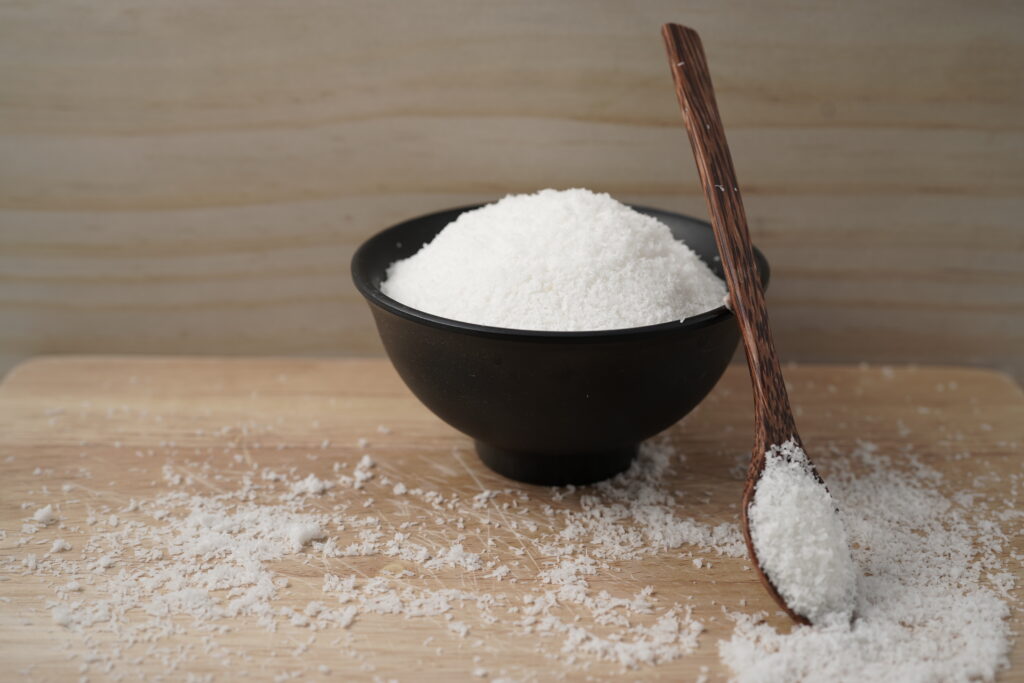
Table of Contents
ToggleA successful Desiccated Coconut Export program depends on several connected factors, including moisture control, fat stability, microbiological safety, packaging performance, container condition, storage management, and batch consistency.
A good specification is essential, but it cannot protect the product by itself. The supplier must also maintain suitable conditions during production, cooling, packaging, warehousing, and container loading.
Moisture is one of the most important quality parameters in desiccated coconut. Excessive moisture can affect texture and flowability, contribute to clumping, and increase the risk of deterioration during storage.
However, obtaining a suitable moisture result at the end of production is only the first step. The manufacturer must also prevent the product from absorbing moisture during cooling, handling, packing, and warehousing.
For Desiccated Coconut Export, buyers should confirm:
A Certificate of Analysis can confirm the moisture result for a particular batch, but it should be supported by consistent production and handling controls. Even properly dried coconut may be affected if it is stored in a humid warehouse or loaded during unsuitable weather conditions.
Desiccated coconut naturally contains fat, particularly high-fat grades. This fat contributes to the characteristic coconut flavor and mouthfeel, but it can also deteriorate through hydrolysis or oxidation if the product is exposed to unsuitable conditions.
Two common indicators used to evaluate fat quality in Desiccated Coconut Export are:
The appropriate limits should be agreed upon between the supplier and buyer based on the product specification, intended application, destination market, and expected transit time.
Low FFA and Peroxide Value results at production do not guarantee stability under all conditions. Heat, oxygen exposure, packaging performance, product age, and storage duration may still influence quality.
Buyers should therefore review the production date, COA, declared shelf life, packaging format, storage requirements, and estimated delivery schedule together.
Packaging is a critical barrier between the coconut and the external environment. It should help protect the product from moisture, oxygen, foreign odors, contamination, and physical damage.
In Desiccated Coconut Export, packaging must remain effective throughout multiple stages, including factory handling, inland transportation, port storage, ocean freight, unloading, and destination warehousing.
Buyers should confirm:
Weak seals, damaged liners, or unsuitable materials may allow the coconut to absorb moisture or surrounding odors. Outer packaging must also be strong enough to withstand stacking and repeated handling.
If the product will be repacked after arrival, the importer should establish suitable hygiene, temperature, humidity, and storage controls after opening the original packaging.
A clean container is essential for protecting food products during ocean transportation. The container should be inspected before loading to confirm that it is dry, odor-free, structurally sound, and free from insects, mold, chemical residues, or previous-cargo contamination.
Desiccated coconut can absorb odors from its surroundings. A container that previously carried chemicals, strongly scented goods, wet materials, or contaminated cargo may create a quality risk even when the product bags appear intact.
Every Desiccated Coconut Export shipment should therefore include an appropriate container inspection before loading.
The loading team should also check for:
Food-grade packaging provides important protection, but it cannot compensate for a wet, contaminated, or unsuitable container.
Ocean containers used for Desiccated Coconut Export may experience temperature changes between daytime and nighttime or between different climate zones. These changes can cause condensation, sometimes referred to as container rain.
Water droplets may form on the container ceiling or walls and fall onto the cargo. This can damage cartons, weaken paper bags, affect labels, or allow moisture to enter if the packaging barrier is compromised.
Depending on the route, season, container type, cargo condition, and packaging format, exporters may consider:
Desiccants may help manage humidity, but they are not a complete solution. They cannot correct wet products, damaged packaging, poor loading practices, or a leaking container.
Every Desiccated Coconut Export shipment must meet the agreed food-safety requirements and applicable regulations of the destination market.
Relevant parameters may include:
The exact limits may vary according to the importing country, buyer requirements, end-use application, and certification program.
A common sourcing mistake is assuming that one supplier’s standard specification will automatically meet every market requirement. Buyers should review the destination regulations and communicate all required limits before confirming production.
Laboratory results should also correspond to the actual production batch rather than only representing a general or historical product sample.
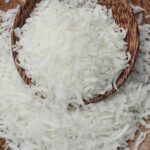
In Desiccated Coconut Export, desiccated coconut is available in different grades, including Fine, Medium, Flakes, and Chips. The suitable grade depends on how the product will be used in bakery, confectionery, snack, filling, coating, dairy, or other food applications.
Grade names alone may not provide enough information. Two suppliers may both offer “Fine Grade,” while their actual particle-size distributions differ.
Buyers should review sieve-analysis results and agree on:
Other physical characteristics may include color, aroma, flavor, clumping, foreign material, and broken-piece ratios for flakes or chips.
A written specification reduces misunderstandings and helps both parties assess whether commercial shipments match the approved quality.
Proper storage is essential for Desiccated Coconut Export. Desiccated coconut should generally be stored in a clean, cool, dry, and well-ventilated location. It should be protected from direct sunlight, moisture, pests, chemicals, and strong-smelling products.
Poor storage conditions may affect the product before loading or after arrival. For example, high temperature can accelerate quality deterioration, while high humidity may damage packaging and encourage moisture absorption.
Importers should review storage requirements with their warehouse and logistics partners. The product’s declared shelf life normally assumes that the recommended packaging and storage conditions are maintained.
A shelf-life statement should not be interpreted as a guarantee under every environment. Product stability depends on the condition of the unopened packaging and the temperature, humidity, hygiene, and handling practices throughout the supply chain.
Sample evaluation plays an important role in Desiccated Coconut Export. A good sample is useful for assessing color, aroma, flavor, texture, and particle size. However, one attractive sample does not prove that the supplier can maintain the same quality across future shipments.
Buyers should confirm whether the sample was taken from normal commercial production or prepared specifically for presentation. Where possible, samples from multiple batches provide better evidence of routine consistency.
The approved sample should serve as a sensory reference, while measurable requirements should be documented separately in the product specification and purchase agreement.
Supporting documents may include:
Documents should be valid, current, and relevant to the actual manufacturing facility, product, and production scope.
Consistency is a decisive factor in Desiccated Coconut Export. Natural agricultural products may show some variation in color, flavor, and physical characteristics. Absolute uniformity is unrealistic, but commercial batches should remain within the agreed specification.
A supplier’s true performance is demonstrated through repeated production—not by a single good sample.
Buyers should evaluate whether the supplier can consistently control:
Clear tolerances, sampling methods, and acceptance criteria should be agreed upon before production. This gives both buyer and supplier an objective basis for handling quality concerns.
Selecting the right partner for Desiccated Coconut Export is not simply about who offers the lowest price. Buyers should also consider product consistency, technical capability, packaging quality, documentation, communication, production capacity, and shipment management.
Before placing an order, importers should ask:
Comparing only the price per kilogram may hide other costs. Inconsistent particle size, excessive clumping, damaged packaging, quality deterioration, or non-compliant documentation may create production delays, rejected batches, repacking expenses, or customer complaints.
Successful Desiccated Coconut Export depends on a complete quality-protection system. Controlled moisture and fat quality are essential, but they must be supported by hygienic production, strong packaging, a clean container, suitable storage, accurate documentation, and reliable batch consistency.
Buyers should evaluate specifications, representative samples, test results, packaging performance, transit conditions, and supplier reliability before confirming a Desiccated Coconut Export order.
Abimex Group supplies Vietnamese desiccated coconut in Fine, Medium, Flakes, and Chips grades for importers, distributors, food manufacturers, and private-label businesses. Our team can discuss your required particle size, fat content, quality parameters, packaging format, and destination-market requirements.
Contact Abimex Group to request product specifications, quotations, or samples for your desiccated coconut sourcing needs.