
CASHEW NUT SHELL OIL

As pet-care markets evolve, distributors are expanding beyond traditional clay litter and exploring plant-based cat litter made from renewable raw materials. Two options attracting attention are tapioca cat litter, produced from cassava-derived materials, and wood pellet cat litter, manufactured from processed wood fibres or wood-industry by-products.
Both can support plant-based product positioning, but they are not identical. For importers, distributors and private-label brands, understanding their differences is important when building the right product portfolio.
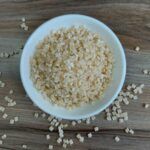
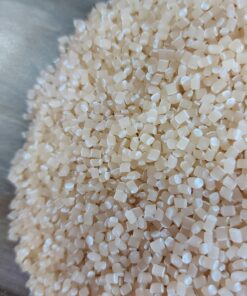
Tapioca cat litter, also known as cassava cat litter, uses cassava-derived starch or fibre-based materials as a key component, depending on the formulation.
Wood litter is based on processed wood fibres, sawdust or other wood-industry materials. Established wood-fibre brands demonstrate how renewable fibre can be engineered into both clumping and non-clumping litter formats.
Therefore, the first distinction is not simply “plant-based versus plant-based,” but the agricultural versus forestry-based raw-material platform.
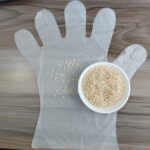
Tapioca-based formulations can be engineered into granules or pellets with different particle sizes and ingredient combinations.
Wood cat litter also varies considerably. Some products use larger non-clumping pellets, while technologically processed wood fibres can be designed to form clumps.
This distinction matters: raw material alone does not determine litter performance. Particle size, density, additives, processing technology and formulation all influence the final product.
For many consumer markets, clumping behavior is an important purchasing criterion.
Cassava-derived starch has functional binding properties, making tapioca an interesting raw-material platform for manufacturers developing plant-based clumping cat litter.
Wood litter should not automatically be classified as non-clumping. Conventional wood pellets are commonly associated with absorption and breakdown after contact with moisture, while specialized wood-fibre products can also be manufactured as clumping litter.
For distributors, the relevant comparison should therefore be between specific finished formulations, rather than raw materials alone.
Particle geometry can influence how consumers perceive a litter product.
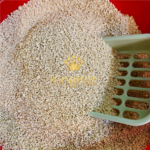
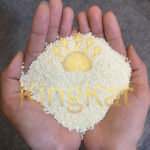
Tapioca cat litter can be produced in relatively fine granules or compact pellets, depending on manufacturing specifications. Wood litter may range from larger pellets to finer processed fibres.
These differences can affect scooping behavior, paw feel and tracking. However, actual results depend strongly on product design and should be validated through testing.
Neither tapioca nor wood should be assumed to provide universally superior odor control.
Wood-based products may rely partly on the natural characteristics and structure of wood fibres. Tapioca litter manufacturers can approach odor management through formulation, moisture management and optional functional ingredients.
For B2B buyers, odor-control claims should ideally be supported by defined test methods and comparable product samples.
Both materials offer alternatives to conventional mineral-based litter.
Wood litter can be positioned around renewable forestry resources and utilization of wood-industry by-products. Tapioca litter creates a different sustainability story around cassava, renewable agricultural resources and plant-based product development.
The strongest sustainability claim, however, should consider more than the ingredient. Raw-material sourcing, processing, packaging, transportation and disposal conditions all contribute to the product’s environmental profile.
For distributors developing a plant-based cat litter category, the decision should not be based on one headline feature.
Key commercial criteria include target retail price, clumping or non-clumping positioning, particle size, packaging format, consumer preferences, local disposal regulations, supply consistency and private-label requirements.
As a cassava cat litter manufacturer, we work with international distributors and private-label partners to develop tapioca-based cat litter specifications for different market requirements.
Rather than positioning tapioca as universally “better” than wood, we believe the opportunity lies in creating the right formulation, packaging and market proposition for each distribution channel.
Looking to develop a plant-based cat litter line for your market? Contact us to discuss cassava cat litter manufacturing, OEM/private-label options, packaging requirements and distributor cooperation.