CASHEW NUT SHELL OIL

CASHEW NUT SHELL OIL
RICE PROTEIN POWDER
RICE PROTEIN POWDER
DESICCATED COCONUT
Bulk jackfruit chips packaging plays a critical role in preserving the product’s crispness, flavor, appearance, and commercial value throughout international transportation. Even when jackfruit chips leave the factory in excellent condition, unsuitable packaging or poor handling can cause them to absorb moisture, lose their crunchy texture, break into smaller pieces, or develop undesirable odors.
For importers, distributors, snack manufacturers, and private-label brands, packaging should therefore be evaluated as part of the product specification—not simply as a container used to hold the chips.
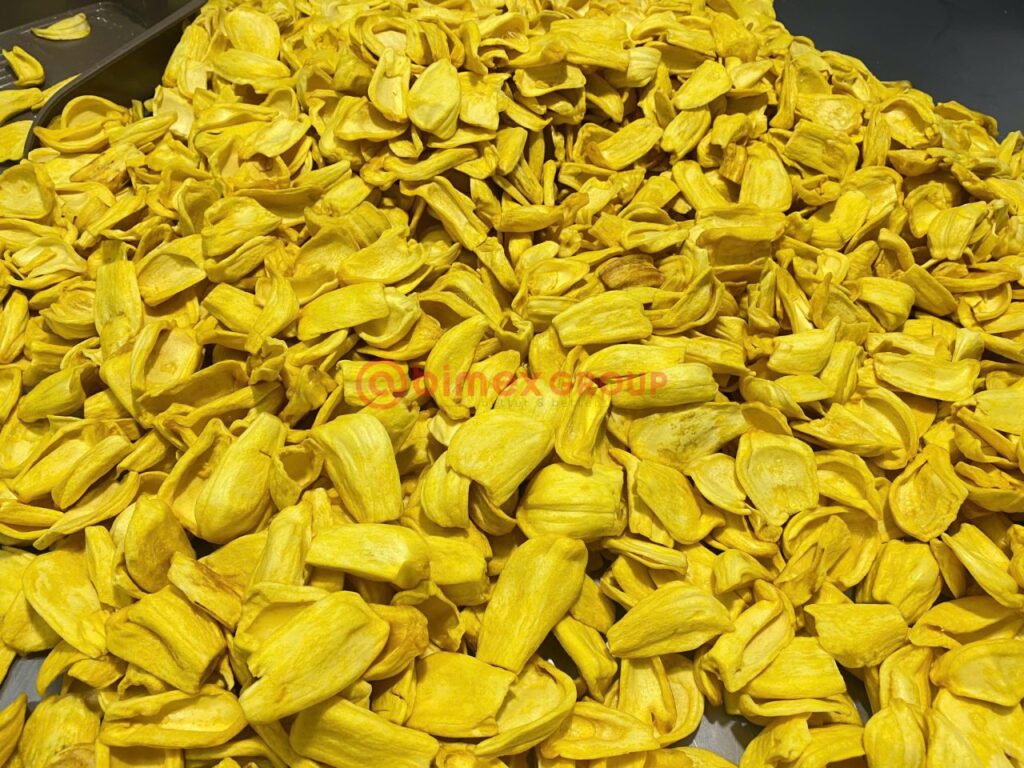
Table of Contents
ToggleJackfruit chips are typically light, porous, and sensitive to surrounding conditions. Their crisp texture can be affected by humidity, oxygen exposure, temperature fluctuations, physical pressure, and improper sealing.
International shipments may involve several weeks of transportation, along with inland trucking, port handling, customs clearance, unloading, and warehouse storage. During this journey, bulk jackfruit chips packaging must provide protection against both environmental and physical risks.
A bag that performs well during a short local delivery may not necessarily be suitable for long-distance export. Importers should assess the packaging structure based on the shipping route, expected transit time, storage conditions, and final application.
Moisture is one of the biggest threats to crispy jackfruit chips. If the product absorbs humidity from the surrounding air, its texture may gradually become soft or less crunchy.
For this reason, packaging should have an appropriate moisture barrier and reliable seal integrity. Buyers should ask suppliers about:
A low moisture result on the Certificate of Analysis is important, but it only reflects the product at the time of testing. It does not guarantee that the chips will remain crisp if the packaging is damaged or improperly sealed.
Effective bulk jackfruit chips packaging must help maintain the product’s condition throughout its declared shelf life under the recommended storage environment.
The oil contained in vacuum-fried jackfruit chips may be affected by prolonged exposure to oxygen, heat, and light. These factors can influence flavor and overall sensory quality over time.
Packaging should therefore limit unnecessary exposure to air and external conditions. Depending on the product, packing format, and buyer requirements, manufacturers may also apply additional controls during sealing.
Jackfruit chips can absorb odors from nearby products or unsuitable storage environments. They should not be stored or transported close to chemicals, strongly scented goods, wet materials, or products that may contaminate the packaging.
Importers should confirm that the bags, cartons, and containers are clean, dry, odor-free, and suitable for food products.
Crispy jackfruit chips are naturally fragile. Pressure, vibration, rough handling, and excessive stacking can increase the percentage of broken pieces.
Although some breakage during transportation may be unavoidable, suitable packaging can help reduce unnecessary damage. A complete bulk jackfruit chips packaging system may include:
Very large bags may appear more economical, but they can place greater pressure on the chips at the bottom. Conversely, smaller packing units may provide better physical protection but increase packaging and handling costs.
The right format should balance product protection, operational efficiency, freight utilization, and the buyer’s intended use.
The inner bag and outer carton perform different functions.
The inner bag acts as the primary barrier against moisture, oxygen, odors, and contamination. Its seals must remain intact during transportation and storage.
The outer carton provides physical protection. It helps prevent crushing, punctures, and direct pressure on the chips. Carton strength should be suitable for the expected stacking height, shipping method, and handling conditions.
When reviewing bulk jackfruit chips packaging, buyers should not evaluate these components separately. A strong carton cannot protect crispness if the inner bag has a weak seal, while a high-barrier inner bag may still be damaged if the carton collapses.
Both layers must work together as one packaging system.
Packaging requirements may differ depending on the buyer’s business model.
Food-service distributors and snack manufacturers may prefer bulk bags packed in export cartons. Retailers and brand owners may require smaller consumer packs with customized designs, nutritional information, barcodes, and destination-market labeling.
For private-label projects, buyers should clarify:
Customized printed packaging often requires a separate minimum order quantity from the packaging manufacturer. This quantity may be significantly higher than the number of bags needed for an initial product trial.
Buyers should discuss packaging quantities early to avoid unexpected costs, unused packaging inventory, or delays in commercial production.
Even well-designed bulk jackfruit chips packaging may be affected by poor container or warehouse conditions.
Before loading, the shipping container should be inspected to ensure that it is:
Temperature changes during ocean transportation may also create condensation inside the container. Depending on the route and season, appropriate container lining, moisture-absorbing materials, pallets, or cargo arrangements may be considered.
However, desiccants cannot compensate for wet cartons, damaged packaging, leaking containers, or unsuitable loading practices.
After arrival, the product should be stored in a clean, cool, dry, and well-ventilated warehouse. Direct sunlight, high humidity, strong odors, pests, and excessive stacking pressure should be avoided.
Importers should request representative samples in the proposed commercial packaging whenever possible. A sample packed differently from the actual shipment may not accurately demonstrate how the product will perform during transportation.
Before confirming an order, buyers may evaluate:
The supplier and buyer should also agree on the method used to measure broken pieces. Without a written definition, both parties may interpret “broken chips” differently.
For commercial shipments, inspection records and photographs taken before loading can provide useful evidence of packaging condition, carton arrangement, and container cleanliness.
There is no single packaging format suitable for every buyer. The right solution depends on the destination, transit time, order volume, distribution channel, storage environment, and final pack size.
Importers should compare packaging options based on total product protection rather than packaging cost alone. Lower-cost materials may create higher losses if the chips become soft, damaged, or unsuitable for resale.
Before production, both parties should confirm:
Clear written requirements reduce misunderstandings and help ensure that commercial shipments match the approved sample.
Reliable bulk jackfruit chips packaging must protect the product from moisture, oxygen, foreign odors, contamination, and physical damage. It should also remain effective during production, warehousing, container loading, ocean transportation, and destination storage.
Packaging alone cannot guarantee quality. Product moisture, frying control, sealing performance, carton strength, container condition, storage practices, and batch consistency must work together.
Abimex Group supplies Vietnamese crispy jackfruit chips for importers, distributors, retailers, snack businesses, and private-label brands. We can discuss your required product characteristics, bulk packing format, retail packaging needs, labeling requirements, and destination market.
Contact Abimex Group to request product specifications, quotations, packaging options, or representative samples for your jackfruit chips sourcing project.