CASHEW NUT SHELL OIL

CASHEW NUT SHELL OIL
RICE PROTEIN POWDER
RICE PROTEIN POWDER
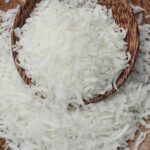
DESICCATED COCONUT
Production Date Matters in Desiccated Coconut because it helps buyers calculate remaining shelf life, plan inventory, evaluate shipment timing, and reduce the risk of receiving products that may not suit their production or distribution schedule.
Many buyers check only the expiry date when reviewing a quotation, sample, or Certificate of Analysis. However, two batches with the same declared shelf life may have very different remaining usable periods when they arrive at the destination. The difference becomes especially important for international shipments that require inland transportation, port handling, ocean freight, customs clearance, warehousing, and local distribution.
Production date should therefore be reviewed together with packaging condition, storage history, laboratory results, expected transit time, and the buyer’s inventory cycle.
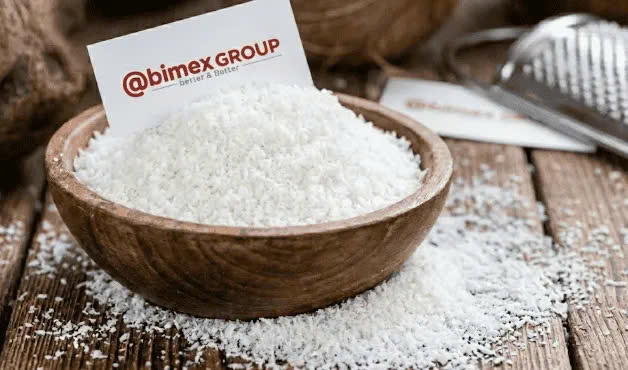
Table of Contents
ToggleDesiccated coconut is commonly used in bakery, confectionery, snack, filling, coating, and other food-manufacturing applications. Importers may purchase enough product to support several weeks or months of production.
If a batch has already spent a significant period in storage before shipment, the buyer will receive less remaining shelf life. This may create pressure to use, sell, or redistribute the product faster than originally planned.
The production date helps buyers estimate:
This information is particularly relevant for distributors supplying multiple customers. Even if the product remains within its declared shelf life, some downstream buyers may require a specific minimum remaining period upon delivery.
Declared shelf life normally begins from the production or packing date, depending on the manufacturer’s system and product documentation. Buyers should confirm which date is used as the starting point.
For example, a product may have a declared shelf life of 12 months. If it is already three months old when shipped and requires another six weeks to reach the destination, its remaining shelf life upon arrival will be considerably shorter than that of a recently produced batch.
One reason Production Date Matters in Desiccated Coconut is that importers need enough time for several activities after arrival:
The expiry date alone does not show how much of the declared shelf life has already been used before the importer receives the goods.
Desiccated coconut naturally contains fat, particularly high-fat grades. This fat contributes to coconut flavor and mouthfeel, but its quality may change over time depending on heat, oxygen exposure, packaging performance, and storage conditions.
Two commonly reviewed indicators are:
Acceptable limits should be agreed upon between the supplier and buyer. Test results should also be interpreted together with the production date and testing date.
A low result at the time of production does not guarantee that the same condition will remain unchanged under every environment. For this reason, Production Date Matters in Desiccated Coconut when buyers assess fat-related parameters, anticipated transit duration, and storage requirements.
A batch-specific COA can provide useful information, but buyers should confirm that it corresponds to the actual commercial lot rather than a general product specification or an older reference batch.
Moisture is another important quality parameter. Excessive moisture may affect texture, flowability, clumping, and storage performance.
However, product age alone does not explain every moisture-related issue. Properly dried desiccated coconut may still absorb moisture if it is exposed to:
A recently produced batch with damaged packaging may perform worse than an older batch stored correctly in unopened, suitable packaging.
This is an important limitation: production date is a decision-making indicator, not complete proof of quality. Buyers should avoid assuming that the newest batch is automatically the best batch without reviewing its specification, COA, packaging, storage, and sensory condition.
International buyers should calculate product age at destination—not only at the factory.
The complete timeline may include:
Unexpected delays may extend this timeline. Port congestion, documentation issues, customs inspection, transshipment, or changes in vessel schedules can reduce the remaining shelf life before the product reaches the final user.
This is another reason Production Date Matters in Desiccated Coconut, especially for destinations with long transit periods or complicated import procedures.
Before confirming an order, buyers should ask for the expected production window, planned shipment date, estimated transit period, and minimum remaining shelf life required upon arrival.
Food manufacturers usually schedule raw-material purchases around production forecasts. If the received product has less remaining shelf life than expected, the company may need to change its production sequence or use the batch earlier.
Distributors face an additional challenge because they must allow enough time to resell and deliver the goods to their own customers. Private-label and retail-ready projects may also require time for packaging approval, product registration, local labeling, or promotional launches.
Understanding that Production Date Matters in Desiccated Coconut helps buyers apply suitable inventory systems such as first-expired, first-out. It also allows purchasing teams to align order quantities with realistic consumption rates.
Ordering a larger volume may reduce the unit cost, but it can create hidden expenses if the buyer cannot use or sell the goods within the available period. These costs may include discounting, urgent redistribution, repacking, disposal, or customer complaints.
Importers should not rely on one date printed on a bag without checking the supporting documents. Relevant information may include:
The date format should also be clear. Numeric formats may be interpreted differently across countries. Using an unambiguous format or writing the month in letters can help prevent mistakes.
All documents should refer to the same batch and remain consistent with the markings on the product packaging.
Before placing an order, importers should ask:
These questions should be discussed before production or shipment. Raising them only after the cargo is ready may create delays or disagreements.
A reliable supplier should communicate product age clearly and provide documents that match the commercial batch. Buyers should also evaluate whether the supplier can maintain consistent specifications, suitable packaging, traceability, and appropriate storage before loading.
When buyers recognize that Production Date Matters in Desiccated Coconut, they can compare quotations more accurately. A lower-priced batch with limited remaining shelf life may not provide better overall value than a newer batch that offers more flexibility for distribution and manufacturing.
Price, production date, remaining shelf life, product quality, and logistics should therefore be evaluated together.
In short, Production Date Matters in Desiccated Coconut because it affects remaining shelf life, inventory planning, distribution time, and the buyer’s ability to use the product as intended.
However, the production date should never be assessed in isolation. A complete evaluation should also include the product specification, batch-specific COA, packaging integrity, storage conditions, shipment duration, and supplier reliability.
Abimex Group supplies Vietnamese desiccated coconut in Fine, Medium, Flakes, and Chips grades for importers, distributors, food manufacturers, and private-label businesses. We can discuss your required particle size, fat content, quality parameters, packaging format, production schedule, and destination-market requirements.
Contact Abimex Group to request product specifications, quotations, COAs, or representative samples for your desiccated coconut sourcing needs.