CASHEW NUT SHELL OIL

CASHEW NUT SHELL OIL
RICE PROTEIN POWDER
RICE PROTEIN POWDER
DESICCATED COCONUT
Vacuum-Fried vs Deep-Fried Jackfruit Chips is an important comparison for importers, distributors, food manufacturers, and snack brands sourcing crispy jackfruit in bulk. Both methods use hot oil to remove moisture and create a crispy texture, but differences in pressure and processing temperature can influence color, flavor, texture, oil uptake, and other characteristics of the finished product.
For B2B buyers, the key is not to assume that one frying method automatically guarantees better quality. Raw-material maturity, slice thickness, frying temperature, frying time, pretreatment, oil management, de-oiling, and packaging can all influence the final result. When comparing Vacuum-Fried vs Deep-Fried Jackfruit Chips, buyers should therefore focus on the actual product specification, sample quality, and production consistency.
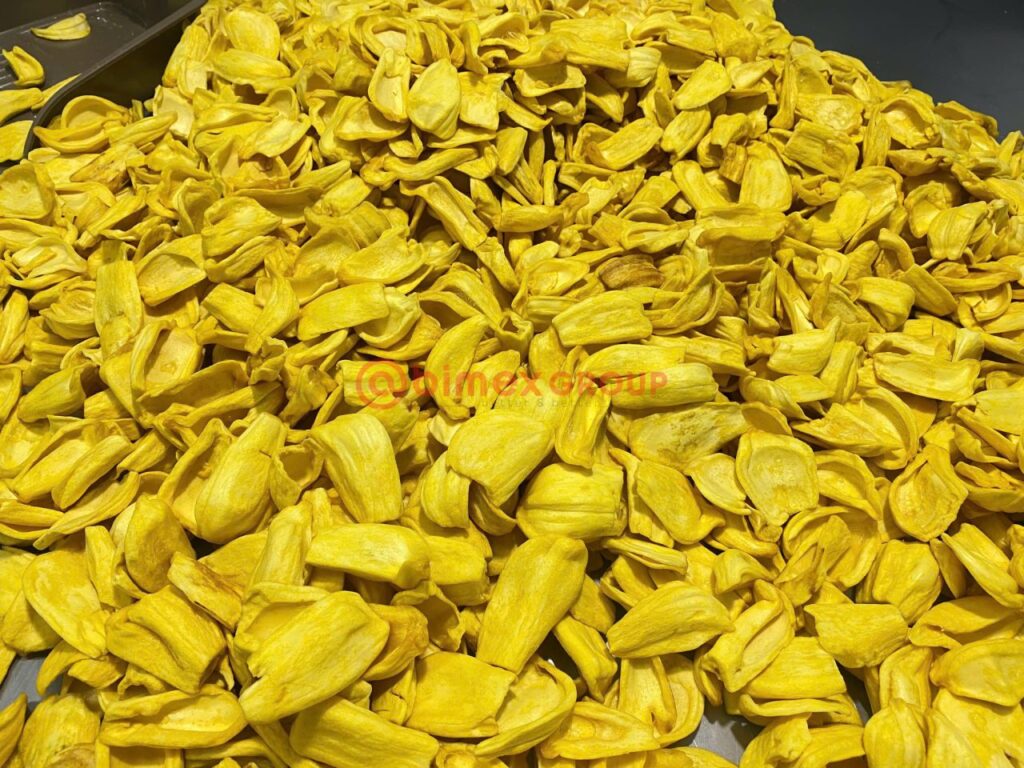
Table of Contents
ToggleVacuum frying takes place under reduced pressure. Lower pressure reduces the boiling point of water, allowing moisture to be removed from jackfruit at lower frying temperatures than would typically be used under atmospheric frying conditions.
Conventional deep frying, often referred to as atmospheric frying in technical studies, takes place at normal atmospheric pressure and generally uses higher oil temperatures to achieve rapid moisture removal and crispness.
This difference creates different processing environments for the fruit. However, pressure and temperature are only part of the equation. The final quality still depends heavily on how well the manufacturer controls each stage of production.
Color is an important quality factor for crispy jackfruit because buyers often expect the finished product to retain an attractive yellow-to-golden appearance.
Vacuum frying can help limit heat-driven browning because the process can operate at lower temperatures and with reduced oxygen exposure. Research on vacuum-fried jackfruit has shown that frying temperature and time influence lightness and other measured color characteristics.
Atmospheric frying at higher temperatures may produce greater browning depending on the raw material and processing conditions. This does not mean that every vacuum-fried product will automatically have better color.
When evaluating Vacuum-Fried vs Deep-Fried Jackfruit Chips, buyers should compare actual samples under similar lighting conditions and establish an acceptable color range or reference sample where necessary.
A common assumption is that every vacuum-fried snack contains less oil than its conventionally fried equivalent. This is too broad.
Research involving fruit and vegetable products has shown that vacuum frying can reduce oil uptake under certain conditions. Studies involving jackfruit have also reported lower oil content for selected vacuum-frying treatments compared with atmospheric frying.
However, oil absorption is influenced by factors such as:
Research on vacuum-fried jackfruit has demonstrated that oil content can increase as frying temperature and frying time increase. Therefore, when comparing Vacuum-Fried vs Deep-Fried Jackfruit Chips, buyers should request the actual nutrition data or fat specification instead of assuming that the processing method alone determines oil content.
This is particularly important for retail brands planning to make nutrition-related claims on consumer packaging.
Jackfruit has a distinctive tropical aroma and naturally sweet flavor. Frying conditions can change this sensory profile.
Because vacuum frying can operate at lower temperatures and under reduced oxygen conditions, it may help limit certain heat- and oxidation-related changes. This can support the retention of desirable fruit characteristics when the process is properly controlled.
However, frying technology is not the only factor affecting taste. Jackfruit variety, maturity, frying oil, processing time, pretreatment, seasoning, and storage can all influence the final sensory profile.
Buyers should conduct direct sample evaluation and consider:
For recurring bulk orders, these characteristics should remain reasonably consistent with the approved specification or reference sample.
Both methods can produce crispy jackfruit chips, but the final texture depends strongly on moisture removal and the physical structure developed during processing.
Vacuum-fried jackfruit can achieve a crisp texture when pressure, temperature, and frying time are properly controlled. Research on jackfruit also shows that different vacuum-frying conditions influence moisture content and breaking force.
In other words, the term “vacuum fried” does not define one fixed texture.
When assessing Vacuum-Fried vs Deep-Fried Jackfruit Chips, buyers should evaluate:
The packaging system is also important because a crispy product can gradually lose its desired texture if it absorbs moisture during storage.
Lower frying temperatures are one reason vacuum frying has attracted interest in food-processing research.
Studies on foods such as potato products have reported substantially lower acrylamide formation under certain vacuum-frying conditions compared with conventional high-temperature frying. However, buyers should not automatically apply results from potato studies to every jackfruit product.
Acrylamide formation depends on the raw material, composition, temperature, time, pretreatment, and other processing conditions.
Therefore, it is more accurate to say that lower-temperature vacuum frying may help limit some heat-related reactions under suitable conditions. If acrylamide is relevant to a buyer’s regulatory or product requirements, laboratory testing of the actual finished jackfruit product provides stronger evidence than a general claim based only on frying technology.
Processing technology cannot fully compensate for unsuitable raw material.
Jackfruit maturity can influence sweetness, aroma, moisture, texture, and frying behavior. Slice thickness and size also affect the rate at which moisture leaves the product.
This means two manufacturers using vacuum fryers can still produce noticeably different products.
For B2B buyers comparing Vacuum-Fried vs Deep-Fried Jackfruit Chips, useful questions include:
Consistency across commercial batches is ultimately more important than the appearance of a single attractive sales sample.
Good processing alone cannot maintain crispy texture indefinitely. Packaging and storage conditions also influence finished-product stability.
Crispy fruit snacks can absorb moisture from the surrounding environment if the package does not provide adequate protection. Buyers should therefore review:
For private-label products, buyers should evaluate packaging requirements together with the product itself. A visually attractive pouch is not enough if it does not provide suitable protection during distribution and storage.
Before approving a supplier, buyers should gather enough information to compare products objectively.
Useful information may include:
During Vacuum-Fried vs Deep-Fried Jackfruit Chips evaluation, quotations should also be compared on an equivalent basis. Different raw-material grades, formulations, oil types, packaging formats, order quantities, or Incoterms may affect the quoted price independently of the frying method.
There is no universal answer for every market or application.
Vacuum frying can offer useful advantages for fruit-chip production, particularly where lower-temperature processing, controlled browning, and preservation of characteristic fruit qualities are priorities.
However, buyers should avoid choosing a product based only on the words “vacuum fried.” The finished product must still meet the required sensory, chemical, microbiological, packaging, and commercial specifications.
For B2B sourcing, a well-controlled production process and consistent commercial batches are more valuable than an unsupported claim that one frying method is always superior.
Understanding Vacuum-Fried vs Deep-Fried Jackfruit Chips helps buyers ask better questions when evaluating crispy jackfruit products.
Frying technology matters, but it is only one part of overall product quality. Raw-material selection, process control, oil management, moisture, sensory consistency, packaging, documentation, and supply reliability should all be considered before a bulk order is approved.
Abimex Group supplies crispy dried jackfruit from Vietnam for importers, distributors, food manufacturers, snack businesses, and private-label customers.
Our team can provide product specifications, packaging information, and samples to support your product evaluation and sourcing process.
Contact Abimex Group to discuss your target market, packaging requirements, order quantity, and crispy dried jackfruit sourcing needs.