CASHEW NUT SHELL OIL

CASHEW NUT SHELL OIL
RICE PROTEIN POWDER
RICE PROTEIN POWDER
DESICCATED COCONUT
Tapioca starch for sauces is widely used by food manufacturers, restaurants, and commercial kitchens looking for a smooth, glossy, and consistent texture. Whether it is a rich gravy, dipping sauce, fruit filling, soup, or ready-to-eat meal, controlling viscosity is essential to creating a product that looks appealing and performs consistently.
Derived from cassava roots, tapioca starch has useful thickening characteristics that make it suitable for many food-processing applications. When properly dispersed and heated with water, the starch granules absorb moisture, swell, and contribute to increased viscosity.
The result can be a sauce with a smooth mouthfeel, attractive sheen, and well-controlled consistency.
But what exactly makes tapioca starch so useful in sauces, and how should manufacturers use it effectively?
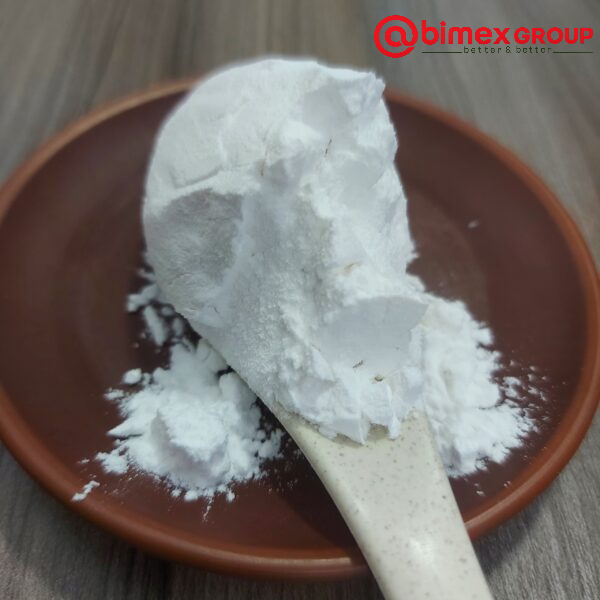
Table of Contents
ToggleSauce formulation is more complex than simply adding a thickener.
Manufacturers need to consider viscosity, appearance, processing temperature, mixing conditions, storage stability, and the interaction between starch and other ingredients.
Tapioca starch for sauces offers several functional characteristics that make it attractive for both industrial and foodservice applications.
One of its most noticeable properties is its ability to create relatively clear and glossy pastes after gelatinization. Compared with some starch systems that produce a more opaque appearance, tapioca starch can help manufacturers achieve a visually attractive sauce where clarity and shine are important.
This characteristic is especially useful in products such as:
The exact performance will still depend on formulation, starch concentration, pH, temperature, shear, and processing conditions.
Native tapioca starch contains starch granules primarily composed of amylose and amylopectin.
When starch is dispersed in water and heated to an appropriate temperature, the granules begin absorbing water and swelling. This process is known as gelatinization.
As gelatinization progresses, the mixture becomes more viscous.
This is the main reason tapioca starch for sauces can transform a thin liquid into a thicker, more cohesive sauce.
The final viscosity depends on several factors, including:
For industrial production, manufacturers should therefore determine the appropriate starch level through formulation trials rather than relying on a single universal dosage.
Texture is not the only consideration in sauce development.
Appearance strongly influences how consumers perceive a product.
Many sauces, especially glazes and dipping sauces, are expected to have a smooth and slightly glossy surface. Tapioca starch can help produce this visual effect because gelatinized tapioca starch typically forms a relatively translucent paste.
That makes tapioca starch for sauces particularly interesting for formulations where manufacturers want to maintain the original color of ingredients while adding body.
For example, a red chili sauce may benefit from a thickening system that does not make the final product excessively cloudy.
Similarly, fruit-based sauces and dessert toppings often require both viscosity and visual clarity.
Starch can form lumps when dry powder is added directly into hot liquid.
The outer layer of the powder may hydrate immediately, trapping dry starch inside and creating small clumps that are difficult to disperse.
A simple solution is to prepare a starch slurry.
The starch is first mixed thoroughly with cool or room-temperature water before being introduced into the heated sauce.
A typical process may include:
For industrial processing, the exact sequence may differ depending on equipment, shear conditions, batch size, and formulation.
Good dispersion is essential for obtaining the smooth texture expected from tapioca starch for sauces.
Food manufacturers may choose between native tapioca starch and modified tapioca starch depending on processing requirements.
Native tapioca starch can work well in relatively straightforward formulations where the product is cooked and consumed without highly demanding processing conditions.
It provides thickening functionality and can produce a smooth, relatively clear paste.
However, native starch may be more sensitive to certain processing conditions such as prolonged heating, strong shear, acidic environments, or repeated freeze-thaw cycles.
Modified tapioca starch is designed to provide specific functional properties depending on the modification.
Certain grades may offer improved resistance to:
For industrial sauces, retort foods, frozen meals, or other demanding applications, a suitable modified starch grade may therefore perform more consistently than standard native starch.
The correct choice depends on the processing system and the desired final product characteristics.
Consistency is critical in large-scale food manufacturing.
A sauce that performs well in a small kitchen test may behave differently during industrial mixing, pumping, heating, filling, or sterilization.
For this reason, manufacturers selecting tapioca starch for sauces should evaluate not only initial viscosity but also processing stability.
Important questions include:
What temperature will the sauce reach?
The starch must perform within the actual heating profile used during production.
How much mechanical shear is involved?
High-speed mixing and pumping can affect the viscosity of some starch systems.
What is the product’s pH?
Acidic sauces may require starches with improved acid tolerance.
Will the product be frozen?
Freeze-thaw conditions can change sauce texture and may require a modified starch specifically designed for frozen products.
How long will the product be stored?
Viscosity and texture should remain within acceptable specifications throughout the intended shelf life.
These factors should be evaluated through laboratory and production-scale trials.
The functional properties of tapioca starch are useful in many products beyond conventional sauces.
Manufacturers may use it in:
Starch helps increase body and can create the viscosity expected in gravies, cream-style soups, and prepared meal sauces.
Products such as chili sauce, sweet and sour sauce, or other dipping sauces may benefit from controlled viscosity and a glossy finish.
Tapioca starch can help bind water and develop thickness in selected fruit fillings, pie fillings, and dessert preparations.
Prepared foods often require sauces that can maintain their consistency during heating, filling, distribution, and reheating.
A smooth, shiny glaze can improve the visual presentation of meat products, bakery products, or prepared meals.
Because every formulation behaves differently, the starch grade and dosage should always be tested under the intended processing conditions.
For food manufacturers, starch performance depends not only on the formulation but also on consistent raw-material specifications.
When selecting tapioca starch for sauces, buyers should evaluate parameters such as:
Technical documentation is also important.
Depending on market and customer requirements, buyers may request a Specification Sheet, Certificate of Analysis, product declaration, allergen information, MSDS/SDS where relevant, and food safety certification documents.
A supplier with experience in food-processing applications can also help customers identify whether native or modified tapioca starch is more suitable for a particular production process.
Although tapioca starch has useful thickening and appearance characteristics, it should not be treated as a universal solution for every sauce.
The final result depends on the complete formulation and processing method.
Acidity, sugar, salt, fat, protein, temperature, shear, storage conditions, and other ingredients can all change starch behavior.
Therefore, food manufacturers should conduct application trials before scaling up production.
It is also important to distinguish between functional food-processing properties and health claims.
Tapioca starch is primarily used here for technological purposes such as viscosity control, thickening, texture development, and appearance. Claims about nutritional or health benefits should only be made when they are supported by appropriate scientific and regulatory evidence.
From dipping sauces and gravies to glazes and ready meals, tapioca starch for sauces provides food manufacturers with an effective way to develop viscosity, smooth texture, and an attractive glossy appearance.
When properly dispersed and processed, tapioca starch can help reduce lump formation and create a uniform sauce consistency.
However, achieving the best performance requires selecting the correct starch type and testing it under actual production conditions.
For applications involving high temperature, acidity, mechanical shear, freezing, or long-term storage, modified tapioca starch may be more suitable than native starch.
Abimex Group supplies Vietnamese Native Tapioca Starch and Modified Tapioca Starch for food manufacturers, ingredient distributors, and industrial processors worldwide.
Our tapioca starch portfolio can support applications including sauces, soups, gravies, bakery fillings, noodles, dairy products, processed foods, and other food formulations.
We provide consistent specifications, export documentation, competitive quotations, and technical information based on customer requirements.