CASHEW NUT SHELL OIL

CASHEW NUT SHELL OIL
RICE PROTEIN POWDER
RICE PROTEIN POWDER
DESICCATED COCONUT
As interest in grain-free and gluten-free foods continues to influence product development, shoppers are paying closer attention to the ingredients used in everyday foods. One ingredient that frequently appears on grain-free labels is tapioca starch.
Tapioca starch, also known as cassava starch, is extracted from cassava, a starchy root crop. Because cassava is a root rather than a grain, tapioca starch is naturally grain-free and gluten-free. This makes it a useful ingredient for manufacturers developing products for consumers who avoid grains or gluten for dietary, medical, or personal reasons.
However, grain-free does not automatically mean healthier for everyone. Understanding where tapioca starch comes from, how it functions, and why it is included in food products can help consumers make more informed choices.
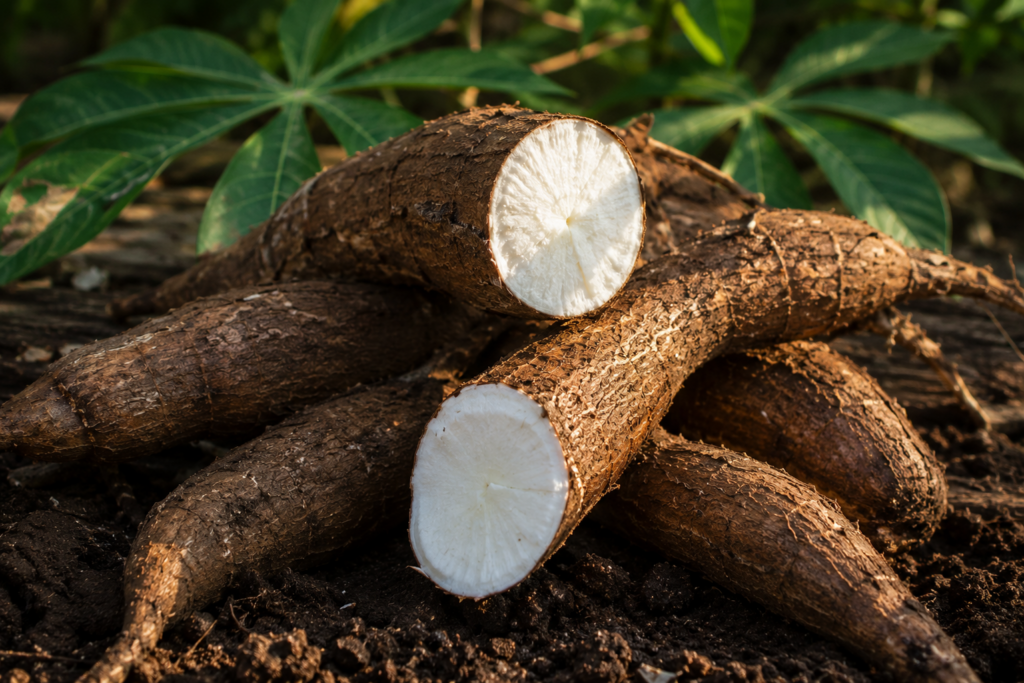
Table of Contents
ToggleTapioca starch is a fine, white starch obtained from the roots of cassava (Manihot esculenta). Cassava is widely cultivated in tropical and subtropical regions, including Southeast Asia, South America, and Africa.
During production, cassava roots are cleaned, processed, and separated to extract the starch. The starch is then purified, dried, and milled into a fine powder suitable for food applications.
Unlike wheat, rice, corn, barley, and other cereal grains, cassava is a root crop. Therefore, tapioca starch is naturally free from cereal grains and does not inherently contain gluten.
This simple botanical distinction is important:tapioca starch is grain-free because its source is cassava, not because it has been specially processed to remove grains.
The growing availability of grain-free products has encouraged food manufacturers to explore alternative starches. Tapioca starch is particularly useful because of its functional properties.
It can provide:
These properties make tapioca starch suitable for a wide range of products, including gluten-free baked goods, noodles, sauces, soups, snacks, processed foods, and prepared meals.
For manufacturers, tapioca starch can therefore be more than a replacement ingredient. It can help create specific textures and processing characteristics that consumers expect from modern food products.
Gluten is a group of proteins naturally present in certain grains, particularly wheat, barley, and rye. Since cassava is not a cereal grain, native tapioca starch does not naturally contain gluten.
This makes tapioca starch a popular ingredient in gluten-free formulations.
However, consumers should still pay attention to the overall product rather than focusing on a single ingredient. A food containing tapioca starch may contain other ingredients that are not suitable for a particular dietary requirement. Cross-contact during manufacturing can also be relevant for consumers with medically diagnosed gluten-related conditions.
For this reason, product labels, allergen statements, and appropriate certifications remain important.
This is one of the most important points for health-conscious shoppers.
Grain-free is a dietary characteristic, not automatically a health claim.For people with specific medical or dietary needs, avoiding certain grains can be important. For others, there may be no general nutritional reason to avoid all grains.
The nutritional quality of a food depends on the complete formulation, including protein, fiber, fat, vitamins, minerals, sodium, added sugars, and overall energy density.
For example, replacing wheat flour with tapioca starch does not automatically make a product nutritionally superior. Tapioca starch is primarily a carbohydrate ingredient and contains relatively little protein and fiber compared with many whole-food ingredients.
Therefore, consumers should consider the complete nutrition profile rather than assuming that a “grain-free” label means a product is universally healthier.
It is also useful to distinguish between cassava as a whole food and tapioca starch as a refined ingredient.
Cassava contains carbohydrates along with other naturally occurring components. Tapioca starch, on the other hand, is primarily the extracted starch portion of the cassava root.
This difference affects how each ingredient functions nutritionally and technologically.
Whole cassava can contribute more of the plant’s original components, while tapioca starch is valued mainly for its functional properties in food processing.
For manufacturers, this concentrated starch functionality is exactly what makes tapioca starch valuable in formulation.
The versatility of tapioca starch has made it popular across multiple food categories.
Tapioca starch can help improve softness, elasticity, and texture in gluten-free bread, cookies, cakes, and other baked goods. It is often combined with other flours and starches to achieve the desired structure.
Tapioca starch can contribute elasticity and chewiness to certain noodle and pasta formulations, particularly products designed without wheat.
As a thickening ingredient, tapioca starch can help create the desired consistency in sauces, gravies, soups, and prepared meals.
Tapioca starch can also be used in snack formulations where manufacturers need specific expansion, crispness, binding, or texture characteristics.
Its functional versatility makes tapioca starch useful in ready-to-eat meals, frozen foods, and other convenience products where texture and processing stability are important.
When buying grain-free products containing tapioca starch, consumers should look beyond the front-of-pack claims.
Consider checking:
1. The ingredient list:
See how much tapioca starch is used and what other ingredients are included.
2. Nutrition facts:
Pay attention to carbohydrates, fiber, protein, saturated fat, sodium, and added sugars.
3. Serving size:
Compare products using realistic serving sizes rather than relying only on package claims.
4. Gluten-free requirements:
If gluten avoidance is medically necessary, look for appropriate labeling or certification and consider the manufacturer’s controls against cross-contact.
5. Overall dietary pattern:
A balanced diet generally depends on the combination of foods consumed, rather than whether one ingredient is grain-free.
From a B2B perspective, tapioca starch offers manufacturers a combination of functionality and market flexibility.
It can support the development of grain-free and gluten-free products while also providing useful technical characteristics such as thickening, binding, texture modification, and structure.
For food companies responding to changing consumer preferences, tapioca starch can therefore serve both formulation and market-positioning needs.
However, product developers should select the appropriate tapioca starch specification according to the application. Factors such as viscosity, moisture, particle size, purity, microbiological requirements, and processing conditions can influence final product performance.
The connection between tapioca starch and grain-free diets is straightforward: tapioca starch comes from cassava, a root crop, so it is naturally grain-free and gluten-free.
Its growing use in food products reflects both consumer interest in alternative diets and the functional advantages of cassava starch in food manufacturing.
At the same time, it is important to avoid treating “grain-free” as a universal synonym for “healthy.” Tapioca starch is primarily a carbohydrate-based starch ingredient, and its nutritional significance depends on the complete food formulation and the overall diet.
For health-conscious shoppers, the best approach is to understand the ingredient, read the full label, and evaluate the entire nutritional profile. For food manufacturers, tapioca starch remains a versatile ingredient for developing modern gluten-free and grain-free products with the texture and performance consumers expect.
Looking for reliable tapioca starch for food manufacturing? Choose a supplier that can provide consistent quality, suitable specifications, and documentation for your target application and market.