
CASHEW NUT SHELL OIL

Sustainable Vietnamese Jackfruit begins with a simple idea: creating more value from tropical fruit while improving quality, reducing waste, and supporting a more responsible supply chain. From cultivation and harvesting to processing, packaging, and export, every stage influences the final product that reaches international buyers.
Vietnam has favorable conditions for jackfruit production, including a tropical climate, experienced growers, and an established agricultural processing sector. These strengths make the country an attractive sourcing destination for importers, distributors, and snack brands seeking dried jackfruit for wholesale, retail, OEM, or private label projects.
However, sustainability should not be treated as a marketing claim alone. Farming practices, processing efficiency, packaging choices, traceability, and supplier transparency can vary significantly. Buyers should evaluate each supplier carefully and request evidence that supports any environmental or social claims.
This article explores how Sustainable Vietnamese Jackfruit moves from farms to finished packaging and what buyers should consider when choosing a reliable supplier.
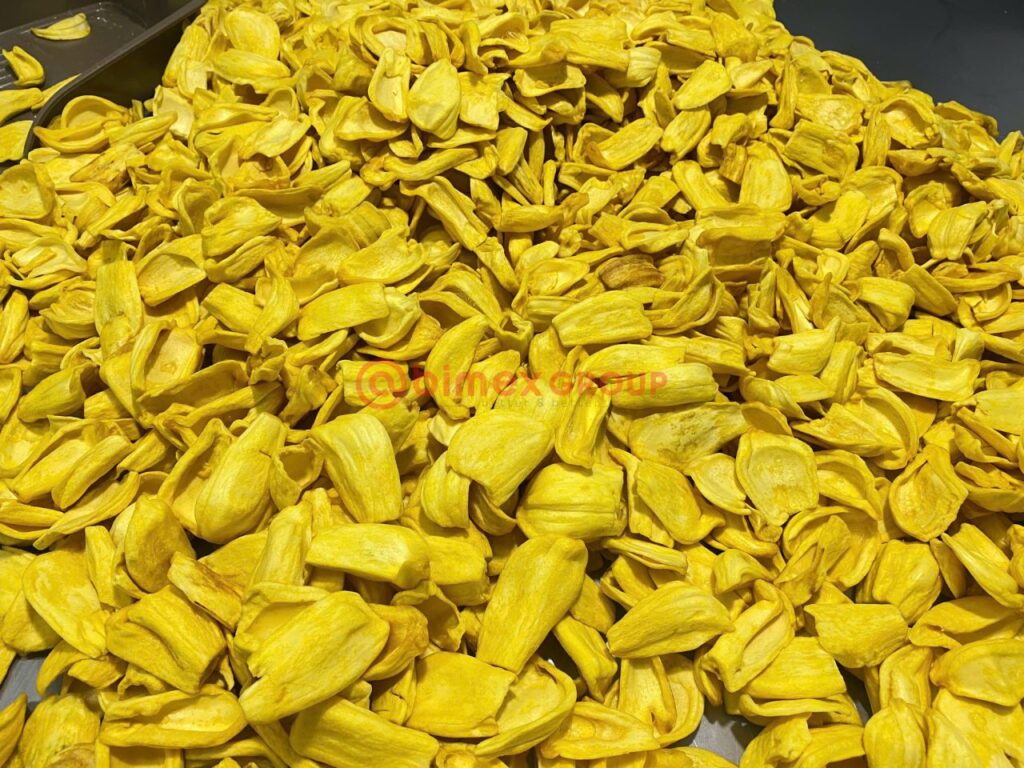
The journey begins in jackfruit-growing regions, where farmers manage orchards, monitor fruit development, and determine the right harvest time.
Jackfruit quality depends on several factors:
Fruit harvested too early may lack sweetness and aroma, while overripe fruit may be more difficult to process consistently. For dried jackfruit production, manufacturers typically require raw materials with suitable firmness, color, flavor, and moisture characteristics.
Some processors work with contracted farms or long-term agricultural partners to improve supply planning and raw material consistency. This arrangement may also support better traceability, although the level of control varies between suppliers.
Responsible farming may include practices such as improved irrigation management, careful fertilizer use, integrated pest management, and soil protection. Buyers should not assume that every farm follows the same standards. When sustainability is important to the target market, importers should ask suppliers for farm records, certifications, sourcing policies, or audit information.
Jackfruit is large, heavy, and easily damaged during handling. Careful harvesting helps reduce bruising and unnecessary product loss.
After harvest, fruit should be transported to the processing facility efficiently. Long delays or unsuitable storage conditions may affect:
One sustainability opportunity is the use of fruit that may not meet fresh retail appearance standards but remains suitable for processing. This can help reduce food waste while creating value from cosmetically imperfect fruit.
However, raw materials must still meet food safety and quality requirements. Using imperfect fruit should never mean accepting spoiled, contaminated, or unsuitable produce.
At the processing facility, jackfruit is inspected before production begins.
Typical checks may include:
The fruit is then opened, and the edible bulbs are separated from the skin, core, and seeds.
Good raw material selection is essential for Sustainable Vietnamese Jackfruit because inconsistent fruit can lead to uneven drying, poor texture, or unnecessary waste later in production.
Suppliers may also explore ways to use jackfruit by-products. Seeds, peels, and fibrous materials may have potential applications in food development, animal feed, composting, or other value-added uses. In practice, by-product utilization differs by factory, so buyers should request specific information rather than assuming a zero-waste system.
Dried jackfruit can be produced using different technologies, and each method creates a different texture, flavor, and cost structure.
Common processing methods may include:
Vacuum-fried jackfruit is typically crispy and light. The process uses reduced pressure, allowing frying at a lower temperature than conventional frying. The finished product usually contains oil, so buyers should confirm the oil type, oil content, and ingredient declaration.
Hot-air drying may create a firmer or chewier product depending on processing conditions. Temperature and drying time must be controlled carefully to achieve consistent moisture and color.
Freeze-dried jackfruit is usually light, porous, and crisp. This method can preserve color and aroma well but generally involves higher production costs. Not every supplier offers freeze-drying.
The most suitable process depends on the buyer’s target market, desired texture, ingredient policy, price range, and packaging format.
Strong quality management is an important part of Sustainable Vietnamese Jackfruit production. Reducing rejected batches, preventing contamination, and improving consistency can minimize waste and protect both buyers and consumers.
Quality control may include:
Food safety systems may include HACCP, ISO 22000, FSSC 22000, BRCGS, Halal, or Kosher, depending on the facility and target market.
Importers should request valid, updated certificates and confirm that the certification scope covers the relevant factory, production line, and product category. Certification should support supplier evaluation, but it should not replace sample testing, document review, or quality agreements.
Sustainability in processing can include more efficient use of energy, water, raw materials, and packaging.
Potential improvements may involve:
These practices can support lower resource consumption and more stable production. However, not all factories implement the same systems, and sustainability performance should be verified individually.
For buyers, supplier transparency is especially important. Ask what is currently in place, what is measured, and whether the supplier has documented improvement targets.
Packaging protects dried jackfruit from moisture, oxygen, contamination, and physical damage.
Common formats include:
The most sustainable-looking package is not always the most suitable one. Dried fruit requires effective moisture and oxygen barriers to maintain quality. Packaging that fails to protect the product may cause spoilage and create more waste than it prevents.
A better approach is to balance:
Retail brands should discuss packaging specifications, testing, MOQ, printing lead time, and regulatory labeling before mass production.
Traceability helps buyers follow products back through production batches and, where systems allow, to raw material sources.
A professional supplier should maintain records such as:
Export documents may include:
Requirements depend on the destination country, product classification, and customer specifications.
Reliable traceability and accurate documentation help strengthen confidence in Sustainable Vietnamese Jackfruit supply chains.
Before placing an order, buyers should ask clear and practical questions:
These questions help importers distinguish verified practices from general marketing language.
The future of Sustainable Vietnamese Jackfruit depends on collaboration between farmers, processors, exporters, logistics providers, brands, and buyers.
Importers can encourage better practices by:
Long-term partnerships often create more opportunities for process improvement than one-time transactions based only on price.
Sustainable Vietnamese Jackfruit is not defined by one certificate, one package, or one production method. It is the result of decisions made throughout the supply chain—from orchard management and harvesting to processing, quality control, packaging, and export.
Vietnam offers strong potential as a dried jackfruit sourcing destination, but buyers should verify supplier capabilities carefully. Transparent communication, valid documentation, consistent samples, traceability, and realistic sustainability claims are essential for building a dependable supply chain.
Looking for a Vietnamese partner for dried jackfruit sourcing?
Abimex Group supports importers, distributors, wholesalers, and retail brands with Vietnamese dried jackfruit, flexible packaging options, OEM and Private Label solutions, product specification support, and export documentation assistance.
Contact Abimex Group to request current product specifications, samples, available certification documents, packaging options, and a customized quotation for your next sourcing project.