CASHEW NUT SHELL OIL

Sourcing soft dried mango in bulk requires more diligence than simply comparing price quotes from a shortlist of suppliers. Because soft dried mango is a natural, minimally processed product, its color, moisture content, sweetness, and shelf stability can vary significantly between suppliers, and even between batches from the same factory. For importers, distributors, and food manufacturers, verifying the right details before confirming an order is the difference between a reliable long-term supply chain and a costly quality dispute.
This guide outlines what B2B buyers should verify before sourcing soft dried mango in bulk, based on the questions Abimex Group regularly receives from international customers.
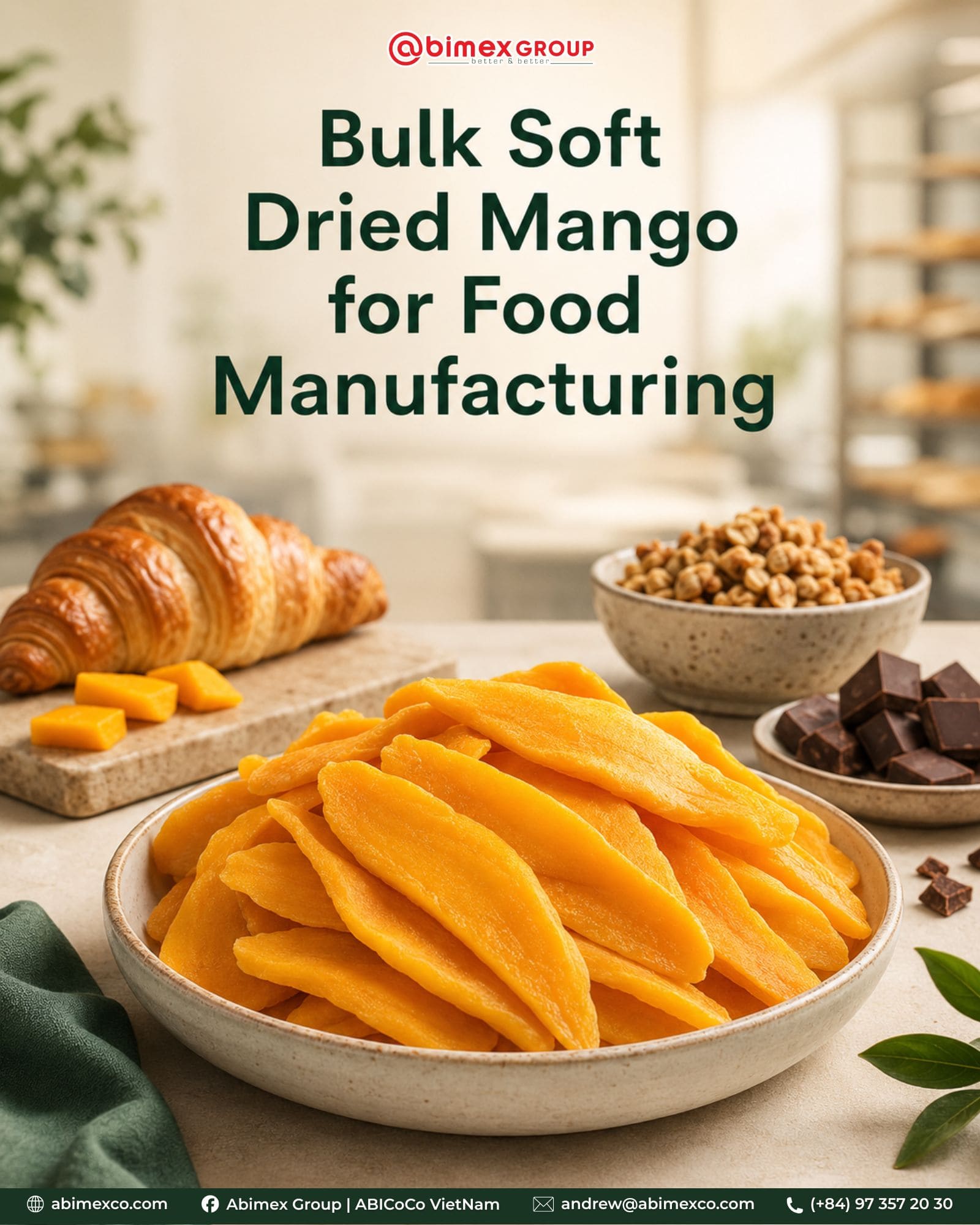
The variety and ripeness of mangoes used has a direct impact on color, sweetness, and texture. Buyers sourcing soft dried mango in bulk should ask which mango varieties are used, whether ripeness is assessed by visual inspection, Brix (sugar) measurement, or both, and whether the supplier can maintain consistent raw-material standards across different harvest seasons.
Soft dried mango may be produced with no added ingredients, or with added sugar, sulfites, or other processing aids. Before sourcing soft dried mango in bulk, buyers should request a full ingredient declaration and confirm whether the product matches their target market’s labeling expectations, particularly for customers seeking “natural” or “no added sugar” claims.
Moisture content and water activity (Aw) are two of the most important technical parameters for soft dried mango, since they directly affect texture, shelf life, and resistance to mold growth. Buyers should request the specified moisture range and water-activity limit, along with the testing method used, and confirm these figures against their own shelf-life and storage requirements.
A Certificate of Analysis for each batch should cover relevant microbiological indicators such as total plate count, yeast and mold, coliforms, and Salmonella, as well as chemical parameters such as sulfur dioxide residue where sulfites are used. When sourcing soft dried mango in bulk for regulated markets such as the EU or United States, buyers should confirm that testing limits align with destination-market regulations, not only the exporter’s home-market standard.
A single attractive sample does not guarantee that every commercial shipment will look and taste the same. Buyers should ask for photos or samples from multiple recent production batches, not only a specially prepared presentation sample, to evaluate whether color, texture, and flavor remain consistent under normal production conditions.
Soft dried mango is more moisture-sensitive than fully dried snacks, so packaging plays a critical role in maintaining softness without allowing spoilage. When sourcing soft dried mango in bulk, buyers should confirm the packaging structure, inner-liner barrier properties, net weight options, and the declared shelf life under the recommended storage conditions.
If you are still evaluating vendors, our guide on choosing a reliable soft dried mango supplier covers additional due-diligence steps worth reviewing before you sign a contract.
Buyers sourcing soft dried mango in bulk should confirm minimum order quantities, standard lead times, seasonal capacity limitations, and whether the supplier can commit to recurring volumes throughout the year. Mango is a seasonal crop in many growing regions, so understanding how a supplier manages raw-material supply during the off-season is an important part of long-term planning.
Depending on the destination market, buyers may require specific certificates such as HACCP, ISO, organic certification, or Halal certification. Before confirming an order, importers should verify that all certificates are current, cover the correct manufacturing facility, and are relevant to the specific product being purchased.
Finally, buyers should evaluate how clearly and quickly a potential supplier communicates. Response time, willingness to share detailed technical data, transparency about production capacity, and openness to third-party audits are all practical indicators of how a supplier will perform once a bulk order is confirmed.
Sourcing soft dried mango in bulk successfully depends on verifying far more than price and appearance. Mango variety and ripeness, ingredient declaration, moisture and water-activity control, microbiological testing, packaging performance, minimum order terms, and documentation all combine to determine whether a supplier can deliver consistent quality shipment after shipment.
Abimex Group supplies soft dried mango from Vietnam in natural and lightly sweetened formats, with full batch documentation, flexible packaging options, and private-label capability for importers, distributors, and food manufacturers. Our team is ready to answer detailed questions about variety, moisture specification, shelf life, and export documentation for your next bulk order.
Contact Abimex Group to request product specifications, quotations, or samples for your soft dried mango sourcing needs.