CASHEW NUT SHELL OIL

CASHEW NUT SHELL OIL
RICE PROTEIN POWDER
RICE PROTEIN POWDER
DESICCATED COCONUT
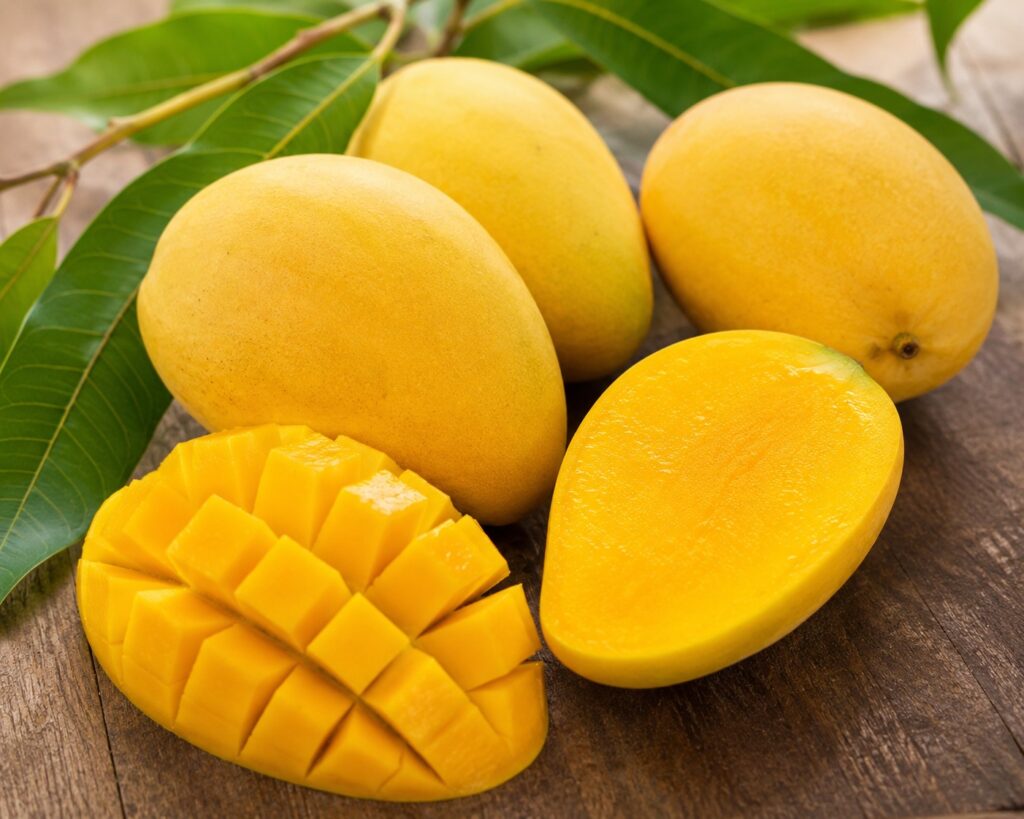
Soft dried mango supply seasons are an important consideration for importers, distributors, snack brands, retailers, and private-label buyers planning year-round sourcing programs.
Unlike ingredients produced mainly from standardized industrial inputs, dried mango begins with an agricultural raw material. Fresh mango supply can change throughout the year depending on harvest cycles, growing regions, varieties, weather conditions, and crop quality.
These changes can influence:
For B2B buyers, this does not mean soft dried mango can only be ordered during harvest season. Processors may operate beyond peak harvest periods through sourcing programs, inventory management, or multiple growing regions.
However, understanding the relationship between mango harvest timing and dried mango production can help buyers create more realistic ordering plans.

Table of Contents
ToggleSoft dried mango production starts with fresh fruit.
The characteristics of that fresh mango can influence the finished product.
Important raw-material factors include:
These characteristics naturally vary according to agricultural conditions.
During periods of stronger fresh-fruit availability, processors may have greater flexibility when selecting raw material for commercial dried mango production.
During tighter supply periods, sourcing conditions can become more challenging.
This is one reason soft dried mango supply seasons should be considered during annual purchasing discussions.
The phrase “mango season” can be misleading because there is not always one single harvest period that applies to every mango-growing region.
Harvest timing can differ according to:
Different regions may harvest at different times.
Some production systems may also use several mango varieties with overlapping crop periods.
Therefore, international buyers should avoid assuming that one fixed calendar applies to every supplier.
Instead, ask the supplier about its current raw-material sourcing program.
During stronger harvest periods, more fresh mango may become available to processors.
This can create several potential advantages.
Processors may have greater ability to select fruit according to:
Larger raw-material availability can also support production planning for higher-volume programs.
However, a large harvest does not automatically guarantee unlimited production.
Factory capacity, quality requirements, labor, packaging materials, and existing contracts can still affect availability.
When local mango production moves away from stronger harvest periods, raw-material supply may become more limited or more variable.
This can influence:
Processors may need to source fruit from different areas or adjust production schedules.
For buyers, the important lesson is that an order placed outside a major sourcing period may not always have exactly the same commercial conditions as one confirmed earlier.
Not necessarily.
A professional dried-fruit manufacturer may manage supply through a combination of:
However, availability varies between suppliers.
Buyers should therefore confirm current production status rather than assuming dried mango is automatically available year-round in every specification.
This becomes particularly important for large-volume orders.
Raw mango is a major component of dried mango production cost.
When fresh fruit supply changes, raw-material prices may also change.
Other factors can influence the final export price as well, including:
Therefore, soft dried mango supply seasons can influence price, but seasonality is not the only factor.
A buyer should not assume that a particular month will always provide the lowest price.
Instead, long-term buyers can discuss pricing windows and procurement plans with their supplier in advance.
Advance planning gives both buyer and supplier more flexibility.
When a buyer shares expected volume earlier, the manufacturer can better consider:
This is particularly useful for:
Waiting until the final selling season may create more pressure on production and logistics.
Soft dried mango is frequently used in seasonal promotions and gift programs.
Retail buyers may require products for:
In these cases, the required delivery date is usually much earlier than the actual consumer event.
Planning should work backward from the target retail date.
The timeline may need to include:
Retail launch → Local distribution → Import clearance → International transit → Production → Packaging → Raw-material planning
This is why procurement discussions should begin well before the desired delivery month.
Private-label soft dried mango usually requires more planning than standard bulk products.
Before production, buyers may need to complete:
Packaging materials can sometimes become the longest part of the project.
Even if mango raw material is available, production may still be delayed if customized packaging is not ready.
For private-label buyers, fruit season and packaging timeline should therefore be planned together.
Soft dried mango is not one standardized product.
Depending on the manufacturer, options may include:
Some specifications may require more selective raw materials or different production arrangements.
For this reason, buyers should not assume that all formulations have the same availability.
A standard dried mango product may be easier to schedule than a highly customized specification.
Cut style also matters.
Common formats may include:
Large premium cuts often require fruit with suitable size and structure.
Smaller pieces may offer more flexibility because appearance requirements can be different.
If a buyer has strict dimensional requirements, these should be communicated before production planning begins.
Fruit harvested at different points in the crop cycle can vary naturally.
Potential differences include:
Manufacturers use raw-material controls and processing adjustments to maintain product consistency.
However, dried mango remains an agricultural product.
Some natural variation should be expected.
For this reason, buyers should define an acceptable specification rather than expecting every individual piece to look identical.
Mango maturity can influence soft dried mango quality.
Riper fruit may provide:
Less mature fruit may be:
Processors need to select suitable fruit maturity to create the target dried mango profile.
This means that fresh-fruit availability is not only about quantity.
The manufacturer also needs fruit that meets processing requirements.
Soft dried mango color can range from yellow to golden-orange depending on factors such as:
Seasonal changes in raw material can influence natural color.
Professional manufacturers typically manage this within an agreed product range.
Buyers requiring a very narrow color specification should discuss this early.
Fresh mango sweetness naturally varies.
This can influence the sensory profile of dried mango.
For no-added-sugar products, raw fruit characteristics become especially important because the finished sweetness relies more heavily on the mango itself.
For sweetened formulations, manufacturers may have more tools for standardizing the final sensory profile.
Still, buyers should approve samples that represent the commercial product.
For products with no added sugar, manufacturers cannot rely on added sweeteners to adjust the finished sweetness in the same way as conventional sweetened products.
Raw mango selection can therefore become particularly important.
Manufacturers may need to pay closer attention to:
This can influence production flexibility during different supply periods.
A small trial order and a multi-container program create different production challenges.
For a larger annual contract, buyers should ideally discuss:
A supplier may then plan raw-material procurement and production capacity more efficiently.
For major programs, forecasting can be more useful than purchasing only through individual spot orders.
Some buyers are reluctant to provide forecasts because they do not want to commit too early.
However, a forecast and a confirmed purchase order can be treated differently.
An indicative forecast may help the supplier understand:
Specific commercial commitments can still be confirmed separately.
The exact arrangement should be agreed between buyer and supplier.
Price validity is important in agricultural products.
A quotation made many months before shipment may not reflect future:
Therefore, buyers can use early discussions for planning while confirming commercial pricing closer to the appropriate purchasing window.
For long-term contracts, pricing mechanisms may also be discussed.
International food supply chains can experience unexpected delays.
Possible causes include:
A tightly planned order with no buffer can create unnecessary risk.
This is especially important for retail promotions where missing the launch date can reduce the value of the shipment significantly.
Packaging decisions may include:
Customized packaging often requires separate production planning.
Buyers should confirm both product and packaging availability before committing to a launch date.
When discussing soft dried mango supply seasons, useful questions include:
These questions are more useful than simply asking:
“Is mango in season now?”
A practical sourcing plan should consider:
These variables can then be discussed with the supplier before confirming the order.
Marketing statements such as:
“September is always the best month to buy dried mango.”
or:
“Mango is unavailable from April to June.”
can be misleading.
Agricultural seasons can vary by:
A more accurate statement is:
“Raw mango availability varies throughout the year, and buyers should confirm current sourcing and production conditions with their supplier.”
This is particularly important for international B2B communication.
When supply becomes tighter, manufacturers should not simply accept unsuitable fruit to maintain production volume.
Consistent dried mango production requires raw material that meets quality requirements.
For professional buyers, reliable quality can be more important than securing the earliest possible shipment.
A realistic production schedule is usually preferable to compromising the agreed product specification.
Strong sourcing relationships can help reduce uncertainty.
A buyer who shares forecasts and communicates requirements early gives the supplier more opportunity to plan:
This does not remove all agricultural risk.
But it can make the supply chain more predictable.
Soft dried mango supply seasons can influence raw-material availability, pricing conditions, production flexibility, and lead times.
However, there is no single universal mango season that determines all dried mango supply.
Availability depends on factors such as:
For B2B buyers, the most effective approach is to plan ahead.
Discuss expected volume, formulation, cut, packaging, and target shipment period with the supplier early enough to allow appropriate sourcing and production planning.
Large-volume and private-label projects benefit particularly from advance forecasting.
At the same time, buyers should avoid assuming that past seasonal patterns guarantee future availability or pricing.
Agriculture changes from year to year.
The best purchasing strategy combines:
early planning + flexible forecasting + clear specifications + current supplier confirmation.
Abimex Group supplies Vietnamese soft dried mango for international importers, distributors, retailers, snack brands, food manufacturers, and private-label projects.
Product options can be discussed according to buyer requirements, including different:
For seasonal or larger-volume programs, early discussion can help coordinate raw-material sourcing, production, packaging, and shipment planning.
Contact Abimex Group for current specifications, samples, availability, and quotations for Vietnamese soft dried mango.