CASHEW NUT SHELL OIL

CASHEW NUT SHELL OIL
RICE PROTEIN POWDER
RICE PROTEIN POWDER
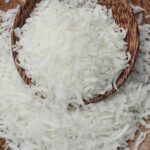
DESICCATED COCONUT
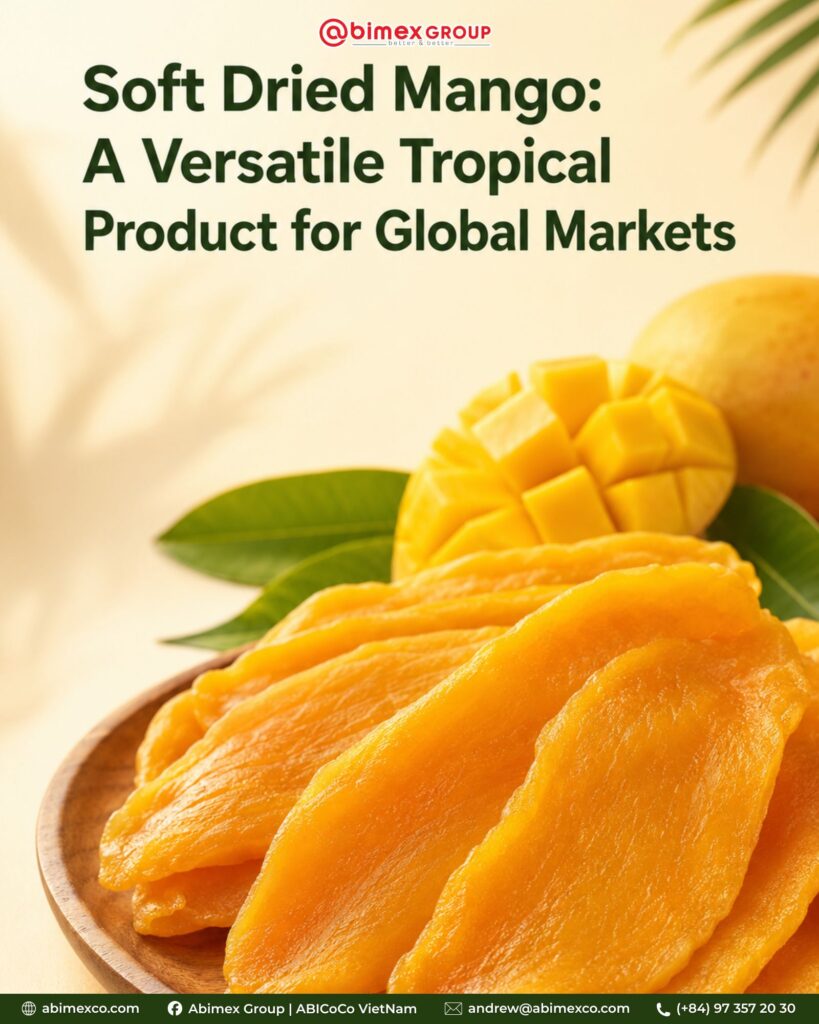
Soft-dried mango is quickly becoming one of the most attractive tropical fruit products for retailers, distributors, restaurants, bakeries, and food service operators worldwide. With its naturally sweet flavor, chewy texture, convenient format, and broad range of applications, this product meets the growing demand for snacks and ingredients that are both enjoyable and easy to use.
Unlike fresh mango, which has a limited shelf life and requires careful storage, dried mango offers greater convenience for international distribution and commercial food production. At the same time, its soft texture provides a more natural eating experience than many heavily processed or crispy alternatives. These advantages are helping it gain stronger attention from buyers seeking products with consumer appeal, flexible packaging options, and reliable year-round supply.
Table of Contents
ToggleSoft-dried mango is produced by removing part of the fruit’s moisture while maintaining a tender and chewy texture. The drying process helps extend shelf life without completely removing the natural characteristics of fresh mango.
Compared with crispy mango snacks, soft-dried products retain more flexibility and moisture. This creates a rich mouthfeel and makes the fruit suitable for direct consumption as well as use in bakery, confectionery, breakfast, and food service applications.
Depending on market requirements, suppliers may offer several product options, including:
This flexibility allows buyers to select specifications that match their target consumers, production processes, and local market regulations.
Convenience remains one of the most important factors influencing modern food purchases. Consumers increasingly look for portable products that can be eaten at work, at school, while traveling, or after exercise.
Soft-dried mango fits this demand because it requires no peeling, cutting, refrigeration, or preparation. Retailers can sell it in resealable pouches, single-serving packs, family-size bags, or mixed-fruit snack combinations.
Its naturally appealing color and recognizable fruit format also make it easier for consumers to understand the product. Unlike snacks made from artificial flavors or highly processed ingredients, dried mango provides a simple and familiar option.
For retail buyers, this means the product can be positioned across several categories, including healthy snacks, tropical foods, premium fruit products, travel snacks, vegan products, and children’s lunchbox items.
The growing popularity of soft-dried mango is not limited to retail shelves. Food service businesses are also using it as a convenient ingredient that adds sweetness, color, texture, and tropical flavor to different menu items.
Restaurants, cafés, hotels, bakeries, and catering companies can use dried mango in:
Because the product is already cleaned, cut, and ready to use, kitchen teams can reduce preparation time and minimize fresh-fruit waste. It is also easier to portion consistently, which helps food service operators control recipe costs.
However, buyers should confirm whether the product contains added sugar, preservatives, or sulfur dioxide before using it in specific recipes or clean-label menu concepts.
Fresh mango is highly perishable. Its quality can change rapidly depending on ripeness, transportation conditions, temperature, and handling. This creates challenges for importers and food service operators that need predictable quality.
By comparison, soft-dried mango offers a longer shelf life and more stable storage performance. When packed in suitable moisture- and oxygen-resistant packaging, it can maintain its texture, flavor, and appearance for an extended period.
This helps buyers reduce several commercial risks:
A longer shelf life does not mean the product can be stored without proper controls. Buyers should follow the supplier’s recommended storage conditions and keep packages away from heat, humidity, direct sunlight, and strong odors.
Consumers are paying closer attention to ingredient lists. Many prefer products made with recognizable ingredients and fewer artificial additives.
No-added-sugar and sulfur-free soft-dried mango can support clean-label product positioning, especially when the fruit’s natural sweetness is sufficient to deliver an enjoyable taste. These options may be suitable for brands targeting health-conscious consumers, vegan shoppers, parents, and buyers looking for minimally processed snacks.
Still, “natural” and “healthy” should not be treated as automatic claims. Dried fruit has concentrated natural sugars because much of its water has been removed. Retailers should communicate serving sizes clearly and avoid making unsupported nutritional or medical claims.
Transparency is particularly important for international markets. Product labels should accurately declare added sugar, preservatives, allergens, nutritional values, country of origin, and storage instructions according to local regulations.
Packaging plays a major role in the commercial success of dried fruit products. Suppliers can provide bulk cartons for repacking or food service use, as well as finished consumer packaging for retail distribution.
Common packaging options include:
For private-label projects, buyers can develop packaging based on their brand identity, target price, and distribution channel. A premium grocery brand may prefer minimalist packaging with strong clean-label messaging, while a convenience-store buyer may focus on smaller packs and impulse-purchase appeal.
The packaging material should also protect the product from moisture and oxidation. Poor packaging can cause dried mango to become too dry, sticky, dark, or uneven in texture.
Demand for tropical fruit products continues to create opportunities for importers and distributors. Vietnam is well positioned as a source of mango products because of its agricultural production, processing capabilities, and experience in food exports.
Working with an experienced supplier can help buyers secure consistent soft-dried mango specifications, suitable documentation, stable production planning, and customized packaging support.
Before confirming an order, buyers should evaluate several factors:
Samples should be evaluated under the buyer’s actual storage, packing, or production conditions. A product that performs well as a direct snack may behave differently when cut, mixed, coated, or packed by machine.
The increasing popularity of soft-dried mango comes from its balance of taste, convenience, versatility, and commercial practicality. It can be sold as a ready-to-eat snack, used as a food service ingredient, included in mixed-fruit products, or developed under a private label.
For retailers, it provides strong visual appeal and multiple positioning opportunities. For food service operators, it offers consistent portions and reduced preparation waste. For distributors, it provides a shelf-stable tropical fruit product that can serve several customer segments.
The greatest opportunity is not simply selling dried mango as another snack. Buyers can differentiate their products through customized cuts, controlled sweetness, sulfur-free options, functional packaging, and responsible sourcing.
Abimex Group supplies Vietnamese dried fruit products for international retail, distribution, and food service markets. Our product range includes regular and no-added-sugar dried mango options, customized cutting formats, bulk packing, and private-label solutions.
We focus on consistent quality, export-ready documentation, flexible commercial support, and long-term cooperation with global buyers.
Looking for a reliable soft-dried mango supplier from Vietnam? Contact Abimex Group to request product specifications, packaging options, current quotations, or samples for your evaluation.