CASHEW NUT SHELL OIL

CASHEW NUT SHELL OIL
RICE PROTEIN POWDER
RICE PROTEIN POWDER
DESICCATED COCONUT
For B2B distributors evaluating premium cat litter, dust performance is an important product-selection factor, especially in urban markets where consumers increasingly prefer cleaner litter-box environments. Two growing options are silica crystal litter and tapioca cat litter, also known as cassava-based cat litter.
Both can be produced with low-dust characteristics, but their physical structures and manufacturing processes are different. Rather than claiming one material is universally safer, distributors should compare measurable product specifications, consistency, and performance after transportation.
Table of Contents
ToggleDust usually comes from fine particles separated from larger granules during production, packing, shipping, pouring, or daily use. The final dust level depends on several factors, including particle-size distribution, granule strength, moisture content, surface abrasion, screening efficiency, and packaging protection.
This means dust performance should be evaluated based on the finished product, not only on the raw material.
Silica crystal litter is generally made from porous silica gel granules. This category is commonly positioned around lightweight handling, moisture absorption, and low-dust performance.
When properly screened, silica litter can contain relatively few loose fines at the factory. However, rigid or brittle crystals may generate smaller fragments when exposed to impact, friction, or long-distance transport. For importers, crystal durability and particle-size consistency therefore matter as much as the initial appearance of the product.
It is also important to distinguish silica gel, which is typically based on amorphous silica, from crystalline silica. These materials should not be treated as identical when making technical or marketing claims.
Tapioca cat litter is manufactured using cassava-derived starch together with other plant-based components depending on the formulation. Its granule structure can be adjusted through formulation, granulation, drying, and screening.
This gives cassava cat litter manufacturers flexibility to control particle size, density, texture, and mechanical strength. However, plant-based composition does not automatically mean dust-free performance. Granules that are too dry, weak, or poorly screened may create more fines during storage and international transportation.
For B2B distributors, stable production control is therefore essential. A strong supplier should monitor granule integrity, moisture, particle-size distribution, and dust percentage across batches.
There is no universal answer based only on material type. Both silica and tapioca cat litter can be engineered for low-dust performance.
Silica litter may offer firm, porous crystals with limited initial fines when production and screening are well controlled. Tapioca litter offers a plant-based granule system that can be engineered for consistent size and reduced loose particles.
For sensitive-home positioning, distributors should request measurable data and test commercial samples before making claims.
Key specifications may include dust percentage, particle-size range, abrasion resistance, granule integrity after transport, tracking behavior, and batch-to-batch consistency.
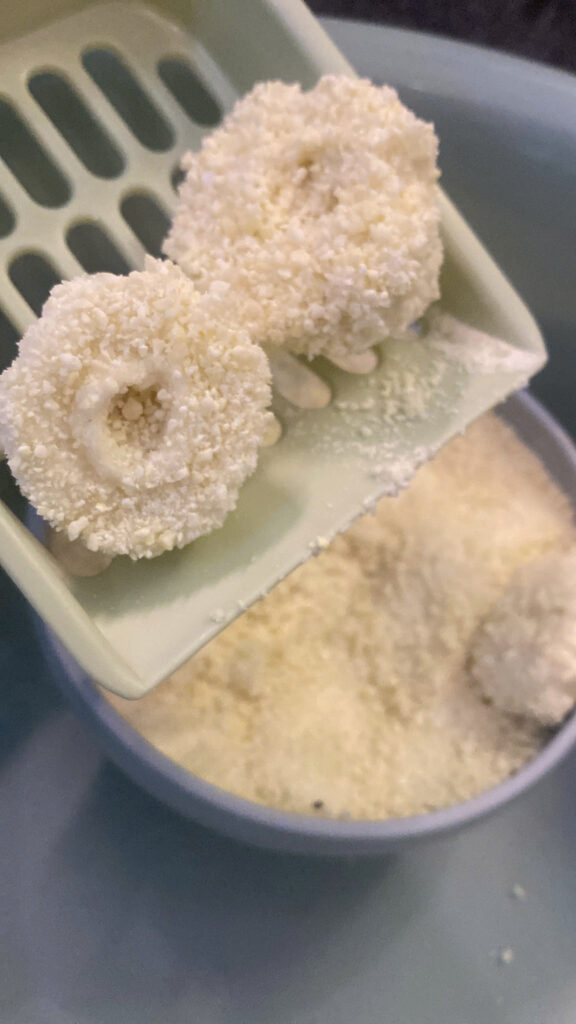
Distributors should request a technical specification sheet, dust-test information, production-control details, and representative samples. Testing samples after simulated transport can be especially useful because a product that looks clean at the factory may generate more fines after long-distance shipping.
Packaging strength should also be reviewed because better protection can help maintain granule integrity through the supply chain.
For distributors developing premium plant-based cat litter portfolios, tapioca offers a differentiated platform with strong potential for natural-material positioning and private-label customization.
As a cassava cat litter manufacturer, we focus on controlled granulation, dust reduction, consistent particle specifications, and OEM solutions for international markets. The right choice should always be based on verified product data, target-market needs, and supply-chain performance rather than absolute material claims.