CASHEW NUT SHELL OIL

CASHEW NUT SHELL OIL
RICE PROTEIN POWDER
RICE PROTEIN POWDER
DESICCATED COCONUT
As the pet care market continues to develop, brands are looking for cat litter products that combine reliable performance, convenient packaging, and a clear product proposition. Private label tapioca cat litter is one option attracting attention from pet brands, distributors, retailers, and importers seeking to develop their own product lines.
However, choosing a private label cat litter supplier involves more than comparing product samples. A successful B2B partnership requires careful evaluation of product specifications, MOQ, packaging capabilities, certifications, quality control, customization, and export documentation.
Before placing an order, pet brands should ask the right questions to make sure the supplier can support both the product requirements and the commercial strategy.
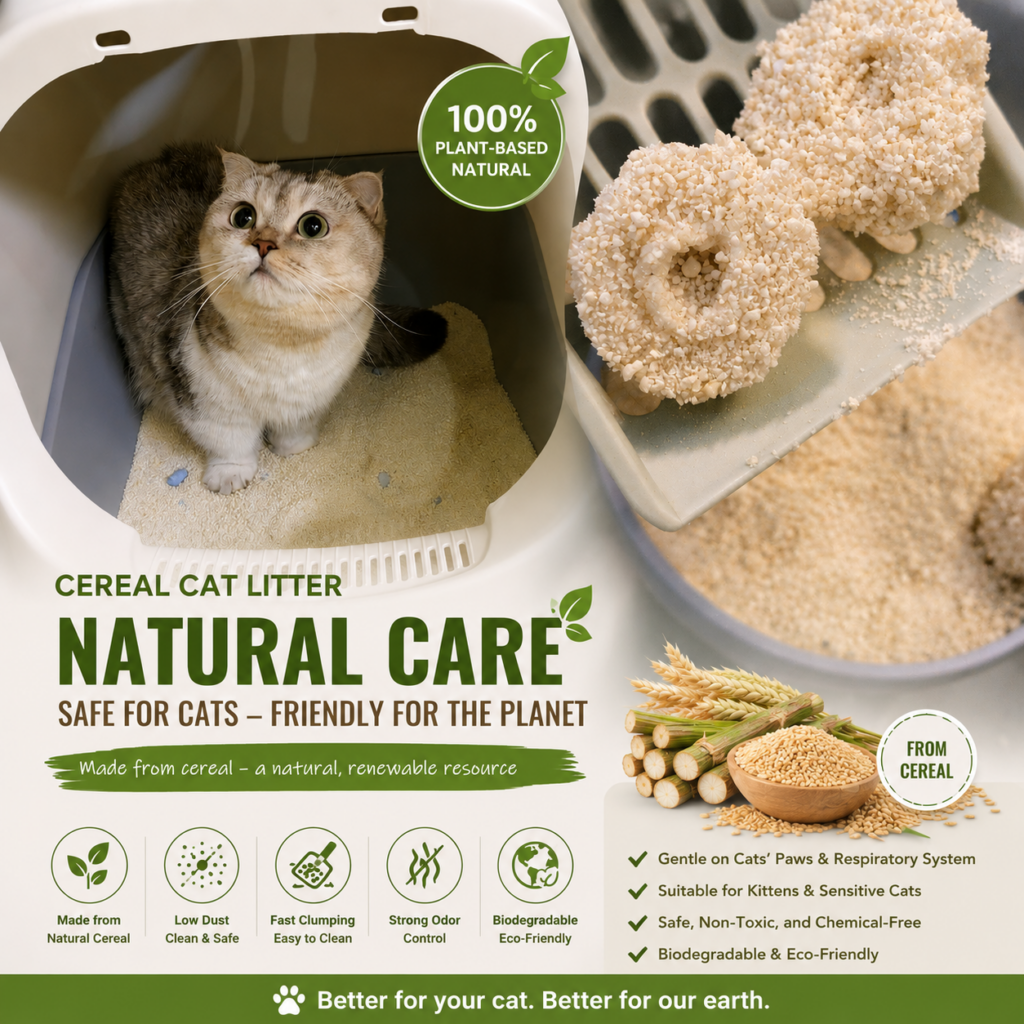
Table of Contents
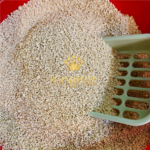
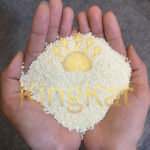
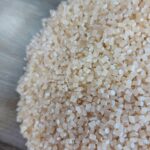
ToggleTapioca cat litter is a plant-based cat litter made using starch derived from cassava, a root crop. Depending on the formulation and manufacturing process, tapioca-based litter can be developed in different forms, including granules or pellets.
For private label brands, the product may be customized according to factors such as:
Because different markets have different consumer expectations, brands should establish detailed product specifications before requesting quotations.
Minimum Order Quantity (MOQ) is one of the first commercial questions a pet brand should ask.
MOQ can vary depending on the supplier, formulation, packaging type, printing requirements, and whether the product is an existing standard formulation or a customized product.
Ask the supplier:
Understanding MOQ early helps brands evaluate whether the supplier is suitable for their current business scale.
A supplier with flexible options may be useful for brands entering a new market, while larger distributors may require production volumes aligned with their retail network.
A professional supplier should be able to provide a clearproduct specification sheet.
Depending on the product, this may include:
Brands should avoid relying solely on marketing descriptions such as “premium,” “natural,” or “high performance.” Technical specifications provide a more practical basis for comparing suppliers.
Certifications can be particularly important for B2B buyers selling into international markets.
Ask the supplier which certifications and quality-management systems are currently available for the specific manufacturing facility and product.
Depending on the target market and customer requirements, relevant documentation may include:
Importantly, brands should verify whether a certificate applies to the actual manufacturing facility and product being purchased rather than assuming that a supplier’s general certification covers every product.
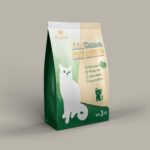
Packaging is a major part of private label development.
Ask whether the supplier can support:
For example, a brand may want 2 kg, 5 kg, or 10 kg packages depending on its sales channel.
The supplier should also clarify packaging specifications such as material structure, thickness, dimensions, printing method, and packaging tolerance.
Not every private label project requires a completely new formulation.
Some brands may simply need their own packaging for an existing product. Others may want specific performance characteristics.
Ask the supplier whether customization is available for:
If customization is required, request a sample or trial batch before confirming the final specification.
Product samples are essential in B2B sourcing.
A sample allows the brand to evaluate characteristics that cannot be fully understood from a specification sheet.
For tapioca cat litter, brands may assess:
Absorption: How quickly does the litter absorb liquid?
Clumping: Does the litter form stable clumps that are easy to remove?
Dust: How much fine material is generated during pouring and use?
Granule consistency: Are the pieces relatively uniform?
Odor control: How does the product perform during normal use?
Handling: Is the packaging convenient for transportation, storage, and consumer use?
Testing should ideally follow a consistent internal evaluation method so different suppliers can be compared objectively.
Consistency is especially important for private label products because the final product carries the buyer’s brand name.
Ask the supplier about quality-control procedures from raw material sourcing through production and packing.
Useful questions include:
A supplier with a structured quality-control system can help brands maintain consistency as order volumes increase.
Because tapioca cat litter is based on cassava-derived material, raw material quality can influence the consistency of the finished product.
Brands should ask where the cassava-based raw materials are sourced and how suppliers manage variations in raw material quality.
Important considerations may include:
For brands promoting a plant-based product concept, understanding the supply chain can also help them communicate more accurately with retailers and consumers.
For international B2B orders, packaging is only one part of the logistics process.
Pet brands should ask suppliers whether they can provide the documentation required for export and import procedures in the destination market.
Depending on the shipment and destination, documentation may include:
Requirements can vary by country, so brands should confirm the applicable documentation with their customs broker or import partner.
Price is naturally important in private label sourcing, but it should not be the only evaluation factor.
A lower quotation may not provide the best overall commercial value if the supplier cannot meet the required product specification, packaging quality, documentation, or consistency.
A practical supplier evaluation can include:
| Criteria | Key Question |
|---|---|
| MOQ | Does the minimum quantity fit our business model? |
| Quality | Is the product specification clearly defined? |
| Certification | Can the supplier provide relevant documentation? |
| Packaging | Can the supplier produce our required format? |
| Customization | Can the formulation meet our requirements? |
| Quality Control | How is batch consistency maintained? |
| Samples | Can we test the product before ordering? |
| Documentation | Can the supplier support export requirements? |
| Communication | Is technical and commercial communication clear? |
This approach helps brands compare suppliers based on the complete sourcing package rather than a single quotation.
Developing a private label tapioca cat litter product can give pet brands greater control over product positioning, packaging, and market strategy. However, the quality of the supplier relationship plays a major role in the long-term success of the product.
Before choosing a supplier, pet brands should ask detailed questions about MOQ, product specifications, certifications, raw materials, quality control, packaging, customization, samples, and export documentation.
The goal is not simply to find a supplier that can manufacture cat litter. It is to find a manufacturing partner capable of producing a consistent product that matches the brand’s specifications and target market requirements.
For B2B buyers, a clear specification and transparent communication from the beginning can make the private label development process much more efficient.