CASHEW NUT SHELL OIL

CASHEW NUT SHELL OIL
RICE PROTEIN POWDER
RICE PROTEIN POWDER
DESICCATED COCONUT
Tapioca-based cat litter odor control is becoming an important consideration for pet brands, distributors, and private-label buyers looking for plant-based litter options. While odor control is often presented as a simple product benefit, the actual mechanism involves several factors working together, including moisture absorption, clumping performance, particle structure, litter depth, and daily litter box maintenance.
Tapioca-based litter does not simply “erase” odor. Instead, it can help manage odor by absorbing moisture, surrounding waste, and making soiled material easier to remove from the litter box.
Understanding how this process works can help buyers evaluate product quality more realistically and communicate product benefits more accurately.
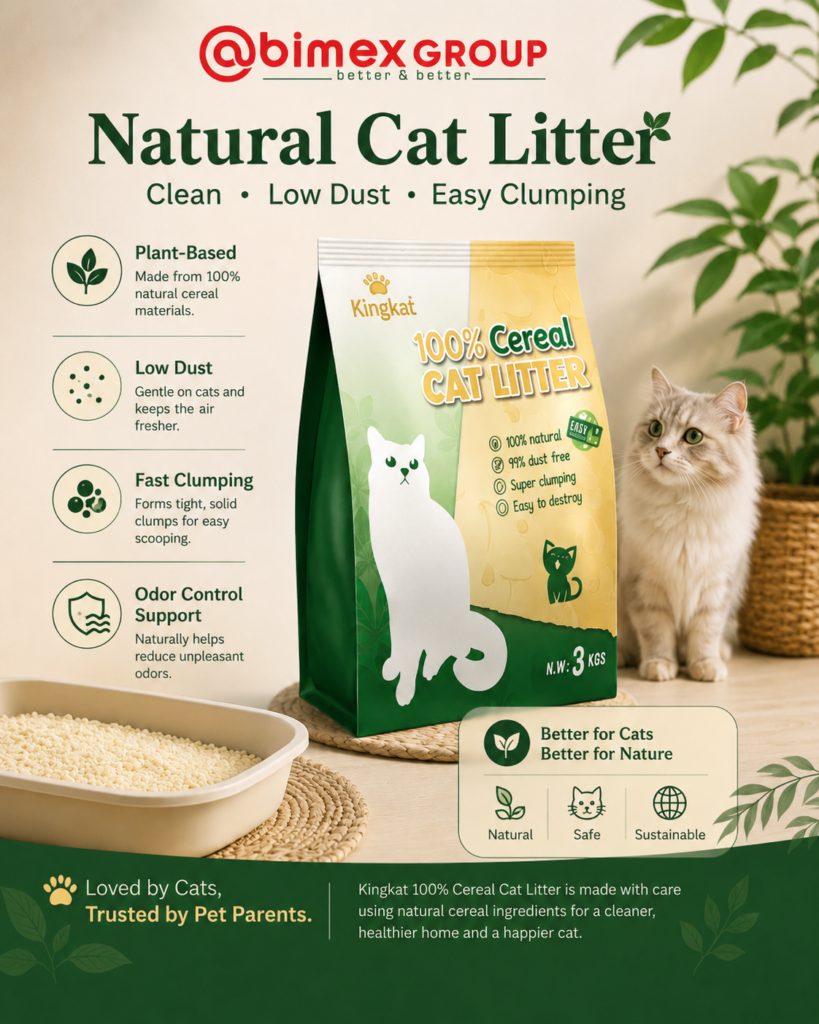
Table of Contents
ToggleBefore discussing tapioca-based cat litter odor control, it is useful to understand where litter box odor comes from.
The main sources are cat urine and feces.
Urine contains water and nitrogen-containing compounds. As urine remains in the litter box, microorganisms can contribute to the formation of stronger-smelling compounds over time.
Feces also contain naturally occurring odor-producing compounds.
The longer moisture and waste remain exposed inside the litter box, the more noticeable odor may become.
This is why effective litter performance depends on more than fragrance.
A litter that absorbs moisture quickly and forms removable clumps can help reduce the amount of waste remaining in the tray.
Tapioca starch comes from cassava roots and contains starch molecules that interact readily with water.
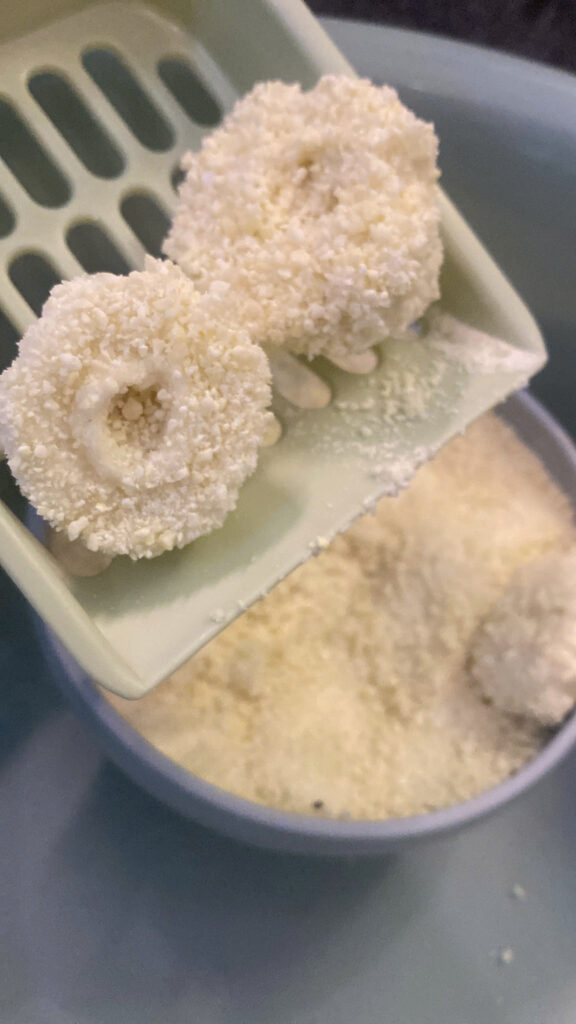
When tapioca-based litter particles come into contact with urine, they can absorb moisture and begin binding together.
This moisture interaction is one of the key foundations of tapioca-based cat litter odor control.
Instead of allowing liquid to remain spread across the bottom of the litter tray, the litter can help concentrate moisture into a more localized area.
The exact absorption performance depends on the product formulation, particle size, density, starch content, processing method, and any additional plant-based materials used.
For this reason, not all tapioca-based litter products perform identically.
One of the most important functions of cat litter is clumping.
When liquid contacts tapioca-based particles, the starch-rich material can swell and bind together, helping form a compact clump.
This clumping process is important for odor management because it helps isolate urine from the surrounding clean litter.
A stable clump can then be removed during routine scooping.
The faster contaminated material is removed, the less time odor-producing waste remains in the litter box.
Therefore, tapioca-based cat litter odor control is closely connected to clump strength and removal efficiency.
A product that forms weak clumps may break apart during scooping, leaving small contaminated particles behind.
For pet brands and importers, clumping performance should therefore be evaluated together with odor-control claims rather than treated as a separate feature.
Some cat litters use fragrance to create a more pleasant smell.
However, fragrance and odor control are not the same thing.
Fragrance may mask certain odors temporarily, while moisture absorption and waste removal address the physical source of odor.
A tapioca-based litter can be formulated with or without added fragrance depending on the target market and consumer preference.
For unscented formulations, the focus is typically on:
For scented products, fragrance may complement these functions, but it does not replace proper moisture management.
This distinction is useful for brands developing claims around tapioca-based cat litter odor control.
Particle size and shape also affect how litter behaves inside the tray.
Smaller particles may create more contact area with liquid, while larger particles can influence tracking, dust behavior, and clump structure.
Manufacturers therefore need to balance several characteristics when designing tapioca-based litter.
These may include:
A product optimized only for very rapid absorption may not necessarily provide the best overall user experience.
This is why formulation development usually involves testing multiple properties at the same time.
Speed matters in litter performance.
When urine enters the litter bed, faster liquid absorption can help reduce the area of contamination.
Rapid clump formation may also make it easier for the waste to remain concentrated in one section of the tray.
This contributes to tapioca-based cat litter odor control because the contaminated material can be identified and removed more easily.
However, clumping speed alone is not enough.
The resulting clump should also remain sufficiently stable during scooping.
A balance between quick formation and structural strength is therefore important.
No litter product should automatically be assumed to eliminate all odor under every condition.
Odor levels are affected by many variables, including:
For this reason, statements such as “100% odor elimination” should only be made when supported by appropriate testing and when allowed by applicable advertising regulations.
A more accurate way to describe tapioca-based cat litter odor control is that the litter can help manage odor through moisture absorption, clumping, and removal of contaminated material.
This language reflects the functional mechanism without overstating performance.
Even high-performing litter requires regular maintenance.
Users should remove clumps and solid waste frequently and replenish litter when necessary.
If contaminated litter remains in the tray for extended periods, odor can gradually increase regardless of the litter material.
This is an important point for pet brands communicating product benefits.
Odor-control performance depends on both product formulation and proper use.
Clear instructions on packaging can help consumers understand how to obtain better performance from the product.
Tapioca is one of several plant-derived materials used in modern cat litter formulations.
Its starch content provides useful water-binding characteristics that can support clumping.
Depending on the formulation, manufacturers may combine tapioca with other materials to adjust properties such as:
This allows suppliers to develop different litter specifications for different markets.
For private-label buyers, it is therefore important to ask about the actual formulation rather than assuming that every product marketed as tapioca litter has the same performance profile.
When evaluating tapioca-based cat litter odor control, commercial buyers should request samples and conduct practical application tests.
Important parameters may include:
How much liquid can the litter absorb under defined test conditions?
How quickly does a stable clump form after contact with liquid?
Does the clump remain intact during scooping?
How does the product manage odor under standardized testing or controlled use conditions?
Does the litter release noticeable dust when poured or used?
How easily do particles leave the litter box on a cat’s paws?
Is the granule size consistent with the target market preference?
Does the product maintain its characteristics during transportation and storage?
Testing these characteristics together gives buyers a more complete understanding of product performance.
Marketing language matters.
Pet brands should avoid making absolute claims unless they have reliable data to support them.
For example, instead of saying:
“Completely eliminates all odor.”
A more responsible product description may be:
“Designed to help manage litter box odor through moisture absorption and fast clumping.”
This type of wording explains the mechanism without promising performance that may vary depending on conditions of use.
For B2B buyers, suppliers should ideally provide available test methods, product specifications, and sample results when odor-control performance is a major purchasing requirement.
For private-label and bulk buyers, consistent production is just as important as the raw material itself.
A supplier should be able to discuss:
It is also useful to test multiple samples if the supplier offers different formulations.
The best formulation for one market may not be ideal for another.
For example, one brand may prioritize strong clumping, while another may prioritize low tracking or lighter product weight.
Tapioca-based cat litter odor control is mainly based on physical moisture management rather than a single “odor-killing” mechanism.
When properly formulated, tapioca-based particles can absorb liquid, form clumps, help contain contaminated material, and make waste easier to remove from the litter box.
These functions can contribute to better everyday odor management when combined with regular scooping and appropriate litter box hygiene.
Actual performance depends on formulation, particle structure, litter depth, environmental conditions, and user habits.
For this reason, buyers should evaluate odor control together with absorption, clumping strength, dust, tracking, and overall product consistency.
Abimex Group supplies tapioca-based cat litter for international pet product distributors, retailers, and private-label brands.
We can support buyers with product specifications, samples, packaging options, and OEM/private-label discussions based on project requirements.
For buyers evaluating odor-control performance, we recommend reviewing the complete product specification and testing representative samples under the intended conditions of use.