CASHEW NUT SHELL OIL

CASHEW NUT SHELL OIL
RICE PROTEIN POWDER
RICE PROTEIN POWDER
DESICCATED COCONUT
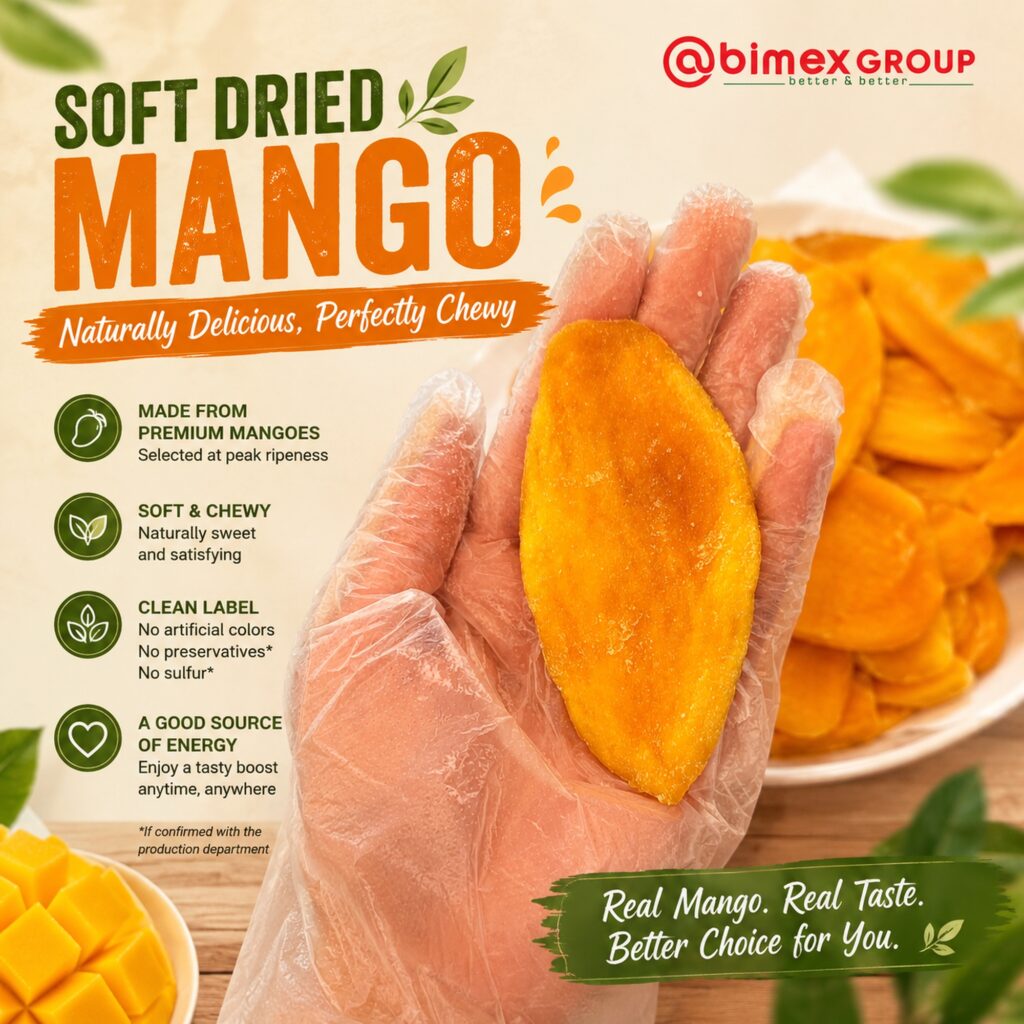
When choosing soft dried mango, consumers often look for simple labels and familiar ingredients. Terms such as “no sulfur,” “no preservatives,” “no added sugar,” and “natural” can influence purchasing decisions. However, these statements should always be supported by the actual ingredient list and product specifications.
For manufacturers, importers, distributors, and consumers, learning how to read a dried mango label is one of the easiest ways to understand what is really inside the package.
Rather than assuming that a product is free from sulfur dioxide, preservatives, or added sugar, check the label carefully and confirm the manufacturer’s specifications when necessary.
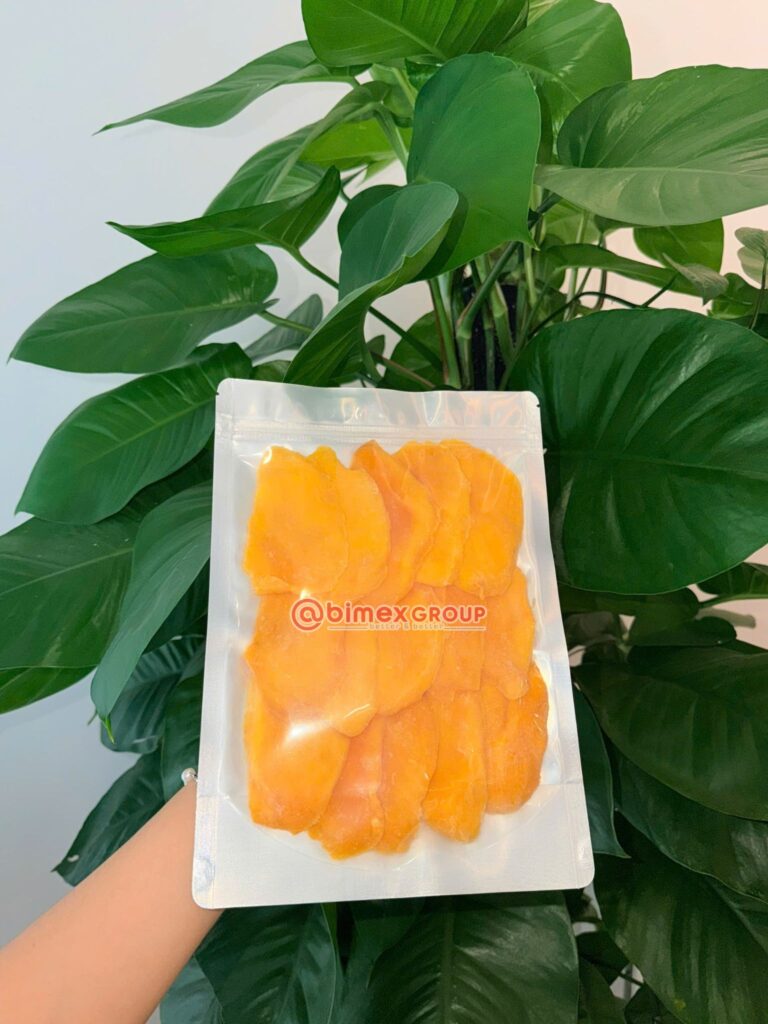
Table of Contents
ToggleThe ingredient list is one of the most important sections of a soft dried mango label.
If the product contains only mango, the ingredient list should clearly reflect that. If other ingredients are used, such as sugar, acidity regulators, preservatives, or antioxidant agents, they should generally be declared according to the applicable labeling requirements of the destination market.
For B2B buyers, the retail label may not tell the entire story. It is useful to request additional documentation such as:
This helps buyers make decisions based on documented information rather than marketing language alone.
Sulfur dioxide and sulfites are commonly associated with the preservation and appearance of some dried fruits. They can help maintain color and extend shelf life in certain applications.
However, “no sulfur” should not be assumed simply because a dried mango looks natural or has a different color.
When evaluating a soft dried mango product, check whether sulfur dioxide or sulfites are listed in the ingredients or specifications. Depending on the market and applicable regulations, sulfites may be declared using different names or additive terminology.
For commercial purchasing, buyers should request confirmation from the manufacturer and, where appropriate, verify the relevant analytical results.
If your product specification requires sulfur-free or sulfite-free dried mango, make this requirement clear before placing an order. Ask the supplier to confirm the requirement in writing and provide supporting documentation where applicable.
This is especially important for private-label and retail products, where label accuracy is critical.
Another common question is whether soft dried mango contains preservatives.
Again, do not rely solely on product appearance or the phrase “natural”. Check the ingredient list and product specification to determine whether preservatives are used.
A product marketed as “no preservatives” should have a documented basis for that claim. If you are sourcing dried mango for international distribution, it is also important to check the labeling and additive regulations in your target country.
Different markets may have different requirements regarding food additives, claims, and ingredient declarations.
These are two completely different claims.
A soft dried mango can potentially be made without preservatives while still containing added sugar. Conversely, a product may contain no added sugar while still requiring evaluation for other ingredients or processing aids.
Therefore, when comparing products, look separately for:
Preservatives: Are any preservative ingredients declared?
Added sugar: Is sugar, syrup, or another sweetening ingredient included?
Sulfur/sulfites: Is sulfur dioxide or another sulfiting agent declared or specified?
Mango content: Is mango the primary or only ingredient?
Understanding these distinctions makes it easier to compare dried mango products accurately.
One of the most important points when evaluating soft dried mango is its naturally occurring sugar.
Mango naturally contains sugars. During drying, water is removed from the fruit, so the sugars become more concentrated by weight.
This means that even a soft dried mango product with no added sugar can still have a relatively high total sugar content.
Consumers should therefore avoid interpreting “no added sugar” as meaning “sugar-free” or automatically “low calorie.”
For food manufacturers and retailers, accurate nutrition information is essential when developing product packaging and marketing materials.
Soft dried mango is designed to retain a chewy, tender texture, rather than the brittle crunch associated with crispy or vacuum-fried fruit snacks.
The final texture can depend on several factors, including:
This is why two products labeled “soft dried mango” can have noticeably different textures.
For B2B buyers, it is useful to define product requirements clearly, including piece size, moisture, texture, color, sweetness, packaging, and shelf life.
The front of a package is designed to communicate the product quickly. However, the most useful information is often found on the back or side.
When evaluating soft dried mango, look for:
Marketing claims can attract attention, but the ingredient declaration and technical documentation provide a stronger basis for comparison.
If you are sourcing soft dried mango for import, retail, food service, or private label, consider asking your supplier these questions:
These questions can help purchasing teams evaluate suppliers more systematically and reduce misunderstandings during product development.
Words such as “natural,” “clean label,” “no preservatives,” and “no sulfur” can be valuable product claims, but they should be used carefully.
A responsible approach is to connect every claim with verifiable product information. This is particularly important for exporters because labeling rules can differ between countries.
If a supplier has not confirmed a particular claim, avoid presenting it as a guaranteed product characteristic.
For example, instead of assuming that every soft dried mango is sulfur-free, buyers should verify the specific product formulation and production process.
A good soft dried mango label should make it easier for buyers to understand what they are purchasing.
The key is to look beyond attractive packaging and focus on the ingredient list, nutrition information, specifications, and supporting documentation.
Whether you are a consumer looking for a convenient fruit snack or a food company sourcing ingredients for a new product, understanding the label helps you make a more informed decision.
“No sulfur” and “no preservatives” should be verified—not assumed. The best way to evaluate soft dried mango is to read the ingredient list carefully and request technical confirmation when necessary.
At the same time, remember that dried mango naturally contains fruit sugars, which become more concentrated as moisture is removed. “No added sugar” and “no preservatives” do not automatically mean that a product is nutritionally superior.
For manufacturers and importers, transparent specifications and accurate labeling are essential for building consumer trust and meeting market requirements.