CASHEW NUT SHELL OIL

CASHEW NUT SHELL OIL
RICE PROTEIN POWDER
RICE PROTEIN POWDER
DESICCATED COCONUT
Natural vs Sweetened Soft Dried Mango is an important comparison for importers, distributors, retailers, and private-label brands developing dried-fruit products. Both options can offer an attractive tropical flavor and convenient shelf-stable format, but they may differ significantly in ingredients, sweetness, texture, color, positioning, and target consumers.
The correct choice depends on more than personal taste. Buyers must consider local consumer preferences, labeling requirements, price positioning, packaging, storage conditions, and the intended sales channel.
It is also important to define the word “natural” clearly. Depending on the supplier, natural soft dried mango may mean no added sugar, no preservatives, no sulfur dioxide, or simply a less processed formulation. Buyers should never rely on the product name alone; the ingredient list and written specification must confirm exactly what the product contains.
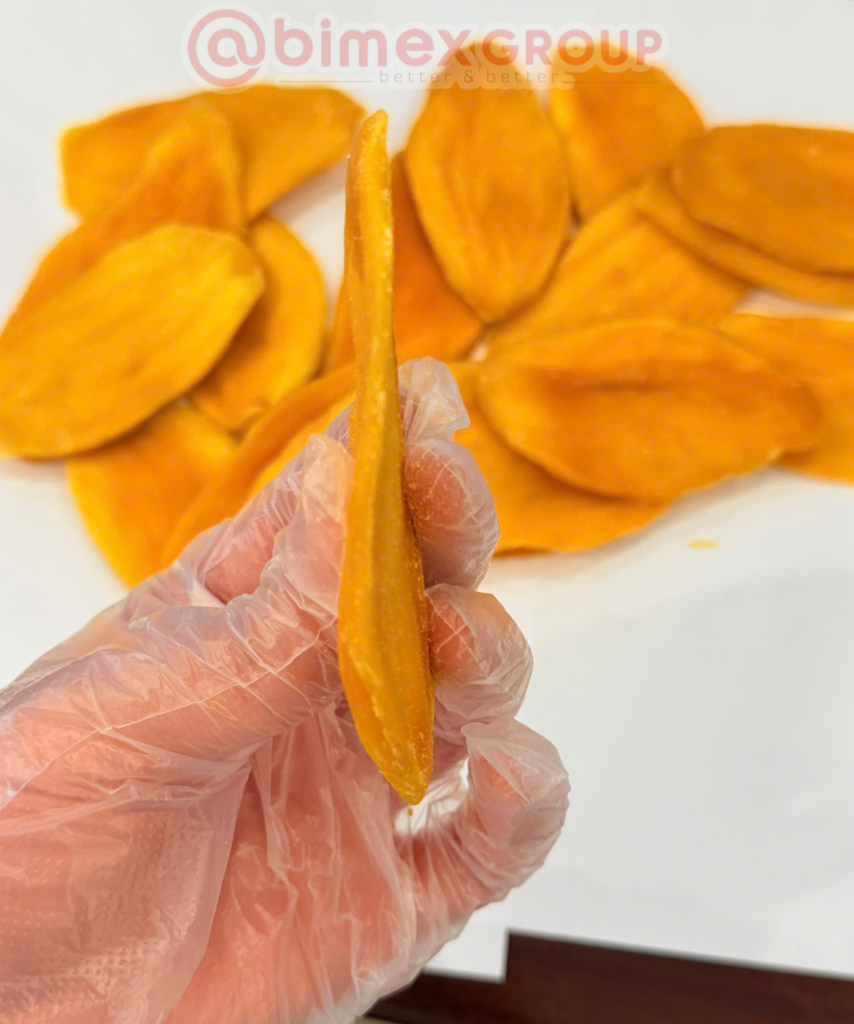
Table of Contents
ToggleThe main difference is usually whether sugar is added during processing. Natural soft dried mango is commonly produced to preserve more of the mango’s original sweetness and acidity, while sweetened mango includes added sugar to create a sweeter and sometimes more consistent flavor profile.
However, the comparison is not always straightforward. A no-added-sugar product may still contain naturally occurring sugars from mango. It may also contain sulfur dioxide or another permitted ingredient unless the supplier specifically confirms otherwise.
Similarly, a sweetened product may differ in sugar level, treatment method, moisture, and texture. Therefore, Natural vs Sweetened Soft Dried Mango should be evaluated using actual specifications, samples, and ingredient declarations rather than marketing terms alone.
Natural soft dried mango is often selected by brands seeking a shorter or simpler ingredient list. If it contains only mango, it may support straightforward product positioning. However, any claim such as “no added sugar,” “preservative-free,” or “sulfur dioxide-free” must accurately reflect the formulation and comply with the destination market’s labeling rules.
Sweetened soft dried mango normally contains mango and added sugar. Depending on the process, other ingredients may also be used to manage color, texture, or shelf stability. Buyers should request a complete ingredient declaration before approving the product.
The term “no added sugar” does not mean “sugar-free.” Mango naturally contains sugar, so the nutrition panel may still show a significant amount of total sugars. This distinction should be communicated clearly to avoid misleading consumers.
For private-label projects, buyers should confirm:
Natural soft dried mango generally offers a flavor closer to the original fruit. Its sweetness, acidity, and aroma may vary depending on the mango variety, maturity, growing season, and production batch.
Some consumers appreciate this more authentic fruit profile. Others may find the natural acidity or batch variation less suitable for their preferences.
Sweetened mango typically delivers a stronger and more immediately recognizable sweetness. Added sugar can help balance acidity and create a flavor profile that may be more consistent across batches. This can be useful for mainstream snack products or markets where consumers prefer sweeter dried fruit.
Nevertheless, more sugar does not automatically mean better flavor. Excessive sweetness may cover the natural mango character and limit the product’s appeal to consumers seeking less-sweet snacks.
When comparing Natural vs Sweetened Soft Dried Mango, buyers should conduct sensory testing with their target market instead of selecting a product based only on internal preferences.
Texture is another important point of difference. Natural mango may have a firmer, more fibrous, or less sticky texture depending on the raw material and drying conditions.
Sweetened products are often perceived as softer or more flexible, although the actual texture depends on processing, moisture content, sugar concentration, slice thickness, and storage conditions.
Added sugar can also contribute to surface stickiness. This may not be a defect if it remains within the agreed product standard, but excessive stickiness can create problems during handling, repacking, and consumer use.
Buyers should evaluate:
A freshly produced sample may perform differently after several months. Packaging trials and shelf-life information are therefore important, especially for retail and private-label products.
Consumers often associate bright, uniform color with product quality, but natural dried fruit does not always maintain the same color throughout storage.
Mango color can be influenced by the fruit variety, maturity, drying temperature, oxygen exposure, light, storage temperature, and use or absence of color-preserving treatments.
Natural or sulfur dioxide-free mango may gradually become darker during storage. This does not automatically indicate that the product is unsafe, but it may affect consumer acceptance and retail appearance.
Sweetened mango may also experience color changes. Added sugar alone does not guarantee stable color, and the final appearance still depends on the entire process and packaging system.
For an objective comparison, buyers should agree on:
The approved sample should serve as a sensory reference, while measurable requirements should be documented in the product specification.
The right choice depends heavily on how and where the product will be sold.
Natural soft dried mango may be suitable for:
Sweetened soft dried mango may be suitable for:
In Natural vs Sweetened Soft Dried Mango, neither option is universally better. A natural formulation may support premium positioning but could have greater variation in flavor, color, or texture. A sweetened formulation may provide a more familiar taste but may be less suitable for brands targeting reduced-added-sugar preferences.
Market research and sample evaluation should guide the decision.
Buyers should not assume that adding sugar automatically guarantees a longer shelf life. Product stability depends on several factors, including moisture, water activity, processing hygiene, packaging barriers, oxygen exposure, storage temperature, and formulation.
A no-added-sugar or sulfur dioxide-free product may require particular attention to packaging and storage. Color and flavor changes may become more visible if the product is exposed to oxygen, heat, or light.
Suitable packaging should help protect the mango from:
The supplier should provide the declared shelf life, storage requirements, packaging specification, and the basis used to support the shelf-life statement.
For private-label projects, testing the product in the actual intended package is preferable to relying only on samples packed in temporary pouches.
Price differences may result from raw-material selection, fruit maturity, formulation, processing yield, production controls, packaging, order volume, and seasonal availability.
Natural mango is not automatically more expensive in every case, and sweetened mango is not automatically the cheaper option. The commercial result depends on the exact specification.
Buyers should compare quotations using the same criteria:
Comparing only the price per kilogram may lead to an inaccurate decision. A lower-priced product may generate additional costs if it has excessive stickiness, inconsistent cuts, weak packaging, or poor acceptance in the target market.
Before placing a bulk order, importers should request documents relevant to their market and intended use, such as:
For Natural vs Sweetened Soft Dried Mango, the documentation must clearly distinguish between natural sugars and added sugars. It should also identify any preservatives or color-protection agents used.
Certificates should be valid, current, and relevant to the actual manufacturing facility and production scope. A certificate alone does not prove that every batch meets the buyer’s requirements, so batch-specific testing and traceability remain important.
Buyers should begin with the target consumer and product positioning. A brand targeting consumers who prefer simpler ingredient lists may prioritize a no-added-sugar formulation. A mainstream snack brand may prefer the familiar sweetness and softer profile of a sweetened product.
Before confirming an order, consider the following questions:
Side-by-side sample testing is one of the most practical ways to compare the two options. Buyers should evaluate multiple pieces and, where possible, samples from more than one production batch.
The Natural vs Sweetened Soft Dried Mango decision affects flavor, texture, color, labeling, product positioning, packaging, and consumer acceptance. Natural mango may provide a more authentic fruit profile and simpler ingredient positioning, while sweetened mango may offer a sweeter and more familiar taste.
Neither option is automatically superior. Buyers should define what “natural” means, review the full ingredient list, test representative samples, confirm destination-market requirements, and document all measurable criteria in the specification.
Abimex Group supplies Vietnamese soft dried mango for importers, distributors, food manufacturers, retailers, and private-label businesses. We can discuss natural, no-added-sugar, sweetened, and customized options based on your required cut, formulation, packaging, and target market.
Contact Abimex Group to request product specifications, quotations, or samples for your soft dried mango sourcing requirements.