CASHEW NUT SHELL OIL

The global gluten-free food market is projected to exceed $12 billion by 2030 — and at the heart of every successful gluten-free formulation is the right starch. Modified tapioca starch gluten free baking solutions have emerged. Modified tapioca starch in gluten-free baking has emerged as one of the most effective functional ingredients available, offering superior texture, stability, and shelf life compared to native starches and other gluten-free alternatives. In this complete guide, we explore how modified tapioca starch in gluten-free baking works, its key benefits, applications across bakery products, and what food manufacturers need to know when sourcing.
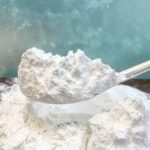
Modified tapioca starch is native cassava starch that has undergone physical, chemical, or enzymatic treatment to enhance its functional properties beyond what native starch can deliver. The modifications improve heat resistance, freeze-thaw stability, texture consistency, and shelf life — making modified tapioca starch significantly more versatile in demanding food manufacturing environments.
In modified tapioca starch gluten free baking applications, this ingredient plays a critical structural role. It replaces the binding, elasticity, and moisture-retention functions that gluten naturally provides in conventional wheat-based products — making it an essential ingredient for any manufacturer serious about gluten-free product quality.
Key advantages over native tapioca starch:
Gluten serves three critical functions in conventional baking: binding ingredients, trapping fermentation gases to create rise, and retaining moisture to keep products soft. Remove gluten, and you lose all three.
Native tapioca starch alone cannot fully compensate. While it provides light texture and some binding, it lacks the stability and structural integrity required for consistent industrial-scale production. Modified tapioca starch gluten free baking formulations fill this gap.
According to food science research, modified tapioca starch provides moisture retention, elasticity, and volume expansion in gluten-free dough, while complementary ingredients such as xanthan gum act as binders to trap gas and control water migration. Together, they counteract the crumbling and drying effects that are the most common quality challenges in gluten-free baking.
Structural integrity — cross-linked modified starches form stronger networks that prevent crumbling and improve slice-ability in gluten-free breads and cakes.
Moisture retention — modified starches hold water more effectively than native starch, keeping products moist and extending shelf life — a critical challenge in gluten-free formulation.
Process tolerance — modified tapioca starch maintains its properties under the high temperatures, pH variations, and mechanical stress of industrial baking, where native starch would break down.
Freeze-thaw stability — for frozen gluten-free products, modified tapioca starch prevents the texture degradation and water separation that occur with native starch through freeze-thaw cycles — a key requirement for the rapidly growing frozen bakery category.
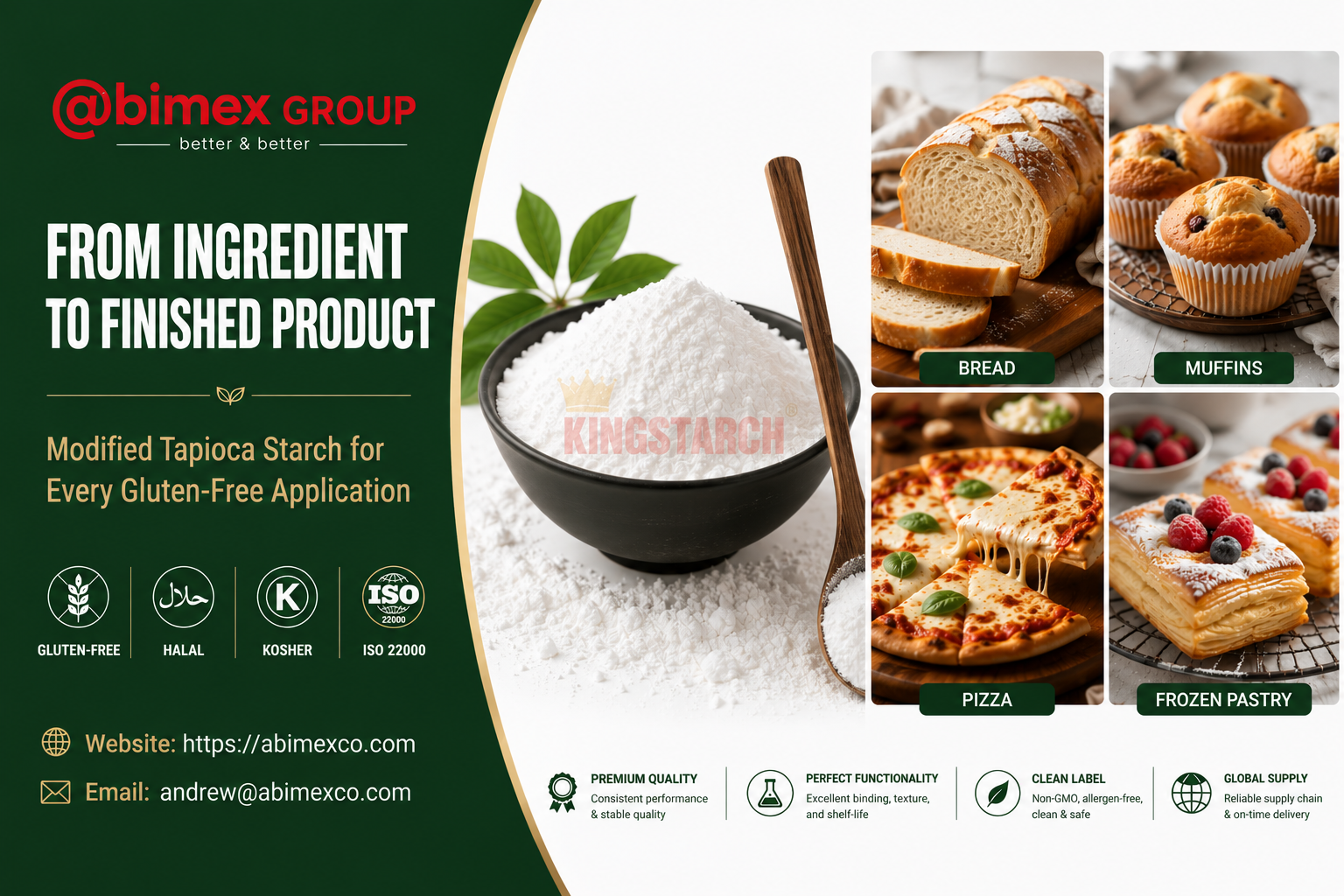
Modified tapioca starch gluten free baking applications span a wide range of products. Modified tapioca starch in gluten-free baking is used across a wide range of bakery products, each with specific functional requirements:
Bread is the most technically demanding gluten-free application. Modified tapioca starch gluten free baking for bread provides the structure, moisture retention, and crumb softness that gluten-free bread requires — both for fresh and frozen formats. It helps achieve a consistent, slice-able loaf with acceptable volume and a shelf life comparable to conventional bread.
In cakes and muffins, modified tapioca starch delivers a tender, moist crumb and reduces the staling rate — keeping products soft for longer on shelf. It works effectively alongside rice flour and other gluten-free bases to achieve the fine texture consumers expect.
For cookies and biscuits, modified tapioca starch gluten free baking contributes crispness, shape retention during baking, and extended shelf life. Its anti-retrogradation properties are particularly valuable in retail products with longer shelf requirements.
Frozen gluten-free products — pizza bases, par-baked bread, pastries, and ready meals — place the highest demands on starch performance. Modified tapioca starch with freeze-thaw stability ensures that products maintain their texture, moisture, and visual appeal through freezing, distribution, and consumer reheating.
In filled bakery products, modified tapioca starch acts as a heat-stable thickener and stabiliser, maintaining filling consistency through baking without breaking down or becoming watery. It delivers the smooth, glossy texture expected in premium pastry applications.
| Starch | Heat Stability | Freeze-Thaw | Texture | Clean Label |
|---|---|---|---|---|
| Modified Tapioca | ✅ Excellent | ✅ Excellent | ✅ Smooth | ✅ Yes |
| Native Tapioca | ⚠️ Limited | ❌ Poor | ✅ Light | ✅ Yes |
| Modified Corn Starch | ✅ Good | ✅ Good | ⚠️ Heavy | ⚠️ GMO risk |
| Rice Starch | ⚠️ Limited | ❌ Poor | ✅ Fine | ✅ Yes |
| Potato Starch | ❌ Poor | ❌ Poor | ✅ Chewy | ✅ Yes |
Modified tapioca starch consistently outperforms alternatives in the critical combination of heat stability, freeze-thaw resistance, and clean flavour profile. For further reference, see the published research on ScienceDirect: Effect of modified tapioca starch and xanthan gum on gluten-free bread quality.
Research indicates modified tapioca starch gluten free baking is most effective at 5–15% of total flour weight for standard applications, and up to 25% in cakes and cookies where additional tenderness is required. The optimal level varies by application, desired texture, and the specific modified starch grade — your supplier should provide application-specific technical guidance.
| Parameter | Specification |
|---|---|
| Moisture content | ≤ 13% |
| Whiteness | ≥ 90% |
| pH | 5.0–7.0 |
| Gluten content | Not detected (< 20 ppm) |
| Shelf life | 24 months in sealed packaging |
| Packaging | 25kg bag or 850kg jumbo bag |
At Abimex Group, we manufacture and supply a comprehensive range of modified tapioca starch grades under our Kingstarch Vietnam brand — Abimex Group’s dedicated tapioca starch and starch derivatives division. All grades carry Halal, ISO 22000, FSSC 22000, and HACCP certification, with Kosher available on selected grades. Available in 25kg bags and 850kg jumbo bags with full technical documentation. Contact us to discuss the right grade for your specific gluten-free application.
Yes. Modified tapioca starch gluten free baking ingredients are derived from cassava root, which contains no gluten. The modification process introduces no gluten-containing ingredients. All grades from Abimex Group’s Kingstarch Vietnam brand test at < 20 ppm gluten — below the international gluten-free labelling threshold accepted in the EU, US, and most global markets.
Not entirely — they serve complementary roles. Modified tapioca starch provides moisture retention, elasticity, and volume expansion, while xanthan gum traps fermentation gas and controls water migration. In many formulations, using both at lower levels delivers better results than increasing either ingredient alone.
Research indicates 5–15% of total dry ingredient weight for most applications, and up to 25% in cakes and cookies. The optimal level depends on your specific formulation, flour blend, and desired texture. Contact Abimex Group’s technical team for application-specific recommendations.
Yes — specific grades of modified tapioca starch under the Kingstarch Vietnam range are engineered for freeze-thaw stability, making them ideal for frozen gluten-free bread, pizza bases, pastries, and ready meals. Selecting the right grade for your freezing and reheating conditions is essential — contact us for grade recommendations.
Properly stored in a cool, dry environment in sealed packaging, modified tapioca starch has a shelf life of 24 months from the date of manufacture.
Modified tapioca starch gluten free baking is an essential functional strategy. Modified tapioca starch in gluten-free baking is an essential functional ingredient for any food manufacturer serious about gluten-free product quality. It replaces gluten’s structural role, improves texture and moisture retention, extends shelf life, and delivers the freeze-thaw stability required for frozen product lines — all while meeting clean-label, Halal, and Kosher requirements that today’s global markets demand.
Looking for modified tapioca starch for your gluten-free formulation? At Abimex Group, we supply a full range of grades under our Kingstarch Vietnam brand, with Halal, Kosher, ISO 22000, and FSSC 22000 certification, available in 25kg bags and 850kg jumbo bags. Contact us to request samples, technical data sheets, and grade recommendations tailored to your application.