CASHEW NUT SHELL OIL

CASHEW NUT SHELL OIL
RICE PROTEIN POWDER
RICE PROTEIN POWDER
DESICCATED COCONUT
Jackfruit Chips Quality Specifications should be established before an importer approves samples or confirms a commercial order. A product may look attractive in a photograph or taste good when freshly opened, but those observations alone do not provide enough information to control quality across repeated shipments.
Jackfruit is a natural agricultural product, so some variation in color, shape, flavor, and size is unavoidable. However, commercial batches should remain within clearly agreed tolerances. Importers should therefore combine measurable parameters with sensory standards, packaging requirements, testing methods, and acceptance procedures.
This guide explains the main factors buyers should review when developing a practical specification for crispy jackfruit chips.
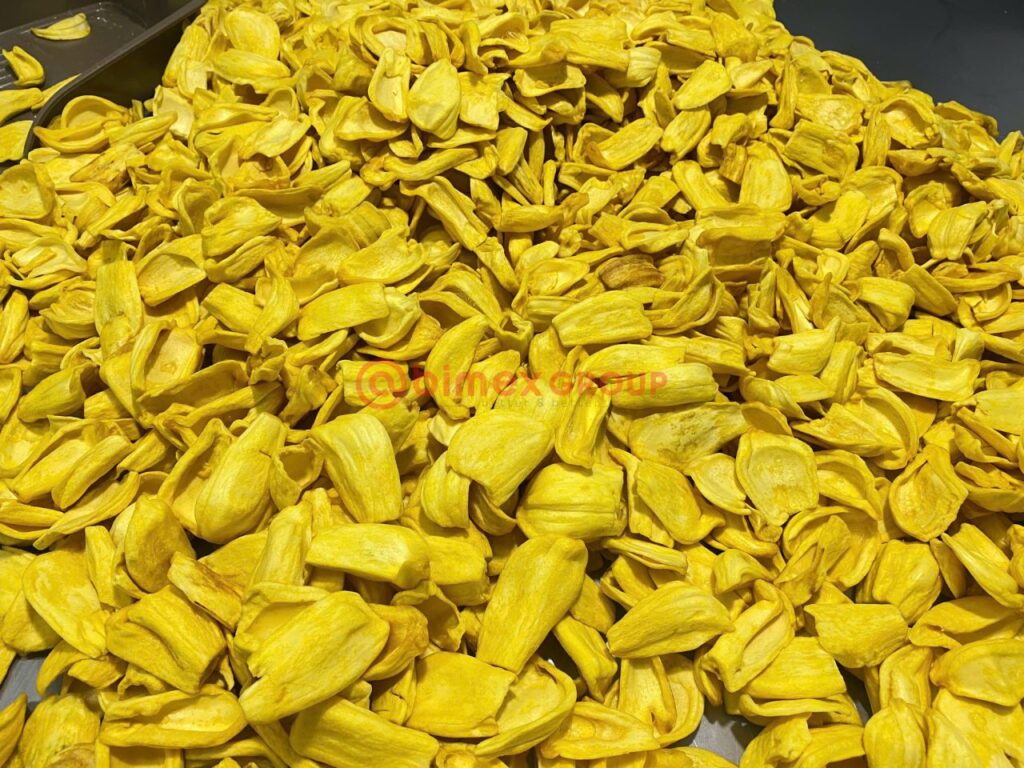
Table of Contents
ToggleClear specifications help importers and suppliers define what an acceptable shipment should look, taste, and perform like. They also reduce disagreements caused by subjective descriptions such as “premium quality,” “bright yellow,” or “extra crispy.”
Strong Jackfruit Chips Quality Specifications should cover:
The appropriate limits depend on the destination market, intended sales channel, packaging format, transportation period, and buyer requirements. A supplier’s standard specification should not automatically be assumed to meet every importer’s needs.
The specification should begin with a clear description of the product. “Dried jackfruit” may refer to several products with different textures and manufacturing methods, including crispy chips, chewy dried slices, or freeze-dried pieces.
Buyers sourcing crispy jackfruit chips should confirm:
Vacuum-fried jackfruit chips and conventionally fried products may differ in appearance, texture, oil content, and processing conditions. The product description should therefore reflect the actual manufacturing method rather than relying on a broad commercial name.
Moisture is closely connected to the texture and storage stability of crispy fruit products. If the product absorbs moisture, it may lose crispness and become soft or less pleasant to eat. However, a low moisture result at the factory does not protect the product throughout its entire journey.
Effective Jackfruit Chips Quality Specifications should consider:
Crispness is usually evaluated through sensory inspection, while moisture is measured through laboratory testing. Buyers should not treat these as interchangeable. A product can meet a moisture limit but still have an undesirable texture because of slice thickness, raw-material condition, processing, oil quality, or handling.
Where texture is commercially critical, the approved sample can serve as a sensory reference alongside the measurable moisture requirement.
Natural jackfruit may vary according to variety, maturity, growing conditions, and production batch. Some controlled color variation is therefore realistic. However, the product should remain within an acceptable range agreed upon by the buyer and supplier.
The sensory specification may describe:
Descriptions should be specific enough to guide evaluation without demanding impossible uniformity. Photographs can support color assessment, but lighting, camera settings, and screen differences may change how a sample appears. Physical reference samples are usually more useful for final sensory comparison.
Piece size affects retail appearance, eating experience, package filling, and perceived value. Some buyers may prefer larger, recognizable slices, while others may accept smaller pieces for snack mixes, foodservice, toppings, or value-oriented retail products.
For this reason, Jackfruit Chips Quality Specifications should define:
Importers should clarify how breakage will be calculated. Measuring by weight may produce a different result from counting individual pieces. The parties should also agree on the minimum size that qualifies as a whole piece or an acceptable broken piece.
A perfect sample does not guarantee that the same piece integrity will remain after carton stacking, inland transport, container loading, ocean freight, customs handling, and destination delivery. Packaging strength and cargo handling must therefore support the physical specification.
Because crispy jackfruit chips may be produced using a frying process, oil quality can influence flavor, aroma, mouthfeel, and storage performance. A product that tastes clean when freshly produced may develop undesirable characteristics if processing oil, oxygen exposure, heat, packaging, or storage conditions are not properly controlled.
Depending on the buyer’s requirements, relevant parameters may include:
Any numerical limit should be agreed upon with a stated test method. Results from different laboratories or methods may not always be directly comparable. Importers should therefore confirm the testing basis before using laboratory data for acceptance or rejection.
Food-safety limits must reflect destination regulations, customer standards, and the intended market. The same specification may not be suitable for every country or retailer.
Possible parameters include:
When preparing Jackfruit Chips Quality Specifications, importers should provide required microbiological limits before production begins. They should also confirm whether testing must be conducted by the factory laboratory, an accredited external laboratory, or a specific inspection company.
A general certificate or historical laboratory report does not prove that the current shipment complies. Where required, results should correspond to the actual production batch.
The finished product should be free from unacceptable foreign materials and contamination. The written specification should identify prohibited materials and clarify how visible defects will be assessed.
Inspection criteria may cover:
Importers should ask the supplier about sorting, inspection, metal-detection, sanitation, and traceability controls. However, production controls and finished-product specifications serve different purposes. A process description should not replace measurable acceptance criteria.
Packaging protects the product from moisture, oxygen, contamination, odors, and physical damage. It should remain effective during warehousing, inland transportation, port handling, international shipping, and destination distribution.
Buyers should confirm:
A transparent window may improve product visibility, but it should be evaluated together with barrier performance and shelf-life requirements. Visual appeal should not weaken product protection.
For private-label projects, the importer should also confirm printed-packaging minimum quantities, artwork responsibilities, and ownership of unused packaging.
A declared shelf life normally assumes that the product remains unopened and is stored under recommended conditions. It should not be interpreted as a guarantee under every temperature, humidity level, or handling environment.
The specification should state:
Shelf-life evidence should be relevant to the actual product and packaging combination. Changing the pouch material, net weight, sealing method, or carton format may affect performance.
Even detailed requirements can lead to disputes if the parties use different sampling and test methods. Importers should define how samples are selected, how many units are inspected, and what happens when a result falls outside the agreed tolerance.
Supporting documents may include:
Reliable Jackfruit Chips Quality Specifications should separate sensory references from measurable acceptance criteria. An approved sample is useful for comparing appearance and flavor, but laboratory requirements and tolerances should remain documented.
Price should not be the only consideration when selecting a jackfruit chips supplier. Importers should also evaluate whether the supplier can provide representative samples, maintain batch consistency, control packaging, support traceability, and communicate clearly about technical requirements.
Before ordering, buyers should ask:
A low quotation may become expensive if the product arrives soft, heavily broken, incorrectly labeled, or outside the required specification.
A practical specification should protect both the importer and supplier. It establishes realistic expectations, creates an objective basis for quality evaluation, and reduces the risk of misunderstandings after shipment.
Importers should review product identity, moisture, sensory characteristics, piece size, oil quality, microbiological safety, packaging, shelf life, and documentation as one connected system. No single laboratory result can demonstrate complete product quality.
Abimex Group supplies Vietnamese crispy jackfruit chips for importers, distributors, retailers, and private-label snack brands. Our team can discuss your required Jackfruit Chips Quality Specifications, packaging format, destination-market requirements, quotations, and sample needs.
Contact Abimex Group to request product information or representative samples for your jackfruit chips sourcing project.