CASHEW NUT SHELL OIL

CASHEW NUT SHELL OIL
RICE PROTEIN POWDER
RICE PROTEIN POWDER
DESICCATED COCONUT
Jackfruit Chips for Snack Mixes can add a distinctive tropical flavor, golden color, and crunchy texture to products such as trail mixes, fruit-and-nut blends, cereal snacks, and premium retail assortments. However, incorporating jackfruit chips into a multi-ingredient product requires more than selecting an attractive sample.
Manufacturers must consider how the chips interact with nuts, seeds, dried fruits, chocolate, seasonings, and other components throughout mixing, packing, transportation, and storage. Differences in moisture, oil content, piece size, density, and physical strength may affect the consistency and shelf life of the final product.
Before commercial production, manufacturers should evaluate the jackfruit chips both individually and within the complete snack-mix formulation.
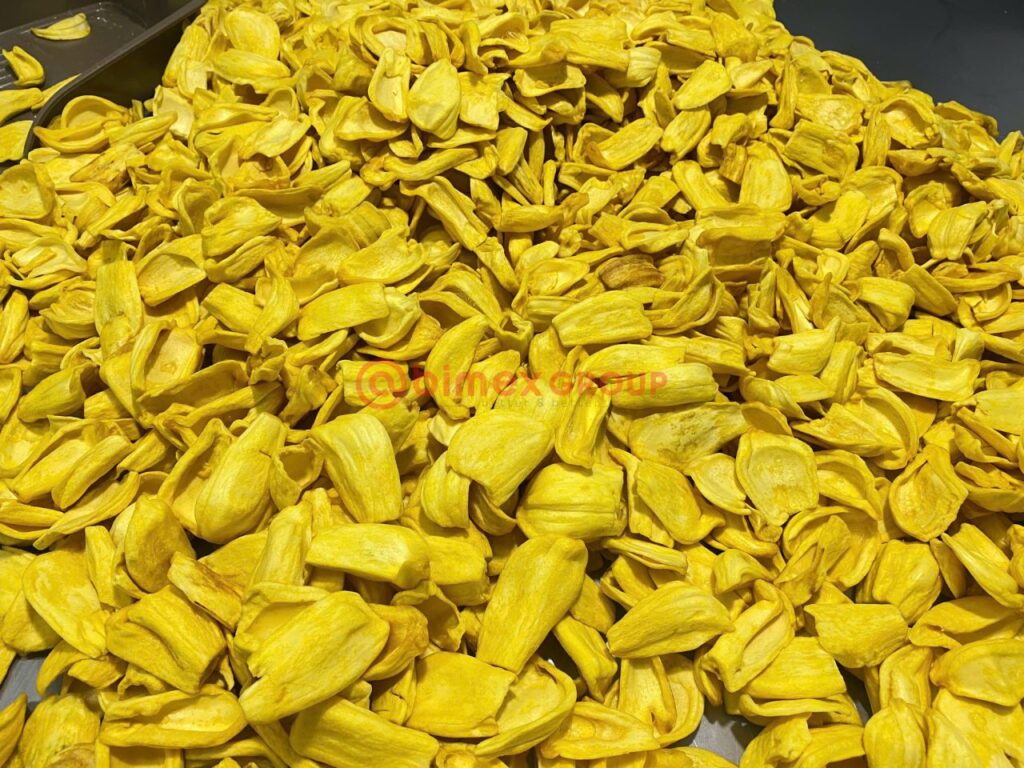
Table of Contents
ToggleJackfruit chips offer a recognizable tropical identity that can help differentiate a snack mix from conventional combinations based only on raisins, nuts, or banana chips. Their golden-yellow appearance can also add visual contrast to darker ingredients such as chocolate, almonds, cashews, or roasted seeds.
Depending on the formulation, Jackfruit Chips for Snack Mixes may be used in:
Their suitability depends on the target market and desired eating experience. A family-oriented snack may require smaller, easy-to-eat pieces, while a premium retail mix may benefit from larger and more visually attractive chips.
Moisture migration is one of the most important technical considerations in a mixed snack product. Ingredients with different moisture levels or water activities may affect each other after they are packed together.
Crispy jackfruit chips may absorb moisture from softer ingredients such as chewy dried mango, raisins, cranberries, or other semi-moist fruits. As a result, the chips can gradually lose their crunch even when the pouch remains properly sealed.
At the same time, moisture transfer may also change the texture of other ingredients. The complete mixture may therefore behave differently from each component stored separately.
Manufacturers should not assume that individually stable ingredients will remain stable when combined. A formulation trial should evaluate:
For Jackfruit Chips for Snack Mixes, testing the final combination is more meaningful than relying only on the shelf-life statement of the chips.
Jackfruit chips can vary in size, thickness, shape, and curvature. Large pieces may look attractive in a premium pouch but can be difficult to distribute evenly throughout the mixture.
If the pieces are significantly larger than the nuts, seeds, or cereal components, they may separate during filling, transportation, or shelf display. This can cause some packages to contain more jackfruit than others.
Smaller pieces may mix more evenly and provide a balanced bite, but excessive breakage can make the product look less premium. Very small fragments and powder may also settle at the bottom of the package.
Manufacturers should define:
There is no universal size that works for every product. The correct specification depends on the serving format, package size, target price, and intended consumer.
Jackfruit chips are physically more fragile than many nuts and seeds. Their breakage ratio may increase during bulk transportation, mechanical mixing, conveying, weighing, filling, and final distribution.
For Jackfruit Chips for Snack Mixes, manufacturers should evaluate the entire handling process rather than judging breakage only when the original carton arrives.
Factors that may increase damage include:
Adding fragile chips later in the mixing process may help reduce damage, but the appropriate method depends on the equipment and formulation. A pilot production trial should be conducted before full-scale manufacturing.
The supplier and buyer should also agree on how the broken-piece ratio is measured. A visual estimate alone may lead to disagreement, so the definition, sampling method, and acceptable limit should be documented.
Jackfruit has a distinctive tropical flavor that can influence the overall profile of the snack mix. Its intensity should complement the other ingredients rather than overpower them.
Manufacturers should assess compatibility with:
The frying oil and seasoning of the jackfruit chips may also influence the finished product. An oily, stale, burnt, or strongly seasoned note can affect the entire mixture, even when only a small percentage of jackfruit is used.
When evaluating Jackfruit Chips for Snack Mixes, taste the complete formulation immediately after production and throughout the proposed storage period.
Jackfruit chips are commonly produced by frying, including vacuum-frying processes. Their final surface feel depends on the raw material, frying conditions, oil management, and de-oiling process.
Excessive surface oil may create several problems:
A simple paper observation can help compare samples under the same conditions, but it does not replace laboratory analysis.
Manufacturers should request relevant product specifications and assess whether the oil flavor remains acceptable throughout storage. The type and condition of the oil used in other snack-mix ingredients should also be considered because oxidation in one component may affect the overall product aroma.
Snack-mix components with different weights, sizes, and shapes may separate during transportation. Heavy nuts can move downward while lighter chips remain near the top, creating an uneven distribution.
This issue may affect:
To reduce separation, manufacturers may need to adjust the size of the jackfruit pieces, select ingredients with more compatible dimensions, modify the mixing process, or control the empty space inside the package.
Distribution should be checked after filling and again after simulated transportation. A pouch that looks balanced immediately after production may separate after repeated vibration.
Seasoning can improve flavor differentiation, but it may also introduce moisture, salt, sugar, powder, or oil into the mixture.
Powdered seasoning may not adhere evenly to jackfruit chips and other ingredients. Some components may become heavily coated while others remain nearly unseasoned. Seasoning may also collect at the bottom of the pouch.
If the jackfruit chips are pre-seasoned, manufacturers should check whether their flavor remains compatible with the rest of the formulation. If the entire mix is seasoned after blending, the process should be tested to avoid excessive chip breakage.
For Jackfruit Chips for Snack Mixes, manufacturers should confirm:
The final ingredient declaration must reflect every component used in the commercial product.
Packaging must protect the complete snack mix—not only the jackfruit chips. It should provide an appropriate barrier against moisture and oxygen while also resisting punctures from sharp or rigid ingredients.
Suitable packaging requirements depend on the formulation, package size, distribution route, storage environment, and intended shelf life.
Manufacturers should evaluate:
The shelf life of the final mix may be limited by its least stable ingredient. A long shelf life for the individual jackfruit chips does not automatically establish the same shelf life for the complete product.
Real-time storage testing is generally the strongest basis for commercial shelf-life validation. Professionally designed accelerated testing may provide additional information, but it should not be interpreted without considering the actual product and storage conditions.
Every ingredient in a snack mix must meet the manufacturer’s quality and food-safety requirements. Buyers should request documentation appropriate to their market and product, such as:
Testing requirements may vary by destination market and customer. Manufacturers should not assume that a general supplier specification automatically meets every regulatory or retail requirement.
The documentation should correspond to the actual manufacturing facility and, where applicable, the commercial production batch.
The lowest purchase price may not provide the lowest cost in the finished product. Manufacturers should consider usable yield, breakage, powder, inconsistent sizing, handling losses, and consumer acceptance.
For example, larger premium pieces may have a higher purchase price but support stronger visual positioning. Smaller pieces may be more economical and easier to distribute evenly, provided the broken ratio remains acceptable.
Manufacturers should calculate:
The most suitable grade is the one that delivers the required performance and appearance in the final snack mix—not necessarily the lowest quotation.
Before placing a commercial order, manufacturers should test representative samples in their intended formulation and packaging. A sample should not be approved based only on taste or appearance when it is consumed separately.
Important supplier questions include:
The buyer and supplier should agree on measurable requirements before production. The approved sensory sample should be supported by a written specification, testing method, packaging standard, and acceptance criteria.
Using Jackfruit Chips for Snack Mixes successfully requires careful attention to moisture compatibility, texture, piece size, breakage, oil quality, seasoning, ingredient distribution, packaging, and shelf-life performance.
A good jackfruit chip sample may perform well on its own but behave differently when mixed with softer fruits, heavy nuts, chocolate, or seasoned ingredients. Pilot production and final-product storage testing are therefore essential before commercial launch.
Abimex Group supplies Vietnamese crispy jackfruit chips for importers, distributors, food manufacturers, retailers, and private-label businesses. Our team can discuss your required piece size, broken-piece tolerance, packaging format, specifications, and intended snack application.
Contact Abimex Group to request product specifications, quotations, or samples for your jackfruit chips sourcing requirements.