CASHEW NUT SHELL OIL

CASHEW NUT SHELL OIL
RICE PROTEIN POWDER
RICE PROTEIN POWDER
DESICCATED COCONUT
Tapioca cat litter absorption ratio is one of the most common performance indicators buyers ask about when evaluating plant-based cat litter. The idea sounds simple: how much liquid can a certain amount of litter absorb?
In practice, the answer is more complicated.
Absorption performance can vary depending on the formulation, particle size, density, starch content, processing method, test procedure, liquid type, contact time, and even how the result is calculated.
For importers, retailers, and private-label brands, understanding what an absorption ratio really means is more useful than simply comparing one number from one supplier with another.
This article explains the concept at a general level and highlights the factors buyers should review before using absorption claims in purchasing or marketing.
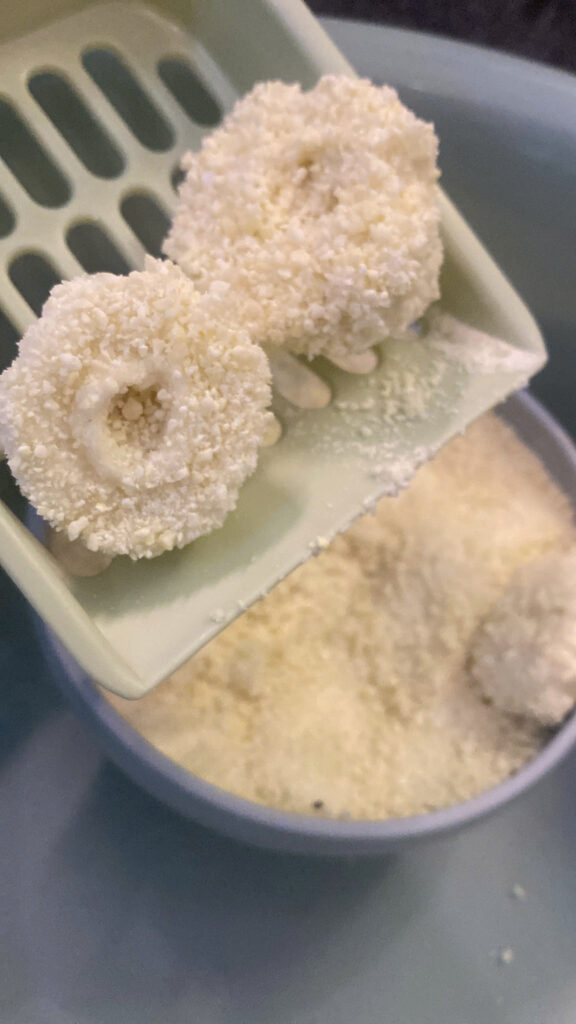
Table of Contents
ToggleA tapioca cat litter absorption ratio generally describes the relationship between the amount of liquid absorbed and the amount of dry litter used in a test.
In simple terms, it answers a question like:
How much liquid can a measured quantity of litter take up under defined conditions?
However, different laboratories or manufacturers may express the result differently.
Some may compare absorbed liquid weight with dry litter weight. Others may use volume-based methods or internal test procedures.
This means two absorption values cannot always be compared directly unless the test method is the same.
For B2B buyers, this is an important point.
A high number may look impressive, but without knowing how it was measured, the figure has limited value.
Tapioca-based litter uses cassava-derived starch or starch-rich materials as part of its formulation.
Starch has a natural ability to interact with water.
When liquid contacts the litter, the particles can take up moisture and begin binding together.
This can lead to:
These functions are closely related, but they are not identical.
A litter can absorb liquid quickly but still produce a weak clump.
Another formulation may absorb somewhat more slowly but form a stronger clump.
Therefore, tapioca cat litter absorption ratio should be evaluated together with clumping performance.
One common source of confusion is the difference between how much liquid a litter can absorb and how fast it absorbs the liquid.
These are two different performance characteristics.
This refers to the total amount of liquid that can be taken up under defined test conditions.
This refers to how quickly the litter begins taking up liquid after contact.
For cat litter applications, both may matter.
Fast absorption can help localize wet areas and reduce spreading inside the tray.
High total absorption can help determine how efficiently the litter uses its own mass.
But neither characteristic should be evaluated alone.
The resulting clump also needs to remain stable enough for scooping.
Several factors can influence the tapioca cat litter absorption ratio.
The amount of starch-based material in the formulation can influence how the product interacts with moisture.
However, increasing starch content does not automatically guarantee better overall performance.
Manufacturers must balance absorption with:
The final formula is therefore usually optimized around several performance goals.
Granule size can influence liquid contact.
Smaller particles generally provide more surface area relative to their mass.
This may allow faster contact with liquid.
Larger particles may behave differently in terms of absorption, clumping, tracking, and dust.
The ideal particle size depends on the intended product positioning.
The internal and external structure of the granule can also matter.
A more porous particle may allow liquid to penetrate differently from a dense, compact particle.
Processing conditions can influence this structure.
That is why two tapioca-based litters with similar ingredient lists may still perform differently.
Bulk density affects how much litter fits into a given volume.
A lighter product and a denser product may therefore show different results when compared by volume.
This is another reason buyers should check whether absorption performance is reported by weight or by volume.
Some tapioca litter formulations include other plant-derived ingredients.
These materials can change:
The phrase “tapioca cat litter” therefore does not necessarily mean every product has the same formulation.
The test method is one of the most important parts of any tapioca cat litter absorption ratio claim.
If two suppliers use different methods, the resulting figures may not be comparable.
Differences may include:
Even small changes in procedure can affect the final result.
For this reason, buyers should request more than a single absorption number.
They should also ask:
What test method was used?
Another important question is the type of liquid used.
Some basic tests use clean water because it is convenient and easy to standardize.
However, cat urine contains dissolved compounds and behaves differently from pure water.
Some manufacturers or laboratories may use a standardized simulated liquid to better represent practical use conditions.
The appropriate method depends on the purpose of the test.
A water-based test can be useful for internal quality comparison.
A more application-oriented test may be useful when evaluating real-world litter performance.
The key is consistency.
When comparing products, buyers should ideally use the same test method for all samples.
Absorption alone does not determine whether a cat litter performs well.
After liquid enters the litter bed, the product should ideally form a removable clump.
Commercial buyers may therefore evaluate:
A strong tapioca cat litter absorption ratio is less useful if the wet material breaks apart during scooping.
This is why application testing should consider both liquid uptake and practical waste removal.
It may seem logical that the highest absorption number must represent the best product.
That is not always true.
A formulation optimized only for maximum liquid uptake could potentially create trade-offs in other areas.
For example, the product might:
The best formulation is usually the one that balances several parameters.
For brands and retailers, user experience matters more than maximizing one laboratory number.
Absorption performance may influence how much litter is removed during daily cleaning.
If liquid spreads widely before clumping, more surrounding litter may become contaminated.
This can lead to larger waste removal.
If liquid is localized efficiently, the user may be able to scoop a more compact area.
However, this depends on formulation, litter depth, clumping speed, and user behavior.
Therefore, suppliers should avoid making strong claims about lower consumption unless those claims are supported by controlled testing.
Laboratory tests typically use controlled quantities.
Consumers do not always use litter under identical conditions.
Litter depth can influence:
A shallow litter bed may behave differently from a deeper one.
This means practical performance should ideally be tested under conditions similar to the intended use.
Tapioca-based litter is designed to interact with moisture.
That also means storage conditions matter.
If litter is exposed to high humidity before use, the particles may already absorb some moisture from the environment.
This can potentially affect:
Packaging should therefore help protect the product from environmental moisture.
For export markets, buyers should pay particular attention to packaging barrier properties because shipments may pass through humid climates and long sea-freight routes.
When evaluating different tapioca cat litter products, buyers should use a consistent procedure.
A practical comparison may include:
Measure how much liquid is absorbed under the same test conditions.
Observe how quickly the wet area forms.
Measure how long it takes for a stable clump to develop.
Check whether the clump remains intact during scooping.
Observe how far the liquid spreads.
Evaluate dust during pouring and normal handling.
Check how easily granules leave the litter tray.
Assess odor performance using an appropriate and repeatable test method.
Looking at all these factors provides a more realistic understanding than relying on a single absorption ratio.
When a supplier provides an absorption claim, importers and private-label brands can ask several useful questions:
These questions help buyers understand whether the data is suitable for real product comparison.
Absorption claims can easily become exaggerated in marketing.
Statements such as:
“Absorbs X times its own weight”
may sound powerful, but the claim should be supported by a documented test method and verified results.
Similarly, a supplier should not automatically describe a product as “super absorbent” without a clear basis for comparison.
For responsible marketing, it is safer to focus on verified functional characteristics such as:
More specific quantitative claims should be based on actual test data.
For private-label brands, absorption performance can become part of the product specification.
Instead of relying only on general descriptions, buyers can establish measurable acceptance criteria.
A private-label specification may include parameters such as:
The exact parameters depend on the product and market.
Defining these expectations before commercial production can help reduce disputes later.
One strong absorption test result is not enough.
Commercial buyers need reasonable consistency between batches.
Raw materials, processing conditions, moisture, and particle characteristics may vary.
Quality control should therefore focus on keeping performance within agreed tolerances.
For international buyers, batch consistency is particularly important because a product may be sold under the same retail brand for months or years.
Consumers expect repeated purchases to perform similarly.
Not necessarily.
A higher number may be attractive on paper, but the best product should be evaluated as a complete litter system.
Buyers should consider:
The most suitable product is the one that matches the target market and consumer expectations.
In other words, the better question is not:
“Which litter absorbs the most?”
but:
“Which formulation delivers the best overall performance for our product positioning?”
A tapioca cat litter absorption ratio can be a useful technical indicator, but only when the test method and conditions are clearly understood.
Absorption performance depends on multiple factors, including formulation, starch content, particle size, porosity, density, moisture, and testing procedure.
It should also be evaluated together with clumping speed and clump strength.
For importers, distributors, and private-label brands, the most reliable approach is to compare representative samples under the same test conditions and request supporting technical information before using quantitative marketing claims.
Rather than focusing on the largest number, buyers should look for consistent, balanced performance across absorption, clumping, dust, tracking, and odor management.
Abimex Group supplies tapioca-based cat litter for international distributors, retailers, pet brands, and private-label projects.
Product specifications, particle characteristics, packaging options, samples, and available technical information can be discussed according to buyer requirements.
For absorption or other quantitative performance claims, buyers should review the applicable test method and verified product data before using specific figures in marketing.