CASHEW NUT SHELL OIL

CASHEW NUT SHELL OIL
RICE PROTEIN POWDER
RICE PROTEIN POWDER
DESICCATED COCONUT
Dried jackfruit piece thickness may look like a small product detail, but it can influence several characteristics that matter to food manufacturers, importers, distributors, and private-label brands.
Thickness can affect how quickly moisture leaves the fruit during drying, how soft or chewy the finished product feels, how consistent different pieces are within the same pack, and even how the product looks on the shelf.
For B2B buyers, understanding dried jackfruit piece thickness can therefore make it easier to define product specifications and choose a format that better matches the intended application.
However, thickness should not be evaluated in isolation. Jackfruit variety, fruit maturity, drying method, target moisture level, formulation, packaging, and storage conditions can all influence the final result.
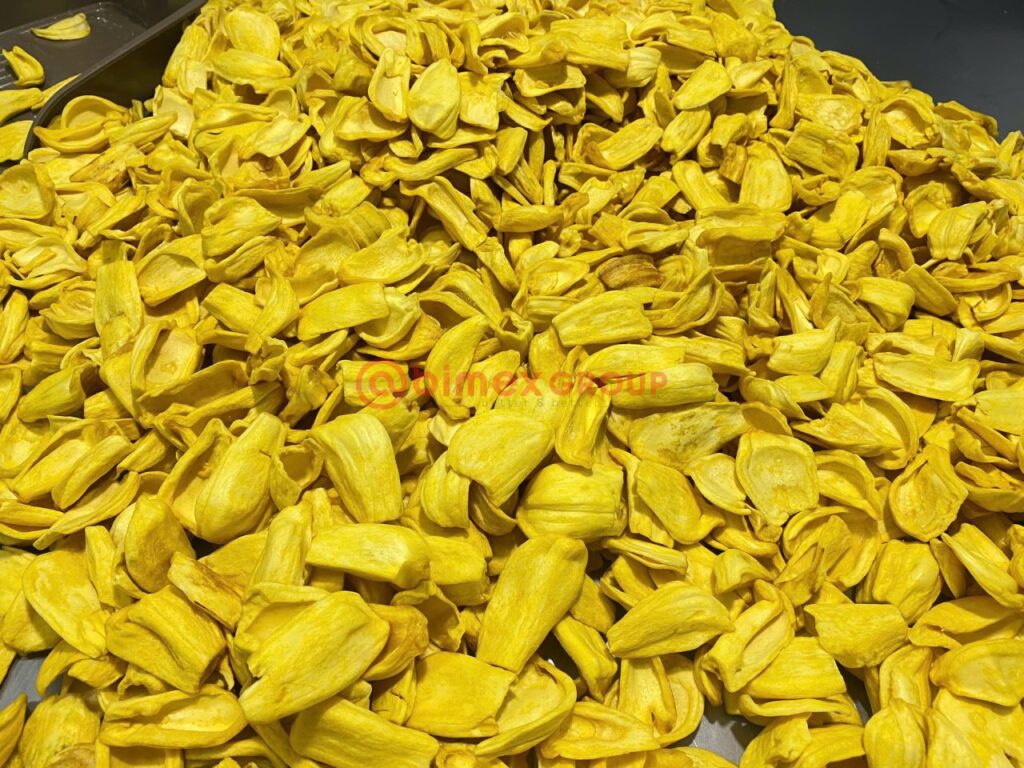
Table of Contents
ToggleFresh jackfruit segments naturally vary in size and shape. Before drying, processors may cut or prepare the fruit according to a target format.
The thickness of each piece influences the distance moisture needs to travel during drying. Thinner pieces generally lose moisture more quickly, while thicker pieces may require more time for moisture to move from the center toward the surface.
This difference can influence texture, drying consistency, and product appearance.
For buyers, the key point is not that one thickness is always better. The right choice depends on the desired eating experience and the final product application.
Texture is one of the most noticeable differences between thinner and thicker fruit pieces.
Thicker pieces may provide a fuller, softer, and more substantial bite. Depending on the drying process and final moisture target, they can retain a more noticeable chewy texture.
Thinner pieces may feel firmer or more delicate because moisture can be removed more quickly and evenly.
This does not mean thin dried jackfruit is necessarily hard, or thick dried jackfruit is always soft. Processing conditions still play an important role.
However, dried jackfruit piece thickness can influence how the final texture is perceived by consumers.
For retail snack products, this matters because texture is part of the product experience. A brand positioned around soft, chewy tropical fruit may prefer a different specification from a product intended for smaller snack inclusions or mixed-fruit applications.
Drying is essentially the controlled removal of water from fruit.
When pieces are relatively uniform in thickness, processors can more easily work toward consistent drying conditions across a batch.
If one tray contains a mixture of very thick and very thin pieces, the thinner pieces may lose moisture faster while thicker pieces may require additional drying time.
This can create differences in softness and chewiness between pieces.
For commercial production, consistency matters because buyers generally expect the product in one pack to deliver a relatively similar eating experience.
This is one reason dried jackfruit piece thickness can be an important quality-control parameter.
The exact drying time should not be assumed from thickness alone, however. Temperature, airflow, equipment, fruit maturity, sugar level, and target moisture specification all affect drying behavior.
Consistency is particularly important for private-label brands and food manufacturers.
If consumers find one piece very soft and another noticeably firmer in the same pack, the product may feel less standardized.
Natural agricultural variation cannot be eliminated completely, but controlled cutting and sorting can help reduce excessive differences.
For B2B buyers, it can be useful to discuss acceptable size and thickness ranges with suppliers before ordering.
A product specification may include information about:
When dried jackfruit piece thickness is relatively consistent, it can support a more predictable sensory experience.
Thickness can also influence how dried jackfruit looks in the final package.
Larger, fuller pieces may create a premium visual impression because the fruit appears more substantial and recognizable.
Thinner pieces can create a lighter appearance and may be easier to layer or portion in smaller retail packs.
For brands using transparent packaging, visual consistency can become especially important.
Consumers can see the product before opening the pack, so differences in piece size, shape, and thickness may influence how they perceive quality.
This is why buyers should consider both sensory performance and visual presentation when defining their dried jackfruit specifications.
Piece dimensions can influence the way dried jackfruit fits into packaging.
Thicker pieces may take up more volume relative to their weight, depending on shape and how they settle inside the pack.
Thinner pieces may pack differently and may create a different product-to-headspace balance.
This can matter for:
However, pack efficiency should be evaluated through actual trials rather than assumptions, because dried jackfruit pieces are irregular natural products.
When reviewing dried jackfruit piece thickness, buyers may want to test the product in the intended packaging format before finalizing commercial specifications.
Dried fruit can experience physical stress during packing, transport, warehousing, and distribution.
Piece thickness may influence how the product responds to handling, although the relationship also depends on texture and moisture.
A very dry thin piece may behave differently from a soft, flexible thicker piece.
For international buyers, this means thickness should be evaluated alongside:
The goal is not simply to maximize thickness. It is to identify a product format that maintains acceptable appearance and texture throughout the supply chain.
Not every buyer uses dried jackfruit in the same way.
For direct retail snacking, larger or thicker pieces may provide a more noticeable fruit identity and a satisfying chewy bite.
For granola, cereal, trail mixes, bakery inclusions, or ingredient applications, smaller or thinner pieces may be more practical depending on the formulation.
Foodservice buyers may also have different preferences based on portioning and presentation.
This is why there is no universal “best” dried jackfruit piece thickness.
The right specification depends on the intended use, target consumer, packaging format, and desired sensory experience.
Thickness alone cannot guarantee texture consistency.
The characteristics of fresh jackfruit also influence the finished product.
Fruit maturity, variety, natural sugar content, fiber structure, and initial moisture can all affect the way a piece behaves during drying.
Two slices with similar thickness may still produce slightly different textures if the raw material differs.
For this reason, suppliers need both raw-material control and processing control to work toward consistent finished products.
Buyers should evaluate thickness as part of a broader quality picture rather than as a stand-alone indicator.
Before placing a bulk order, buyers may want to ask:
Sample evaluation is particularly useful.
Buyers can compare softness, chewiness, piece dimensions, color, aroma, and packaging performance before finalizing specifications.
The ideal dried jackfruit piece thickness depends on what the product is expected to do.
If the goal is a soft, substantial snack with strong visual appeal, one specification may be suitable. If the product will be used as an inclusion in granola or snack mixes, another may make more sense.
Rather than asking whether thicker or thinner is objectively better, B2B buyers should focus on whether the specification matches the intended market and application.
Clear communication around thickness, texture, moisture, packaging, and expected variation can help reduce sourcing misunderstandings and support more consistent product performance.
Abimex Group supports international B2B buyers looking for dried jackfruit and other processed fruit products for retail, wholesale, foodservice, private-label, and ingredient applications.
From product specifications and piece-size requirements to packaging options and export coordination, Abimex Group works with customers to identify suitable solutions for different markets.
If your business is evaluating dried jackfruit piece thickness, texture, packaging, or other product requirements, contact Abimex Group to discuss the specifications that best fit your application and target market.