CASHEW NUT SHELL OIL

Choosing the wrong grade of desiccated coconut is one of the most common — and costly — mistakes in food formulation. The difference between fine and medium desiccated coconut goes far beyond particle size. It affects texture, moisture retention, visual appeal, mixing behaviour, and ultimately whether your finished product performs the way it should.
This guide breaks down the key differences between fine and medium desiccated coconut grades, their ideal applications, and how to choose the right desiccated coconut grade for your specific product.
Desiccated coconut is fresh coconut meat that has been shredded or ground, then dried to a moisture content of below 3%. Desiccated coconut grades are defined by particle size and shape — most commonly fine, medium, coarse, and chip.
All desiccated coconut grades share the same base nutritional profile: high fat content (60–65%), dietary fibre, and natural coconut flavour. What differs is how each grade behaves in formulation.
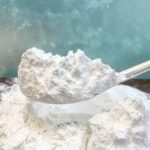
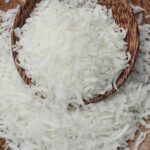
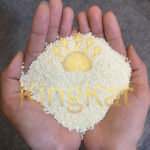
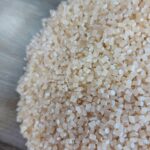
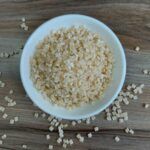
The most fundamental difference between desiccated coconut grades is physical. Fine desiccated coconut is finely ground into small, almost powdery particles — soft and uniform, similar to coarse flour. Medium desiccated coconut consists of slightly larger shredded strands with a more distinct fibrous texture, clearly visible in the finished product.
Fine desiccated coconut has a higher surface area-to-volume ratio, absorbing and releasing moisture more rapidly than medium grade. In baked goods this translates to a moist, tender crumb for fine grade versus more structural integrity and chewiness for medium grade.
For products where mouthfeel is a key differentiator — premium cookies, energy bars, or layered cakes — the desiccated coconut grade choice directly impacts consumer experience.
Fine desiccated coconut blends invisibly into the product matrix — ideal where a uniform appearance is preferred. Medium desiccated coconut remains visible as distinct flakes or strands, signalling “real coconut” to consumers on shelf and supporting premium clean label positioning.
Fine desiccated coconut disperses evenly in wet batters and doughs, working well in extruded or moulded products and high-speed industrial mixing. Medium desiccated coconut performs better when folded in gently or used as a coating rather than mixed into a wet base.
| Application | Fine Grade | Medium Grade |
|---|---|---|
| Cakes and muffins | ✅ Preferred | ✅ Works well |
| Cookies and biscuits | ✅ Preferred | ✅ Preferred |
| Chocolate confectionery | ✅ Preferred | ✅ Works well |
| Granola and cereal | ❌ Too fine | ✅ Preferred |
| Snack and energy bars | ✅ Works well | ✅ Preferred |
| Coatings and toppings | ❌ Too fine | ✅ Preferred |
| Cream fillings and mousses | ✅ Preferred | ❌ Too coarse |
| Extruded products | ✅ Preferred | ❌ Not suitable |
| Lamingtons and coated cakes | ❌ Too fine | ✅ Preferred |
| Yoghurt and dairy toppings | ❌ Too fine | ✅ Preferred |
Fine desiccated coconut is the right choice when you need coconut flavour and fat contribution without visible texture, when the product requires smooth uniform integration (mousses, fillings, spreads), when working with high-speed industrial mixing, or when the product is extruded or moulded and particle size must be controlled.
Common fine grade applications: coconut cream fillings, macarons, coconut-flavoured biscuits, laminated doughs, and protein bars with a smooth texture.
Medium desiccated coconut is the right choice when visual coconut inclusion is a product feature, when you want a chewy distinct texture in the bite, when the product is a coating or topping, or when clean label positioning benefits from clearly identifiable coconut pieces.
Common medium grade applications: lamingtons, coconut macaroons, granola bars, yoghurt toppings, chocolate-dipped confectionery, and premium biscuits.
Regardless of desiccated coconut grade, verify these parameters when sourcing from any supplier:
| Parameter | Standard |
|---|---|
| Moisture content | ≤3% |
| Free fatty acid (FFA) | ≤0.1% |
| Water activity (Aw) | <0.5 |
| Total plate count | ≤10,000 CFU/g |
| Salmonella | Negative/25g |
| E. coli | Negative |
| Colour | White to creamy white |
According to the Codex Alimentarius Standard CXS 177-1991 for Desiccated Coconut, moisture content and microbiological limits are internationally standardised. Always request a Certificate of Analysis (COA) per batch and verify supplier certificates (Halal, Kosher, FSSC 22000) are valid.
Yes — blending fine and medium desiccated coconut grades is a proven approach for applications needing both seamless integration and visual appeal. Fine grade provides even flavour and fat distribution throughout the product while medium grade adds visible texture and consumer appeal on shelf.
This is common in premium coconut biscuits, granola bars, and layered confectionery. Confirm both desiccated coconut grades meet the same microbiological and chemical specifications to simplify documentation.
Vietnam is one of the leading exporters of desiccated coconut in Southeast Asia, producing both fine and medium desiccated coconut grades to consistent specification. When sourcing, confirm grade specification (particle size in mm via sieve analysis), fat content (full-fat 62–65% vs reduced-fat 35–45%), certifications (Halal, Kosher, ISO 22000 / FSSC 22000), and lead time (typically 2–4 weeks from order confirmation).
The primary difference between desiccated coconut grades is particle size. Fine grade is ground into small near-powdery particles that integrate invisibly into product matrices. Medium grade consists of larger shredded strands that remain visible and add distinct texture in the finished product.
Both desiccated coconut grades work in baking but for different results. Fine grade produces a smoother crumb, preferred for cakes, mousses, and cream fillings. Medium grade adds visible flakes and chewier texture, better for cookies, macaroons, and granola.
No. Fine desiccated coconut retains its full fat content (60–65%). Coconut flour is a by-product of coconut milk production with most fat removed — high-fibre and low-fat. They behave very differently in formulation and are not interchangeable.
Yes. Blending desiccated coconut grades is common in premium applications needing both even flavour distribution (fine grade) and visible texture (medium grade). Confirm both grades meet the same quality specifications before blending.
At minimum: FSSC 22000 or ISO 22000 for food safety management, and Halal if distributing in Muslim-majority markets. Kosher is required for certain retail channels in the US and Europe. Organic certification (EU or USDA) if marketing as organic.
Fine and medium desiccated coconut grades are not interchangeable — choosing the right one from the start saves reformulation time, production waste, and quality complaints. Use fine grade when you need seamless integration and smooth texture. Use medium grade when visual appeal and distinct bite are priorities. Consider blending both desiccated coconut grades when your application demands the best of each.
At Abimex Group, we supply both fine and medium desiccated coconut — full-fat and reduced-fat, Halal, Kosher, ISO 22000, and FSSC 22000 certified. Available in 25kg bags with full documentation for every shipment.
Contact us to request samples or grade specifications.