
CASHEW NUT SHELL OIL

Understanding soft dried mango price factors can help importers, distributors, retailers, snack brands, and private-label buyers compare quotations more accurately.
Two soft dried mango products may look similar at first glance but have different commercial costs because they are produced to different specifications.
Price can be influenced by factors such as:
For buyers, the important question is not simply:
“What is the price per kilogram?”
A more useful question is:
“What exact product specification is included in this price?”
Understanding the answer makes supplier quotations easier to evaluate.
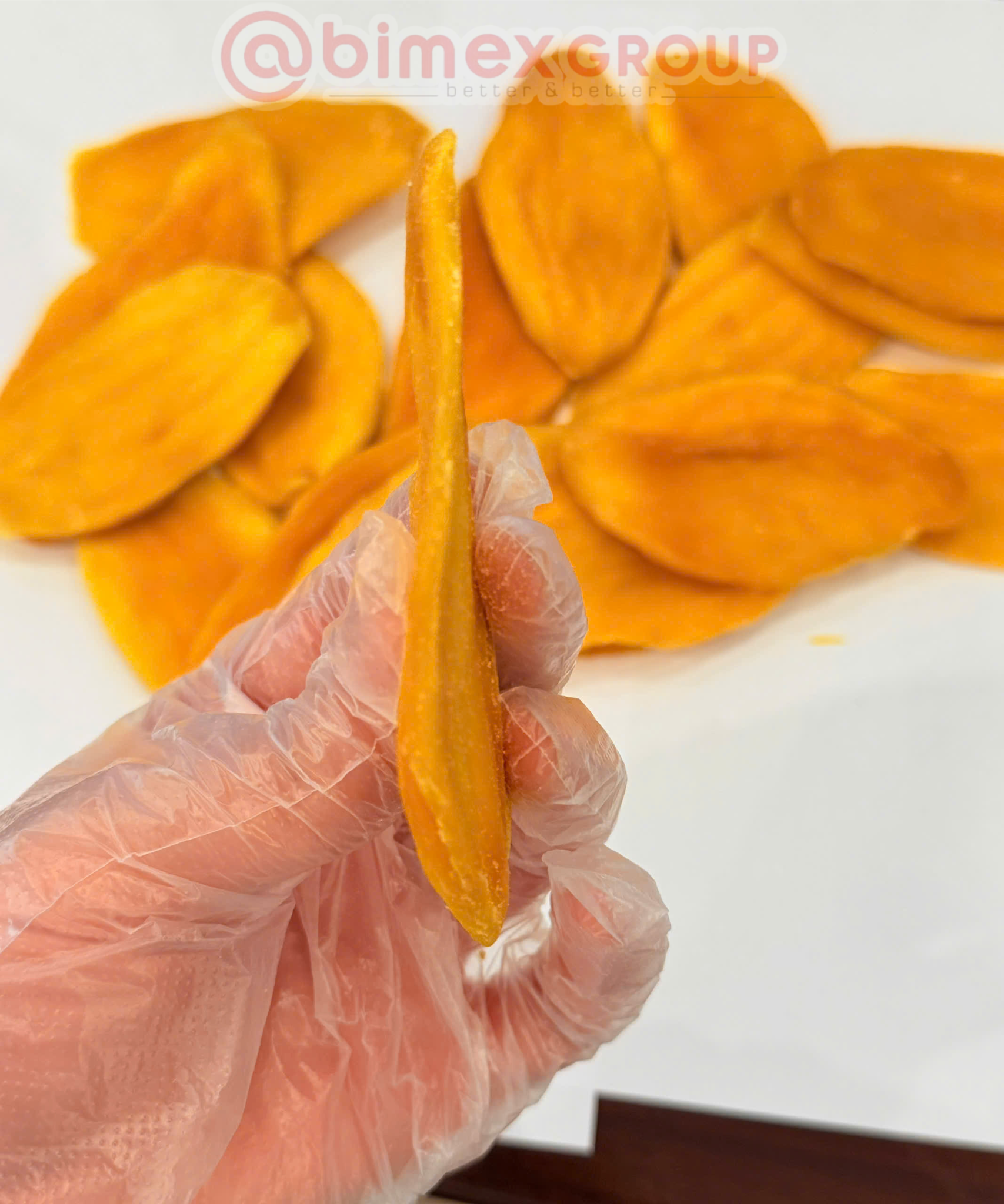
Every soft dried mango product begins with fresh fruit.
The cost and availability of fresh mango can therefore influence the commercial cost of the finished product.
Raw-material conditions may vary depending on:
However, raw mango price is only one part of the final dried mango quotation.
The fresh fruit still needs to be selected, peeled, cut, processed, dried, inspected, packed, and prepared for export.
One of the most important soft dried mango price factors is how much usable finished product can be produced from the incoming fresh fruit.
Not every part of a mango becomes dried mango.
During processing, manufacturers may remove:
Water is also removed during drying.
As a result, the amount of finished dried mango is lower than the original weight of fresh fruit.
The exact relationship varies according to:
Because of this variation, there is no single universal recovery ratio that should be applied to every manufacturer or product.
Fruit quality can influence how much mango remains suitable after trimming and preparation.
For example, fruit with more:
may require additional sorting or trimming.
This may reduce usable material and increase processing work.
A manufacturer producing a stricter premium grade may therefore need more selective raw materials than one producing a product with broader visual specifications.
“Soft dried mango” is not one single quality grade.
Different buyers may have different requirements regarding:
A premium retail product may require greater visual consistency than a dried mango used as an ingredient in cereal or bakery production.
Tighter grading can require additional:
These steps can influence the overall cost.
Buyers sometimes request very specific appearance standards.
Examples may include preferences for:
These requirements may be commercially achievable, but they can also reduce the amount of production that meets the selected grade.
For this reason, buyers should clearly define the visual standard through:
instead of using vague descriptions such as “premium quality.”
Cut style is another major element in soft dried mango price factors.
Possible formats may include:
Different cuts can require different levels of raw-material selection and labor.
A large, visually complete piece may require a mango with suitable size and flesh structure.
Smaller cuts may provide more flexibility because pieces can be produced from different sections of the fruit.
When buyers request large, attractive mango pieces, the manufacturer may need fruit that can produce those dimensions after:
Not every mango can provide the same piece size.
This means large premium cuts can involve more selective production than smaller pieces.
The commercial effect depends on the buyer’s exact specification.
Special cut requirements can also affect production.
A customer may request:
These products may require additional:
Even when the same mango is used, the production process can differ.
Buyers should therefore mention cut requirements when requesting a quotation.
Soft dried mango is available in different product concepts.
Depending on the manufacturer, these may include:
Different formulations may require different:
Therefore, buyers should not assume that all soft dried mango formulations will have the same commercial cost.
In a no-added-sugar formulation, the natural characteristics of the mango become especially important.
Manufacturers may need to consider factors such as:
This can influence raw-material selection and production planning.
It does not mean no-added-sugar mango is always more expensive or cheaper.
The commercial result depends on the complete product specification and production conditions.
Some buyers want dried mango that is:
These texture targets may require different process controls.
The desired texture can be influenced by:
A tighter texture specification may require additional production control and quality checking.
Drying is one of the core production stages.
The manufacturer needs to remove enough moisture to achieve the target product characteristics while maintaining the intended texture.
Different products may have different moisture-related specifications.
The exact requirement should be defined in the agreed product specification.
Buyers should avoid assuming that a lower moisture value automatically means a better or cheaper product.
The correct target depends on the intended product.
After drying, mango pieces may be sorted according to the agreed grade.
Sorting can include checking:
More demanding grading usually requires more inspection effort.
For large orders, this can become a significant part of production.
Packaging is another major soft dried mango price factor.
A bulk export carton and a small retail pouch have very different packaging requirements.
Possible formats include:
The more complex the packaging, the more components may be involved.
If the same amount of mango is packed into many small bags instead of a few bulk bags, production may require more:
This is why buyers should always provide the requested retail pack size when asking for a quotation.
A price for bulk mango should not be assumed to apply to private-label retail packs.
Packaging cost also depends on the type of material selected.
Different structures may provide different levels of:
A basic bag and a higher-barrier laminated pouch are not commercially identical.
Packaging should be selected according to the product’s actual requirements and distribution conditions.
Private-label programs may require customized bags.
This can involve:
If the customer’s order quantity is much smaller than the packaging printer’s MOQ, packaging can become an important commercial consideration.
Buyers should therefore discuss private-label plans early.
For smaller trial programs, some brands may consider:
instead of fully printed bags.
Whether this is suitable depends on:
This approach can sometimes simplify low-volume launches, but it should be evaluated case by case.
Order quantity can affect how efficiently a manufacturer:
A small trial order and a regular container program have different operational structures.
However, buyers should not assume there is a universal volume discount.
Commercial terms depend on the supplier, product specification, packaging, and current production conditions.
A buyer may request one shipment containing:
Even when total volume is large, multiple SKUs can increase:
This can affect the commercial quotation.
Different customers and markets may request documentation such as:
Some customers may also request additional third-party testing.
If special testing is required for every shipment or batch, it should be discussed during quotation.
Food buyers may define specific microbiological criteria.
The manufacturer needs to confirm that the requested specification can be consistently achieved and verified.
Stricter requirements may involve:
Any commercial impact depends on the actual specification.
Some buyers may require:
These services may add separate costs or require additional lead time.
They should therefore be clarified before the purchase order is confirmed.
Export buyers may have special logistics requirements.
For example:
These requirements can influence:
Therefore, buyers should communicate logistics requirements during the quotation stage.
The final landed cost also depends on the Incoterm.
A quotation may be:
depending on the commercial agreement.
Freight, insurance, local charges, and destination services can significantly change the total landed cost even when the product itself is unchanged.
When comparing offers, buyers should confirm that they are comparing the same Incoterm.
Fresh mango is an agricultural raw material.
Availability can vary according to:
These factors can affect sourcing conditions.
However, buyers should not assume that a particular month always produces a specific price.
Seasonality is only one factor among many.
Current quotations should always be confirmed directly with the supplier.
Urgent orders may be more difficult to schedule than forecasted programs.
A manufacturer needs time for:
Private-label orders can require additional time for packaging.
Early forecasting can therefore help buyers and suppliers coordinate production more efficiently.
Two quotations labeled “soft dried mango” may actually represent very different products.
For example, they could differ in:
Therefore, comparing only the price per kilogram can be misleading.
The correct comparison is:
Specification vs specification.
When requesting a quotation, B2B buyers should provide as much relevant information as possible.
A useful RFQ may include:
A clear RFQ allows suppliers to provide a more relevant quotation.
If a quotation appears higher or lower than expected, ask what it includes.
Useful questions include:
This is more useful than comparing headline prices without context.
A premium whole-piece mango and a smaller-cut product should not necessarily be compared as though they are identical.
Likewise:
bulk pack ≠ retail pack
standard packaging ≠ private label
standard grade ≠ tighter visual grading
Understanding these distinctions helps procurement teams make better commercial decisions.
For repeat B2B purchasing, consistency can be as important as the initial quotation.
Buyers may need stable performance in:
A product that meets the agreed specification consistently can reduce problems during:
Therefore, procurement decisions should consider total supply performance rather than price alone.
Before confirming a large order, buyers can approve a representative sample.
This gives both parties a clearer reference for:
The commercial specification can then document the relevant requirements.
This reduces the risk of disagreements after shipment.
The main soft dried mango price factors generally include:
No single factor determines the final quotation.
The product should always be evaluated as a complete specification.
Understanding soft dried mango price factors helps buyers evaluate quotations more accurately.
The price of soft dried mango is influenced by much more than the cost of fresh mango.
Important factors include:
fruit yield + grade + cut type + formulation + quality requirements + packaging + order specifications.
For B2B buyers, the best procurement approach is to clearly define:
Once these details are aligned, quotations become much easier to compare.
There is no universal pricing formula that applies to every dried mango order, and agricultural or commercial conditions can change.
For this reason, buyers should request a quotation based on the exact current specification rather than relying on general price assumptions.
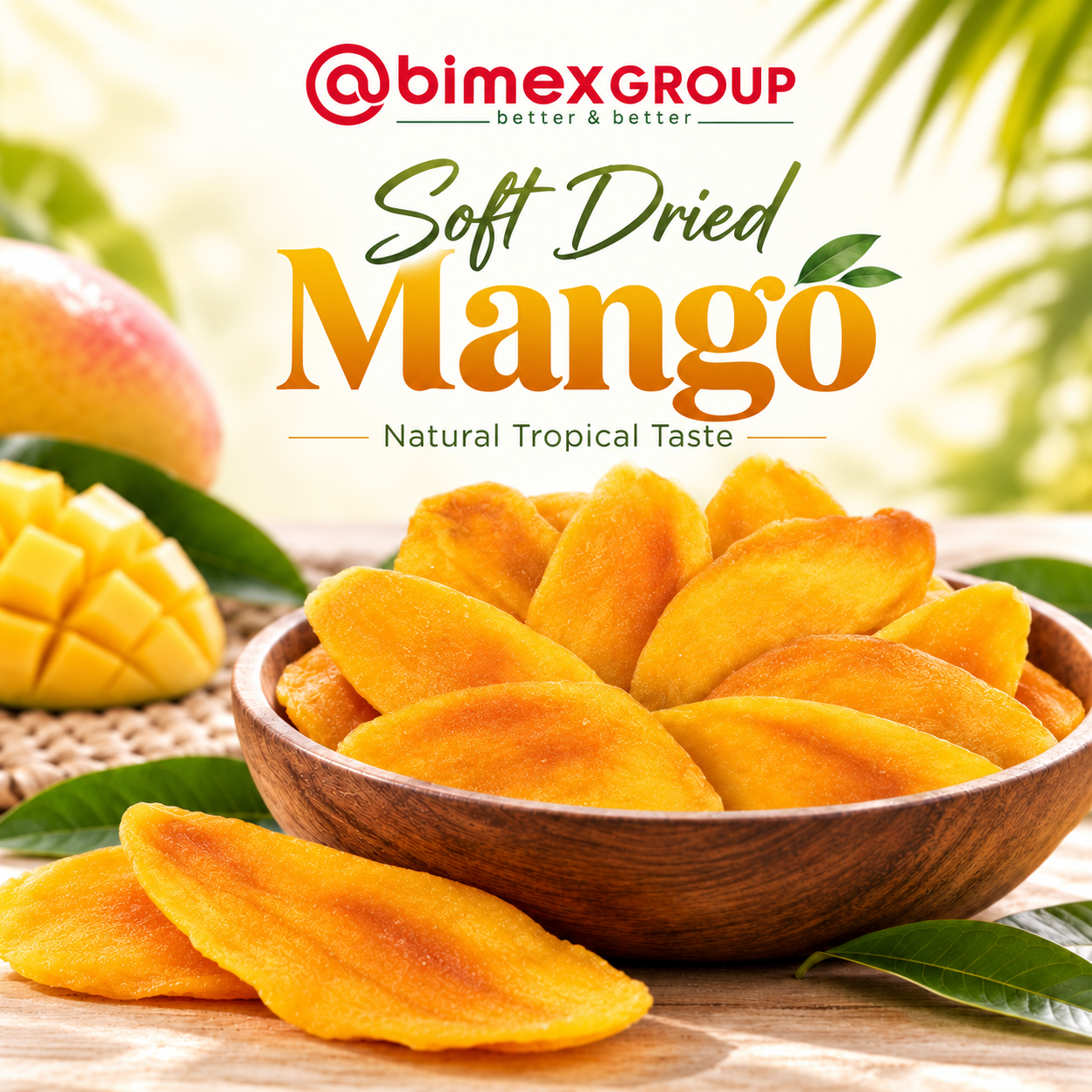
Abimex Group supplies Vietnamese soft dried mango for international importers, distributors, retailers, snack brands, food manufacturers, and private-label projects.
Different options can be discussed according to buyer requirements, including:
Contact Abimex Group for specifications, samples, packaging options, and a quotation based on your specific soft dried mango requirements.