
CASHEW NUT SHELL OIL

Knowing how to keep jackfruit chips crispy after opening the bag can help maintain their preferred texture and eating quality for as long as practical under normal household conditions.
Crispy jackfruit chips are dry, crunchy snacks. Once the package is opened, the product is exposed to the surrounding environment.
The main factors that can affect texture include:
Over time, moisture from the surrounding air can move into a dry snack and make it feel softer or less crisp.
No storage method can guarantee perfect protection in every situation, but simple habits can help reduce unnecessary moisture exposure.
Consumers should always follow the storage instructions and best-before information printed on the product packaging.
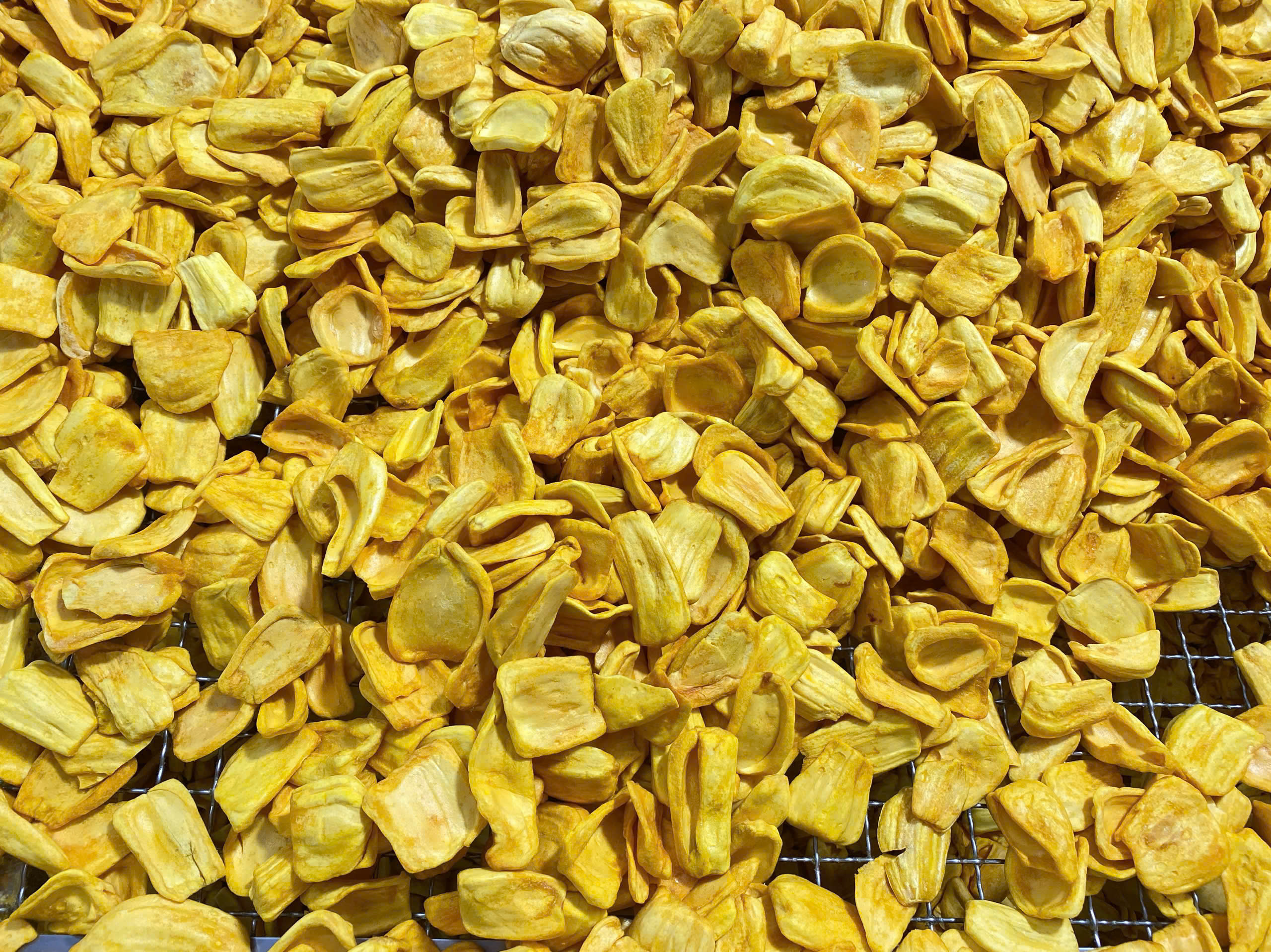
Crispy jackfruit chips contain much less available moisture than fresh jackfruit.
That dry structure is a major reason they feel crisp when bitten.
After the package is opened, however, the chips come into contact with air.
In humid environments, especially in tropical climates, dry foods may gradually absorb moisture from the atmosphere.
As this happens, the texture can change from:
crisp → less crisp → softer
The speed of this change can vary depending on the product, package design, weather, and storage conditions.
This is why the best strategy is to reduce unnecessary exposure after opening.
One of the simplest ways to keep jackfruit chips crispy is to close the package soon after taking out the amount you want to eat.
Leaving the bag open while watching television, working, or preparing other food exposes the chips to more air.
If the package includes a zipper closure:
Check that no pieces of jackfruit are trapped in the zipper.
A partially closed zipper may not provide the intended protection.
Some snack packages do not have resealable closures.
In that case, consumers can fold the open top of the bag several times and secure it with:
The objective is to reduce the amount of open space through which humid air can enter.
This approach can help, but it should not be considered completely moisture-proof.
If the original bag cannot be closed effectively, the remaining jackfruit chips may be transferred to a clean, dry container with a secure lid.
Suitable food-storage containers can help reduce repeated exposure to room air.
Before using a container, make sure it is:
Even a small amount of water inside the container may affect a crispy snack.
Moisture is one of the main enemies of crispy texture.
Avoid storing an opened package near:
A kitchen can have very different humidity levels depending on where the product is stored.
A dry cupboard may provide a more suitable environment than a shelf directly beside a cooking area.
It is easy to overlook this habit.
If wet or damp fingers repeatedly enter the bag, small amounts of moisture can be introduced directly to the chips.
Instead:
This also helps maintain general package cleanliness.
The same principle applies when serving jackfruit chips with other foods.
If a spoon, tong, or serving utensil is wet, it can transfer moisture to the snack.
Use clean and dry utensils when taking chips from larger packages.
This can be particularly relevant in:
Steam from cooking can significantly increase local humidity.
Avoid leaving an open or loosely sealed bag near:
Even if the room itself feels dry, the area around hot cooking equipment may have much higher moisture exposure.
A dry location is important, but temperature also matters.
Avoid leaving opened jackfruit chips:
Heat can affect food quality and packaging performance.
Consumers should store the product according to the conditions stated on the label.
Every time the bag is opened, fresh room air enters.
For a large package that will be eaten over several occasions, repeated opening may increase exposure.
One practical approach is to divide the product into smaller dry containers after opening.
This way, only one portion needs to be opened at a time.
Whether this is useful depends on the package size and how quickly the product is consumed.
A common snack habit is to open the package and leave it sitting open for an extended period.
This is especially likely during:
If the environment is humid, this can affect crispness.
Instead, pour out a reasonable serving and close the main bag.
Additional portions can be taken later if needed.
Jackfruit chips and many other crispy snacks are sensitive to moisture because their texture depends on maintaining a relatively dry structure.
The surrounding air contains water vapor.
The amount varies depending on:
In high-humidity conditions, dry foods may absorb moisture faster.
This means storage practices can become particularly important in tropical markets.
Commercial snack packaging is designed not only for appearance but also for product protection.
Depending on the packaging structure, it may help limit:
Before opening, the packaging barrier provides the greatest protection when the seal remains intact.
After opening, performance depends partly on how effectively the package can be closed again.
This is why resealable designs can be useful for larger consumer packs.
If the original package has a high-quality zipper and remains undamaged, keeping the chips in that bag may be convenient.
The packaging was selected specifically for the product.
However, consumers should ensure:
If the package is damaged, moving the product into a suitable dry container may be more practical.
Storage is not only about moisture.
Food products can also be affected by their surroundings.
Avoid keeping an opened package directly beside strong-smelling materials such as:
A tightly closed package or food container can help reduce unwanted exposure.
Jackfruit chips should be kept in a normal food-storage area, separated from household chemicals.
This is a basic food-handling practice.
Avoid storing snack packages together with:
The storage environment should remain clean and appropriate for food.
Consumers sometimes place opened snacks in the refrigerator because they assume colder storage always keeps food fresher.
For crispy products, however, refrigeration can introduce additional considerations such as moisture and condensation.
The appropriate storage method depends on the actual product and packaging.
Therefore, consumers should follow the storage instructions printed on the jackfruit chip package rather than automatically refrigerating the product.
If the label does not recommend refrigeration, there may be no reason to add an unnecessary storage step.
Condensation occurs when moisture in the air forms droplets on a cooler surface.
This can happen when food or packaging moves between environments with very different temperatures.
Direct moisture contact is not desirable for crispy jackfruit chips.
For this reason, avoiding unnecessary temperature changes can help simplify storage.
Again, follow the manufacturer’s instructions for the specific product.
Consumers should not automatically add random moisture absorbers to food packages.
Commercial food packaging may contain appropriately selected components when designed by the manufacturer.
If a package originally contains a food-approved sachet, follow the warnings and instructions printed on the package.
Do not open or consume such sachets.
Consumers should not assume that adding an unrelated moisture absorber to a snack package is always suitable.
Before eating or storing the product, check the package.
Do not ignore signs such as:
If packaging appears compromised before opening, follow the retailer’s or manufacturer’s guidance.
Package integrity is part of protecting snack quality.
One of the easiest storage habits is portion control.
Instead of carrying the entire bag to the table:
Pour a serving → Reseal the main package → Store it properly.
This reduces the time the rest of the product spends exposed to air.
It can be especially helpful with larger family-size or foodservice packs.
Once chips have been served in a bowl, they may come into contact with:
Returning them to the original bag can introduce moisture or crumbs into the remaining product.
For better handling, keep served portions separate from the unopened remainder.
A change in crispness can happen after opening, especially if the product has been exposed to humidity.
Consumers should first check:
Texture change alone does not provide complete information about product suitability.
Always check:
If the product shows unusual odor, appearance, contamination, or other signs that raise concerns, it should not simply be judged by crispness alone.
The best-before or shelf-life information on packaging generally refers to the product under specified conditions.
Opening the package changes the storage environment.
For this reason, consumers should not assume that the printed shelf life guarantees the same level of crispness for the entire period after the package has been opened.
Likewise, there is no universal number of days that every jackfruit chip product will stay crispy after opening.
Packaging, environment, humidity, and handling all matter.
The most important storage rule is simple:
Different manufacturers may recommend different storage practices depending on:
The label is therefore more relevant to the specific product than a generic online article.
This guide should be treated as general consumer guidance rather than a replacement for product-specific instructions.
Brands selling crispy jackfruit chips can help customers maintain product quality by providing clear after-opening instructions.
Useful packaging messages may include:
The exact wording should reflect the actual packaging and product validation.
For larger packs, a zipper closure may make it easier for customers to store the product between eating occasions.
Other design features may include:
Packaging should balance:
For B2B buyers, this makes packaging selection an important part of product development.
Jackfruit chips may also be sold in larger packs for:
After opening a bulk package, foodservice operators should minimize unnecessary air exposure and use clean, dry storage containers if appropriate.
The supplier’s handling instructions should remain the primary reference.
To help keep jackfruit chips crispy after opening:
These habits can reduce unnecessary exposure, but no method should be considered an absolute guarantee against moisture.
The key to keep jackfruit chips crispy is simple:
reduce unnecessary exposure to moisture and air.
After opening:
Take your serving → Reseal the package → Keep it dry → Store according to the label.
Humidity, open-package time, package condition, and everyday handling can all influence texture.
There is no single number of days that jackfruit chips will remain crispy after opening, and no household storage method can completely prevent moisture exposure in every environment.
Consumers should always follow the product-specific storage instructions and best-before information printed on the package.
For snack brands, clear storage guidance and suitable packaging can also help customers enjoy the product as intended.
Abimex Group supplies Vietnamese crispy jackfruit chips for international importers, distributors, retailers, snack brands, foodservice buyers, and private-label projects.
Buyers can discuss:
Contact Abimex Group to discuss crispy jackfruit chips for your retail, foodservice, or private-label program.