
CASHEW NUT SHELL OIL

Desiccated coconut for chewy macaroons can influence much more than coconut flavor. Particle size, moisture behavior, and the way coconut interacts with the rest of the formula can affect whether a macaroon feels soft and cohesive, coarse and textured, or dry and crumbly.
For bakery manufacturers, foodservice operators, private-label brands, and ingredient buyers, selecting desiccated coconut only by product name may not be enough.
Two grades of coconut can look similar in a specification sheet but behave differently during mixing and baking.
Important factors may include:
There is no single coconut grade that is automatically ideal for every macaroon recipe. The preferred grade depends on the desired texture, visual appearance, production process, and other ingredients in the formulation.
A typical coconut macaroon combines coconut with ingredients that help provide:
During mixing and baking, these components work together to create the final texture.
Desiccated coconut contributes both solid structure and moisture interaction.
Depending on the grade, coconut particles can absorb some of the available liquid in the formulation. They can also influence how compact or open the finished interior feels.
This is why desiccated coconut for chewy macaroons should be considered a structural ingredient, not simply a topping or flavor component.
Grind size describes the general size of the coconut particles.
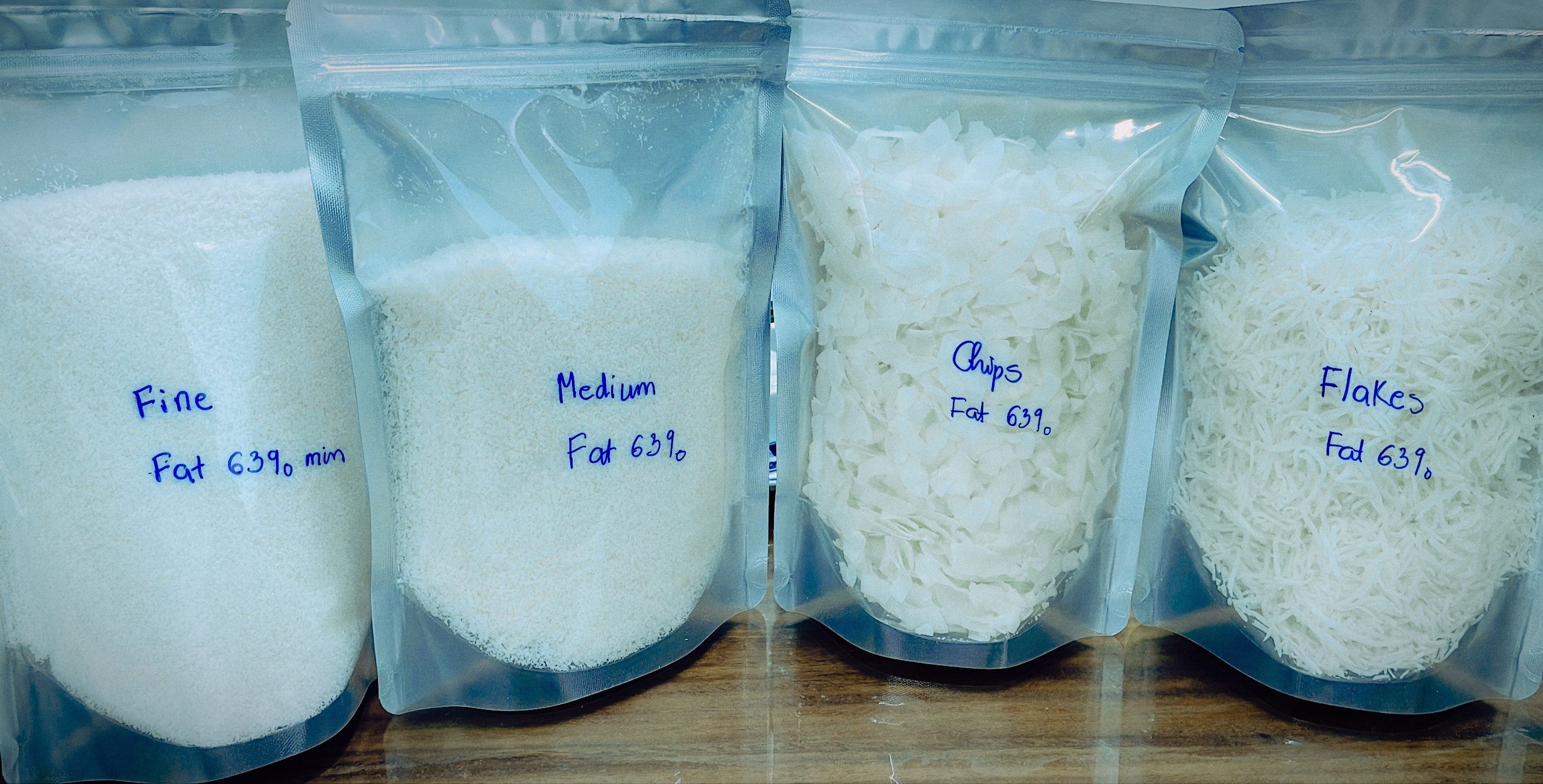
Commercial desiccated coconut is commonly offered in grades such as:
For macaroon production, Fine and Medium grades are often particularly relevant because they can create different finished textures.
However, grade names are not completely universal between suppliers.
A “Fine” product from one manufacturer may not have exactly the same particle distribution as another.
B2B buyers should therefore review the technical specification and, where possible, test representative samples.
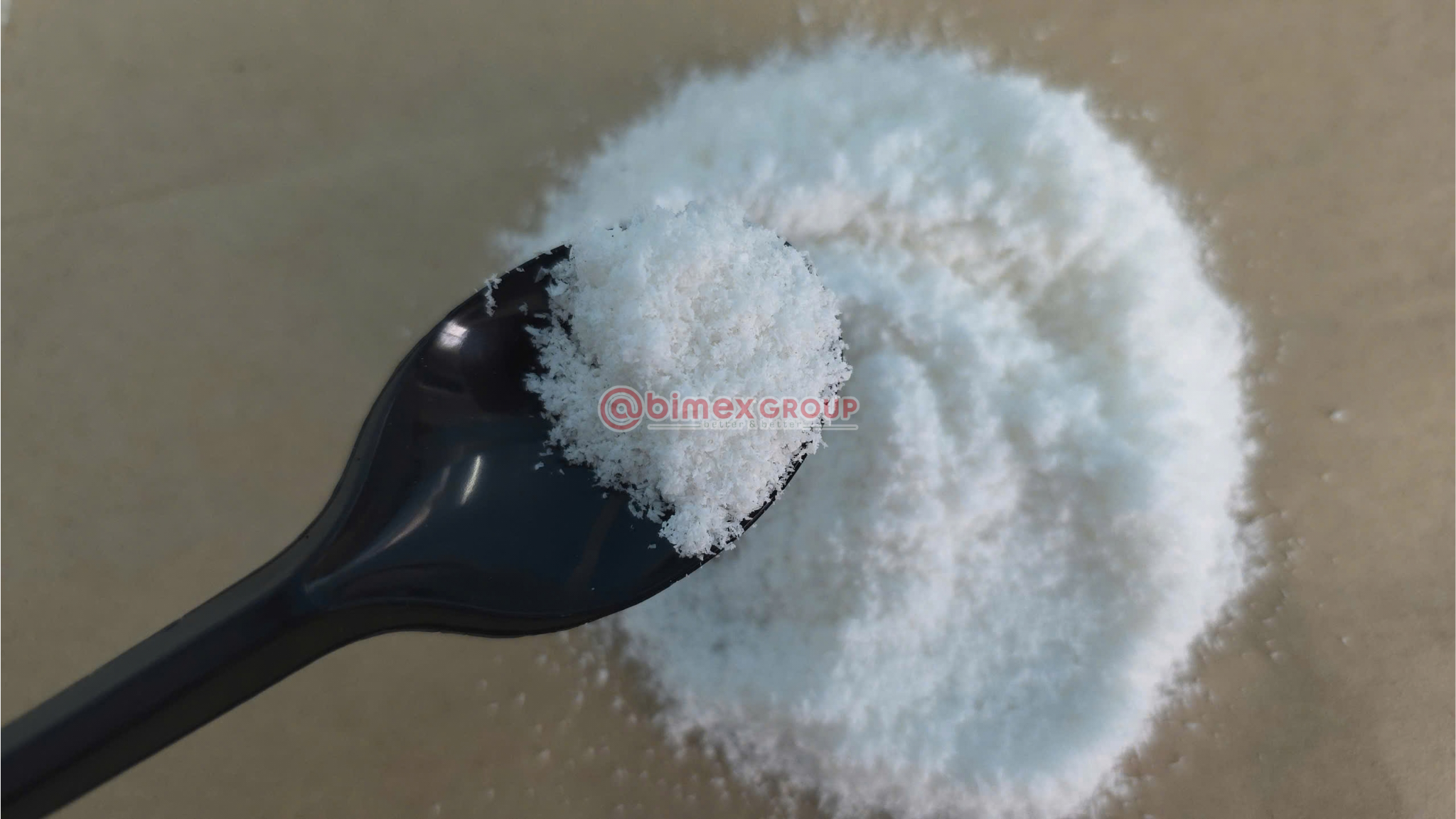
Fine desiccated coconut contains relatively small particles.
In a macaroon mixture, smaller particles may distribute more evenly through the mass.
This can contribute to:
Fine coconut may therefore suit formulations where the baker wants a more compact and consistent interior.
Because smaller particles have more surface area relative to their size, they may also interact with moisture differently from larger particles.
This can affect the feel of the mixture before baking and the final chewiness afterward.
Medium coconut generally provides more visible particle definition.
It may contribute to:
For products positioned as handmade, artisanal, or heavily coconut-forward, this may be desirable.
However, larger particles may not bind exactly like Fine coconut.
If the formulation does not provide enough cohesion, the finished macaroon may feel more open or less compact.
This is why application testing is important.
Neither is universally better.
Fine coconut may work well when the goal is:
Medium coconut may work well when the goal is:
Some manufacturers may also combine different particle sizes to create a particular texture.
The appropriate choice depends on the complete formulation.
Moisture plays a major role in how a coconut macaroon feels after baking.
A chewy macaroon usually needs a balance between:
Desiccated coconut naturally interacts with water in the formula.
If coconut absorbs too much available moisture relative to the rest of the formulation, the finished product may become firmer or drier than intended.
If the system contains more available moisture, the macaroon may remain softer.
However, moisture balance cannot be determined by coconut alone.
Other ingredients and processing conditions are equally important.
Commercial desiccated coconut is a dried ingredient, but it still contains some moisture.
The actual moisture level should be assessed according to the supplier’s specification and relevant batch documentation.
Differences in coconut moisture can potentially influence:
For industrial production, consistent raw-material specifications can help support more consistent bakery results.
Buyers should avoid assuming that lower moisture is always better.
The goal is to use material that meets the agreed specification and performs appropriately in the recipe.
When desiccated coconut is combined with liquid ingredients, it begins interacting with available moisture.
The amount and speed of absorption can depend on:
If the mixture rests before baking, the texture may continue changing as coconut hydrates.
This means that production timing can influence consistency.
A mixture baked immediately may behave differently from one held for a longer period.
Commercial bakeries should therefore control their production process consistently.
A macaroon may become drier or more crumbly for many reasons.
Potential factors can include:
It is therefore risky to blame one ingredient automatically.
For example, switching from Medium to Fine coconut without adjusting the rest of the formula may change moisture distribution.
Likewise, a good coconut grade may still produce a dry macaroon if the overall process removes too much moisture.
Smaller coconut particles may pack more closely together.
This can help create a more cohesive matrix when combined with the recipe’s binding ingredients.
Larger particles can create more spaces and a more textured interior.
Neither structure is inherently superior.
The desired result may depend on whether the brand wants:
smooth and cohesive or rustic and highly textured.
This distinction is useful when developing specifications with an ingredient supplier.
Grind size also affects how macaroons look.
Fine coconut may create:
Medium or coarser coconut may create:
Appearance can be particularly important for retail bakery products because consumers often judge texture visually before tasting.
Surface browning is influenced by the complete formulation and baking process.
Coconut particle size may indirectly affect the amount of surface exposed to heat.
Smaller particles and larger pieces may therefore develop different appearances under the same process.
However, it would be misleading to define one universal baking condition for all macaroon formulations.
Bakeries should determine suitable processing conditions through controlled trials with their own equipment and recipe.
Desiccated coconut naturally contains coconut fat, although commercial products may be available in different fat categories.
Fat level may influence:
For macaroon applications, fat content should be evaluated together with grind and moisture.
Choosing coconut based only on particle size may overlook another important sensory characteristic.
Different fat levels can affect how coconut interacts with the other ingredients.
The finished product may vary in:
This does not mean one type is always better for macaroons.
The bakery’s target product should determine which raw material is appropriate.
Sample testing is recommended before commercial production.
A bag labeled “Medium” may contain a distribution of particle sizes rather than particles that are all exactly identical.
Likewise, Fine coconut may contain both very small and slightly larger pieces.
This distribution can influence texture.
If there are excessive fines, the mixture may behave differently from a product with a more balanced particle profile.
For commercial purchasing, sieve analysis or supplier particle-size documentation may therefore be useful when consistency is critical.
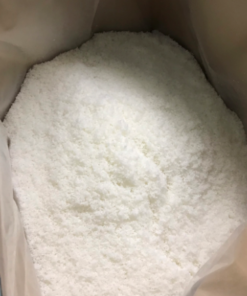
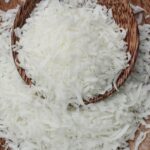
Desiccated coconut typically has a natural white to creamy-white appearance, depending on the product and processing.
The coconut color can influence the appearance of the macaroon before and after baking.
Retail buyers may have specific expectations regarding:
These preferences should be discussed during sample approval.
Proper storage helps maintain ingredient quality.
General good practices include:
If coconut absorbs unwanted humidity before production, its handling and texture may change.
This can introduce unnecessary variation into bakery production.
Texture does not stop changing when the product leaves the oven.
During cooling and storage, moisture can move between different parts of the product and the surrounding environment.
Packaging therefore plays an important role in maintaining the intended texture.
Depending on the product, inadequate packaging may contribute to:
Commercial shelf-life decisions should be based on product-specific testing rather than generic assumptions.
A technical specification can tell buyers about the coconut.
It cannot fully predict the finished macaroon.
Manufacturers should test desiccated coconut for chewy macaroons in their actual formulation and equipment.
Useful trial observations include:
Testing more than one grade can help identify meaningful differences.
In general terms:
Fine coconut may support a smoother, more uniform, and cohesive macaroon.
Medium coconut may support greater particle definition and a more textured bite.
But these are tendencies, not guarantees.
The final result depends on the interaction between the coconut and the complete recipe.
That is why replacing one grade with another without a production trial may lead to unexpected changes.
Samples allow bakery buyers to evaluate characteristics that are difficult to understand from documents alone.
For example:
A sample can also help buyers compare several grades side by side.
For large-volume purchasing, sample approval can become an important reference for future shipments.
When sourcing desiccated coconut for macaroon production, useful purchasing information may include:
Any numerical requirements should be based on agreed specifications rather than copied from a generic online guide.
Yes, similar considerations may apply in products such as:
However, ingredient behavior may differ substantially between recipes.
A coconut grade that works well in a macaroon is not automatically the ideal choice for another product.
The application should always guide the selection.
Food manufacturers and consumers should refer to the applicable product label and ingredient documentation when evaluating allergens and labeling requirements.
This article does not determine whether a specific coconut product does or does not present an allergen concern for a particular person or market.
Manufacturers should follow the labeling and regulatory requirements applicable to their destination market, and consumers with food allergies should review product labels and appropriate professional guidance.
Ingredient cost is important, but the lowest-priced coconut may not always be the most economical choice for a specific bakery process.
Differences in:
can influence production and finished-product quality.
For B2B buyers, evaluating total application performance can be more useful than comparing price alone.
A chewy texture depends on overall formulation balance.
Adding or retaining more moisture does not automatically create a better macaroon.
Excess moisture can affect:
The goal is controlled moisture distribution within a stable formulation.
This requires development trials rather than a universal rule.
Desiccated coconut for chewy macaroons plays an important role in determining the product’s texture, structure, and appearance.
Grind size can influence:
Moisture behavior can influence:
Fine coconut may create a smoother and more cohesive result, while Medium coconut may provide a more noticeable coconut texture.
Neither is automatically the correct choice for every recipe.
For commercial bakeries, the best approach is:
Define the target texture → Compare suitable coconut grades → Test them in the actual formula → Evaluate the finished product → Confirm the commercial specification.
This helps manufacturers select coconut based on real bakery performance rather than grade name alone.
Abimex Group supplies Vietnamese desiccated coconut for international bakeries, food manufacturers, importers, distributors, and private-label projects.
Different grades and specifications can be discussed according to application requirements, including Fine and Medium options.
Buyers can contact us for:
Contact Abimex Group to discuss desiccated coconut for coconut macaroons, cookies, cakes, and other bakery applications.