
CASHEW NUT SHELL OIL

Soft dried mango appearance grading is an important part of quality evaluation for importers, distributors, snack brands, retailers, and private-label buyers.
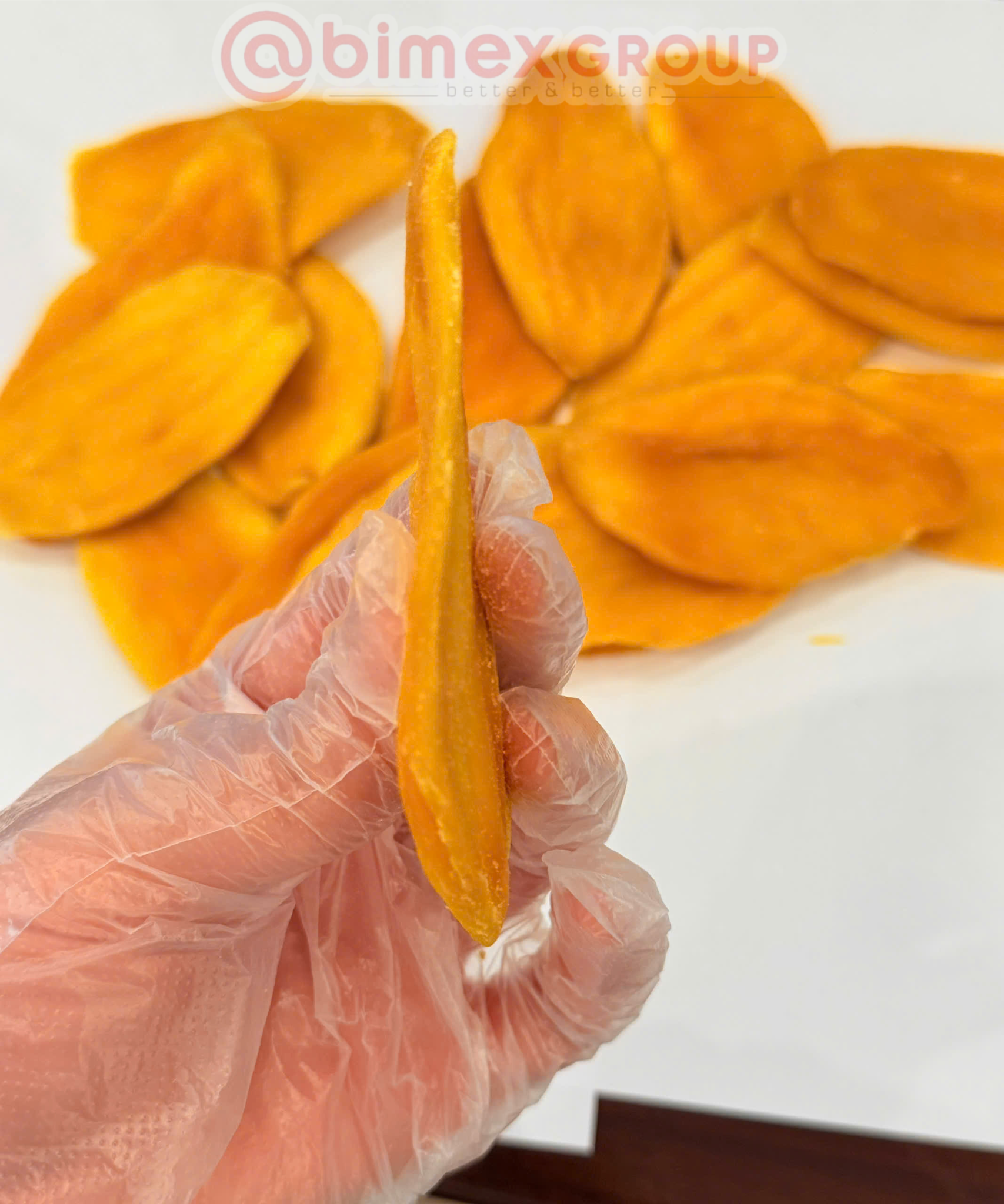
When buyers inspect dried mango, appearance is often one of the first characteristics they notice. Pieces may differ in color, shape, fiber visibility, thickness, and surface texture.
Some pieces may be bright yellow or golden, while others may appear slightly darker. Visible fibers may occur in certain parts of the fruit. Small darker areas can also appear depending on the raw mango and processing conditions.
These characteristics should not automatically be interpreted as proof that a product is either high quality or poor quality.
Mango is an agricultural product, and some natural variation is expected.
For commercial purchasing, the key is to define what appearance is acceptable for the intended market and agree on the grading criteria before production.
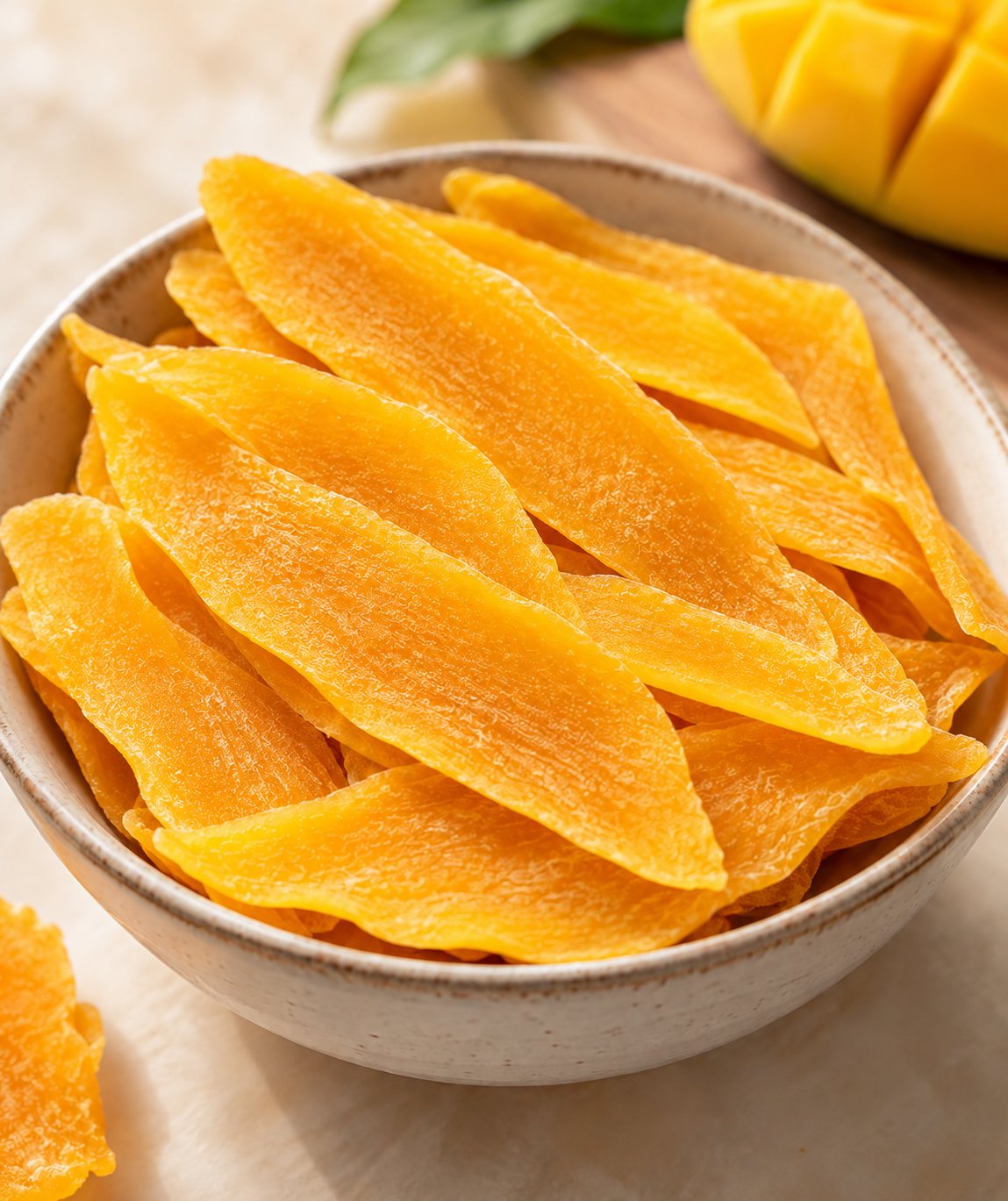
Appearance can influence how consumers perceive a product before tasting it.
This is especially important for:
A buyer supplying premium retail stores may want greater visual consistency than a manufacturer using dried mango as an ingredient.
For this reason, soft dried mango appearance grading should reflect the actual application rather than a universal standard for every buyer.
Fresh mangoes are not identical.
Differences can occur because of:
These differences can remain visible after drying.
Even when a manufacturer follows consistent processing controls, some variation between mango pieces may remain.
The goal of commercial grading is therefore usually not to make every piece look identical.
Instead, it is to define an acceptable range for the agreed product grade.
One common question from buyers involves darker areas on dried mango.
A darker spot or section may have several possible causes.
These may include:
A dark area should therefore be evaluated in context.
It is not correct to assume that every darker area automatically indicates poor quality.
At the same time, buyers may have aesthetic requirements that limit visible dark areas in premium retail products.
The acceptable appearance should be defined through specifications and approved samples.
Commercial quality inspection should distinguish between normal color variation and defects that fall outside the agreed specification.
This is why visual grading should not rely only on descriptions such as:
“No dark spots.”
Such wording can be too broad.
A more effective B2B specification may define:
Any specific defect tolerance should be agreed between buyer and supplier rather than assumed from a general industry article.
Mango flesh naturally contains fibrous structures.
The amount and visibility of fiber can vary according to factors such as:
After drying, fibers may become more visible because water has been removed from the fruit tissue.
Some pieces may therefore show fine fibrous lines or strands.
This does not automatically mean that the mango is defective.
Although visible fiber is partly an appearance issue, it can also influence texture.
A piece with more noticeable fibers may feel different during chewing than a smoother piece.
For premium soft dried mango, buyers may have preferences related to:
However, fiber should not be classified as universally positive or negative.
The significance depends on the target product and agreed quality specification.
Different mango varieties can have different flesh characteristics.
Some may naturally appear:
These differences can remain after drying.
For manufacturers, raw-material selection is therefore important when targeting a particular finished-product appearance.
For buyers, it is useful to understand that changing mango variety may also change:
even if the general product category remains “soft dried mango.”
Soft dried mango may naturally range from:
Variation can occur both between pieces and within the same piece.
Several factors may influence the final color.
These include:
Therefore, perfectly identical color should not automatically be expected from every piece.
A single piece may have one area that is lighter or darker than another.
This can happen because the original mango flesh was not completely uniform.
Thickness differences may also affect how the piece dries.
A thicker section and thinner edge can respond differently during processing.
For buyers, the important question is whether the visual variation remains within the appearance standard agreed for that product.
Not necessarily.
Color alone should not be used to determine sweetness.
Likewise, a lighter yellow mango should not automatically be considered less ripe or lower quality.
Color can be influenced by many factors beyond sweetness.
Buyers should evaluate sensory characteristics separately through:
rather than drawing conclusions from appearance alone.
No.
A bright and uniform appearance may be desirable for certain retail programs, but color alone cannot define overall product quality.
Quality evaluation should also consider:
A visually attractive product that does not meet the agreed technical requirements is not necessarily the right product for the buyer.
Some dried mango pieces may have a relatively smooth surface.
Others may show:
Drying removes water from the fruit, which changes its original structure.
Some wrinkling or surface variation can therefore be expected.
The desired appearance depends on how the product is positioned.
Commercial dried mango may be supplied in different cuts such as:
Within each format, some variation in shape may remain.
Premium retail products may require more visually complete pieces.
Food-manufacturing applications may place less emphasis on shape.
This demonstrates why grading should be linked to intended use.
Differences in thickness can influence:
Very thin areas may appear different from thicker sections after drying.
For commercial production, manufacturers typically work toward consistent cutting.
However, mango is a natural raw material, so some dimensional variation can remain.
Buyers should clearly communicate whether the product will be sold directly to consumers or used as an ingredient.
For a premium retail pack, consumers may expect:
For cereal, bakery, or snack-mix production, smaller mango pieces may be completely appropriate.
A smaller piece is not automatically lower quality if it matches the contracted grade.
Processing conditions can affect the final appearance of soft dried mango.
Important steps may include:
Manufacturers control these processes to achieve a consistent commercial product.
However, processing cannot completely remove the natural variation that begins with the fresh fruit.
Soft dried mango may be produced using different formulations.
Depending on the product concept, options may include:
Different formulations can result in differences in:
Buyers should therefore avoid comparing two visually different formulations as though they were identical products.
Product appearance may also change during storage.
Factors such as:
can influence color and surface characteristics over time.
This is why buyers should inspect not only initial samples but also consider the product’s intended distribution and storage conditions.
Packaging plays an important role in protecting product quality.
For soft dried mango appearance grading, photographs and written descriptions are useful, but an approved physical sample can provide much greater clarity.
An approved sample allows both sides to discuss:
This can reduce misunderstandings during commercial inspection.
However, the parties should recognize that natural products may show reasonable variation around the approved reference.
Photos can change depending on:
A mango that appears bright orange in one photograph may look more yellow in another.
For this reason, buyers should avoid relying only on marketing photographs to define commercial quality.
Technical specifications and representative samples are more useful.
A practical specification may address areas such as:
Where quantitative tolerances are needed, they should be negotiated and written into the commercial specification or contract.
There is no universal defect percentage that should automatically apply to every buyer.
Terms such as:
can create ambiguity.
Different people may interpret these words differently.
More useful communication might describe the target as:
with any specific grading tolerances separately documented.
Different markets can have different visual expectations.
For example, a premium retail pouch may prioritize:
A foodservice customer may prioritize:
An industrial buyer may focus more on:
The “best” visual grade therefore depends on the customer.
Even premium dried mango remains a natural fruit product.
Expecting every piece to have exactly the same:
may not be realistic.
Instead, premium grading generally aims for a tighter level of visual consistency based on the agreed commercial standard.
The exact acceptance criteria still need to be defined between supplier and buyer.
For large B2B orders, pre-shipment checks can help confirm that production generally matches the approved requirements.
Inspection may include:
The inspection method and acceptance criteria should be agreed in advance.
A visual inspection performed without a defined standard can easily create disagreements.
A Certificate of Analysis may report technical characteristics for a production lot.
Appearance grading, however, often relies more heavily on:
Therefore, buyers should not expect the COA alone to communicate every visual characteristic.
Both technical documentation and visual standards can be useful.
Before placing an order, buyers should confirm the following:
Any specific tolerances for color variation, dark areas, fibers, or piece defects should be documented rather than assumed.
Appearance disputes often arise when the buyer and supplier have different interpretations of quality.
For example, one buyer may consider a darker edge normal, while another may reject it for a premium retail product.
Clear contract language helps reduce this risk.
Commercial documents can reference:
This creates a more objective basis for evaluating shipments.
Another common mistake is making a conclusion about an entire lot based on one unusually light, dark, fibrous, or irregular piece.
Commercial assessment should use an appropriate sample representing the shipment.
The method of sampling should be agreed when appearance is a critical purchasing parameter.
This provides a more reliable view of overall lot consistency.
Individually, these features do not provide a complete quality judgment.
Dark spots may reflect natural or processing-related variation.
Visible fibers may reflect fruit structure or variety.
Uneven color may reflect differences in ripeness, thickness, drying, or natural fruit characteristics.
Their commercial significance depends on:
This is why soft dried mango appearance grading needs a defined commercial context.
Soft dried mango appearance grading should help buyers distinguish acceptable natural variation from characteristics that fall outside the agreed product specification.
Factors such as:
can occur in dried mango for different reasons.
None of these characteristics should automatically be labeled as proof of either superior or inferior quality without considering the complete product and agreed standard.
For B2B buyers, a better approach is to:
Define the application → Review representative samples → Agree on appearance criteria → Document tolerances → Inspect commercial lots against the same standard.
Because mango is a natural agricultural product, some variation is expected.
Clear specifications and buyer–supplier communication are therefore more useful than trying to apply one universal visual grading rule to every shipment.
Abimex Group supplies Vietnamese soft dried mango for international importers, distributors, retailers, snack brands, food manufacturers, and private-label projects.
Different product concepts can be discussed according to buyer requirements, including:
Buyers can request product specifications, representative samples, available quality documents, packaging information, and quotations.