CASHEW NUT SHELL OIL

CASHEW NUT SHELL OIL
RICE PROTEIN POWDER
RICE PROTEIN POWDER
DESICCATED COCONUT
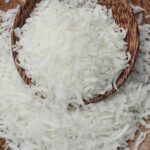
Desiccated coconut discoloration can raise immediate questions for importers, food manufacturers, distributors, and private-label buyers. According to the Codex Standard for Desiccated Coconut, the product is generally expected to have a natural white to light creamy-white color. When buyers notice yellowing, darker areas, or unexpected specks, it is reasonable to investigate what may have influenced the appearance.
However, color variation does not always point to one specific problem.
Raw coconut characteristics, preparation, heat exposure, browning reactions, storage conditions, packaging integrity, and handling can all contribute to changes in appearance. Dark particles also need to be considered separately from general yellowing because they may have a different origin.
For B2B buyers, the most reliable approach is to compare the product with the agreed specification and review its appearance together with aroma, texture, packaging condition, lot information, supplier documentation, and testing when appropriate.
Table of Contents
ToggleDesiccated coconut is produced from coconut kernel that has been prepared, dried, and reduced to the required particle size or grade.
Because coconut is an agricultural raw material, some natural variation can occur before processing even begins. Coconut maturity, growing conditions, kernel characteristics, harvesting, and handling may all contribute to differences between raw materials.
Processing and storage can then introduce additional factors that influence color.
Understanding these factors can help buyers investigate desiccated coconut discoloration without automatically assuming that every visual difference has the same cause.
Heat is an important part of producing dried coconut, but temperature and processing time need to be controlled.
When food materials are exposed to heat, browning reactions may occur. Depending on the conditions, coconut may shift from its normal white or creamy appearance toward a more yellow, beige, or light brown tone.
The extent of this change can be influenced by factors such as:
Uneven heating can also create localized differences between particles.
For this reason, a slightly creamy shade should not automatically be treated as a defect. Buyers should evaluate the actual appearance against the approved specification and reference sample, where available.
Coconut naturally contains fat, which means prolonged exposure to oxygen can contribute to quality deterioration over time.
Oxidative changes may influence aroma and flavor and can occur alongside changes in appearance. However, yellowing should not automatically be attributed to oxidation alone.
Other browning reactions, heat history, storage conditions, and raw material variation may also contribute.
When desiccated coconut discoloration develops or becomes more noticeable during storage, useful questions include:
Packaging with suitable barrier properties can help reduce unnecessary exposure to oxygen and environmental moisture, but packaging performance should always be considered together with the product and storage conditions.
Not every coconut kernel has exactly the same characteristics.
Differences in maturity can influence kernel structure and composition. Agricultural conditions and handling before processing may also affect the quality of the raw material reaching the factory.
This does not mean that a particular maturity level automatically causes yellowing. Instead, raw material condition should be viewed as one of several factors that can contribute to variation in the finished product.
For buyers investigating desiccated coconut discoloration, it may therefore be useful to ask how incoming coconuts are selected, inspected, and prepared before processing.
Raw material control is an important part of achieving consistent finished-product appearance.
Dark specks should not automatically be treated as the same issue as general yellowing.
One possible source of brown particles is residual material from the brown skin, or testa, surrounding the white coconut kernel. During production of white desiccated coconut, this layer is generally removed during preparation.
If small fragments remain, they may appear as brown or darker specks in the finished product.
Localized browning or overheated coconut particles may also create darker areas.
However, an unexpected dark particle should not automatically be assumed to be harmless coconut material.
If its origin is unclear, the material should be investigated against the agreed specification and applicable quality requirements. Possible foreign matter should be treated as a separate quality concern rather than normalized as natural color variation.
When unusual particles are found, buyers may consider:
This evidence-based approach is more useful than trying to identify the cause from appearance alone.
Desiccated coconut is a dried food ingredient, so protection from excess environmental moisture is important.
If packaging is damaged, left open, or exposed to unsuitable storage conditions, the product may absorb moisture from the surrounding environment.
This can affect characteristics such as:
Excess moisture may also create conditions that increase the risk of product deterioration or spoilage.
However, desiccated coconut discoloration alone should not be used to diagnose mold growth or another specific microbiological problem. Color can change for several reasons, and visual inspection cannot always identify the underlying cause.
If spoilage is suspected, appropriate quality assessment and testing should be used rather than relying on color alone.
Packaging continues to protect desiccated coconut after processing is complete.
Depending on the product and distribution system, suitable packaging can help reduce exposure to:
For internationally traded ingredients, packaging may pass through warehouses, containers, ports, and distribution centers before the product reaches the customer.
A punctured liner, incomplete seal, damaged bag, or unsuitable warehouse environment can therefore provide important context when investigating desiccated coconut discoloration.
Buyers should inspect both the ingredient and its packaging rather than evaluating the coconut in isolation.
Temperature and light can also influence food quality over time.
Prolonged exposure to high temperatures may accelerate several quality changes. Light exposure can interact with other environmental factors, depending on the packaging and storage system.
For this reason, desiccated coconut should be stored according to verified supplier instructions.
It is better to follow the specific storage recommendations for the product than to apply one universal temperature or humidity rule to all desiccated coconut.
B2B buyers should also consider the destination climate and warehouse environment when evaluating storage and packaging needs.
Managing desiccated coconut discoloration requires attention across several stages of the supply chain.
At the manufacturing level, general control measures may include:
After production, distributors and buyers can support product stability by maintaining package integrity and following verified storage recommendations.
Products should also be protected from unnecessary exposure to heat, humidity, strong odors, and other unsuitable warehouse conditions.
No single step can guarantee that every particle will look identical, but consistent controls can help reduce unnecessary variation.
Appearance should be evaluated as part of a wider product-quality assessment.
When reviewing a desiccated coconut sample or shipment, buyers may check:
Approved reference samples can also be useful when buyers need a shared benchmark for appearance.
Photography is valuable for communicating issues, but differences in lighting, camera settings, and screens may affect how color appears. For significant quality investigations, representative physical samples are often more useful.
Some variation is possible because coconut is an agricultural ingredient.
A small shift from bright white to light creamy white may have a different significance from widespread yellowing, unusual odor, excessive clumping, or unidentified dark particles.
The key question is whether the product remains within the agreed specification.
When desiccated coconut discoloration is observed, buyers should avoid jumping directly to conclusions such as “oxidation,” “mold,” or “foreign matter” without supporting evidence.
Instead, review the full picture:
This approach helps both buyer and supplier communicate more clearly and reach conclusions based on evidence rather than assumptions.
Understanding desiccated coconut discoloration can help importers and food manufacturers ask better questions about raw materials, processing, packaging, storage, and product specifications.
Abimex Group supports international B2B buyers sourcing desiccated coconut for bakery, confectionery, snacks, food manufacturing, wholesale, private-label, and ingredient applications.
From product specifications and packaging requirements to sourcing discussions, documentation, and export coordination, Abimex Group works with customers to identify options suitable for different markets and applications.
Contact Abimex Group to discuss your desiccated coconut specifications, appearance requirements, packaging options, and sourcing needs for your target market.